

How to Build a Morning Routine for Better Mental Health
Hydration, mindfulness, light movement, sunlight and a balanced breakfast—done consistently—reduce stress and lift mood.


Starting your day right can improve your mental health and set a positive tone for the rest of your day. A structured morning routine helps regulate your nervous system, reduce stress, and improve focus. Here’s how to create a simple, effective morning routine:
- Wake up at the same time daily: Consistent wake-up times support your internal clock and improve sleep quality.
- Hydrate immediately: Drink 8–16 ounces of water to rehydrate and boost mental clarity.
- Practice mindfulness: Spend a few minutes meditating or deep breathing to calm your mind.
- Incorporate light exercise: Stretch, do yoga, or go for a short walk to release endorphins and increase energy.
- Get sunlight exposure: Step outside or sit by a window within 30 minutes of waking to support your sleep-wake cycle.
- Eat a balanced breakfast: Include protein, healthy fats, and complex carbs to stabilize energy and mood.
- Journal and set intentions: Write down what you’re grateful for and outline your goals to stay focused and positive.
Start small by adding one or two habits, and build from there. Consistency is key, and even minor changes can make a big difference in your mental well-being.
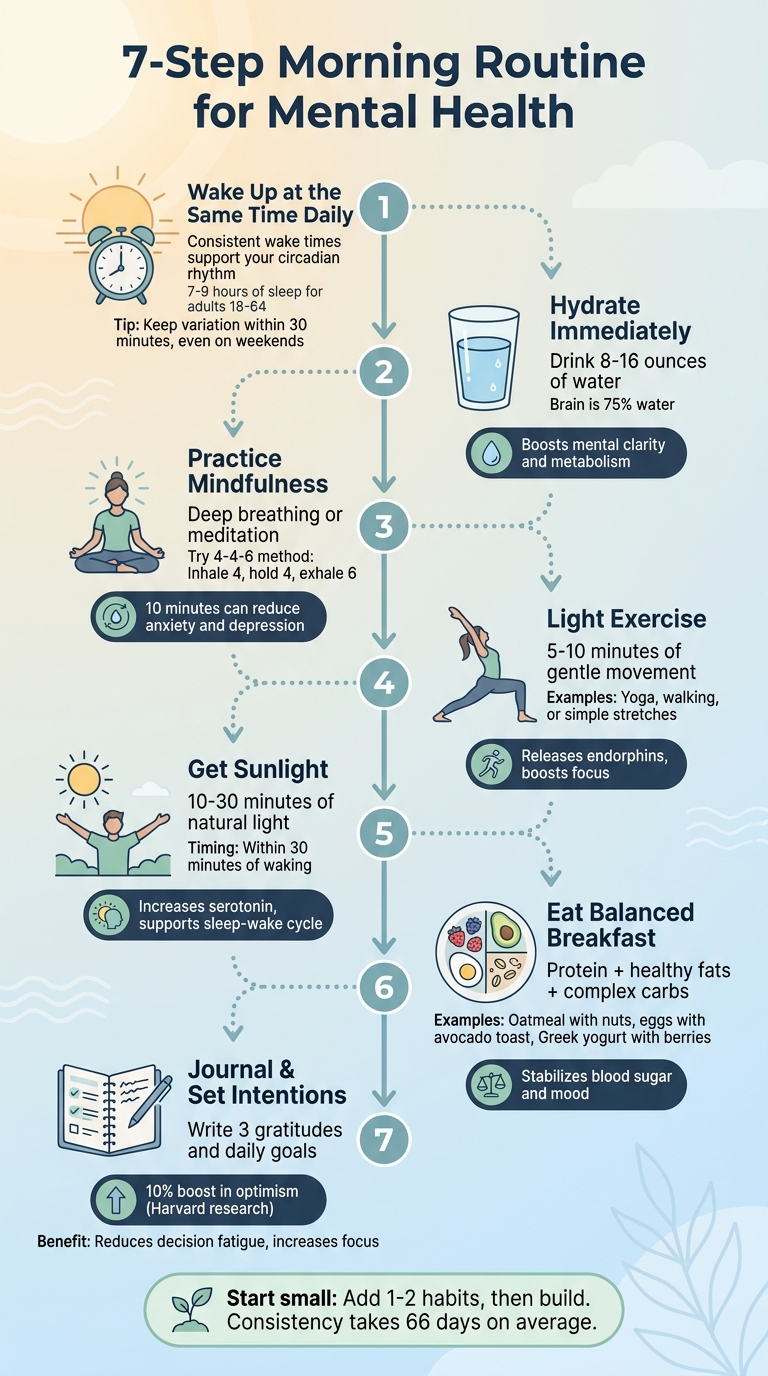
7-Step Morning Routine for Better Mental Health
My 6-Step Morning Protocol for a Better Day
sbb-itb-3d8e4fc
Wake Up at the Same Time Every Day
Your body has an internal clock known as the circadian rhythm, which regulates your sleep and wake cycles. When you wake up at inconsistent times, it throws this rhythm off balance, making it harder to fall asleep and feel alert in the morning. Sticking to a regular wake-up time helps your body establish a routine, improving the quality of your sleep and lowering stress levels.
Adults aged 18 to 64 typically need 7–9 hours of sleep each night. To maintain this, aim to wake up and go to bed at roughly the same time every day, keeping the variation within 30 minutes - even on weekends. Dr. Mary Ella Blair Wood, an integrative medicine physician at Northwestern Medicine, emphasizes the importance of this consistency:
"Keeping a consistent bedtime and wake-up time is essential for circadian rhythm and cortisol alignment" [5].
This alignment is crucial because cortisol, the hormone that helps you feel awake, naturally peaks in the early morning. Erratic sleep schedules can disrupt cortisol levels, which may increase feelings of anxiety or depression.
Choose a Wake-Up Time That Works for You
To find the right wake-up time, work backward from your schedule. Subtract the time you need for commuting, getting ready, and at least 30 minutes of self-care from when your day officially begins.
Instead of obsessing over how many hours you're sleeping, listen to your body. Dr. Wood offers a simple guideline:
"My rule of thumb for anyone wondering if they're getting enough sleep is to ask: 'Do you feel rested upon waking?' If so, that is a better indicator than focusing on the number of hours of sleep you're getting" [5].
If you’re trying to wake up earlier, ease into it by setting your alarm 10–15 minutes earlier each day. This gradual shift allows your body to adjust without leaving you feeling drained.
Build Better Sleep Habits
A consistent wake-up time is only effective if you’re also sleeping well. Start winding down an hour before bed by dimming the lights and stepping away from screens. The blue light from phones and laptops can suppress melatonin, the hormone that promotes sleep. In the morning, expose yourself to natural sunlight within 30 minutes of waking - spending 10 minutes by a window or stepping outside can help reset your internal clock and boost alertness.
If nighttime worries keep you awake, try jotting down your thoughts in a notebook. This simple habit can help clear your mind and prepare you for restful sleep.
By combining a steady wake-up time with healthy sleep practices, you’ll set yourself up for a productive day, starting with hydration and mindfulness.
This article is for informational purposes only and is not medical, health, fitness, or wellness advice. Always consult a qualified healthcare, medical, fitness, or wellness professional before making decisions, starting a new routine, changing your diet, using supplements, or acting on any health-related information.
Start with Water and Mindfulness
Once you've nailed down a consistent wake-up time and improved your sleep habits, the next logical step is to rehydrate your body and center your mind.
After 6–8 hours of sleep, your body is naturally dehydrated, which can mess with your brain's ability to function properly. Since the brain is roughly 75% water, even slight dehydration can affect cognitive processes like emotional regulation and decision-making. This is why you might feel "foggy", find it hard to focus, or feel irritable when you wake up[10].
Drink Water When You Wake Up
Starting your day with 8 to 16 ounces of water can help replace lost fluids and give your metabolism a little boost[3]. To make this habit stick, keep a glass or a reusable water bottle within arm's reach of your bed. That way, drinking water becomes second nature before you even step out of bed[4]. Want to take it up a notch? Add a squeeze of lemon to warm water for a quick dose of antioxidants[3]. If remembering to hydrate is a challenge, try pairing it with something you already do - like drinking your water right after brushing your teeth[5].
Once you're hydrated, it's time to turn your attention inward and prepare your mind for the day.
Try Deep Breathing or Meditation
After quenching your thirst, spend a few minutes practicing mindfulness to ease into your day. Deep breathing exercises, like the 4-4-6 method (inhale for 4 counts, hold for 4, exhale for 6), can help calm your nervous system and keep you grounded in the present moment. This simple practice may even reduce feelings of anxiety[9]. Psychiatrist Dr. Ryan Sultan highlights the value of such routines:
"A structured but flexible mindful morning routine can act as a stabilizing anchor, helping the nervous system transition from sleep to wakefulness with intention rather than urgency."[1]
Even dedicating just 10 minutes to mindfulness each morning can help alleviate symptoms of depression and anxiety[9]. To protect this peaceful start, avoid diving into your phone first thing - checking emails or scrolling through social media can derail your focus and shift your attention to others' demands before you've had time to focus on yourself. Combining hydration with mindfulness creates a calm and intentional foundation for the rest of your day.
Add Light Exercise to Your Morning
Once you're hydrated and have taken a moment for mindfulness, it's time to get moving. Even just 5–10 minutes of gentle exercise can work wonders. It releases endorphins that lift your mood and ease stress [4]. Plus, it boosts blood flow and oxygen to your brain, sharpening your focus and preparing you to tackle the day [4].
Starting your day with movement instead of jumping straight into screen time helps you avoid triggering unnecessary stress [16]. Gentle physical activity transitions your body out of that groggy morning state and sets a calm, intentional tone for the hours ahead.
Pick Simple Exercises
You don’t need a gym membership or fancy equipment to get started. A few yoga poses can work wonders in just minutes. Try:
- Cat-Cow Pose: Loosens up your spine.
- Downward Facing Dog: Stretches your hamstrings and opens your chest.
- Child's Pose: Helps you relax and ease into the day.
If yoga isn’t your style, a brisk 10- to 30-minute walk outdoors is a great alternative. It combines light exercise with exposure to natural light, giving you a double dose of benefits [4][5]. Quick exercises like squats or push-ups can also energize your muscles and give you a mental boost [4].
For a mindful approach, try walking meditation. Focus on each step as you move. As Dr. Mary Ella Blair Wood from Northwestern Medicine says:
"Taking five minutes for yourself a few times a day makes a difference" [5].
The key is consistency, not intensity. Small, regular doses of physical activity can help your body and mind lean toward relaxation instead of stress [5]. Once you’ve gotten moving, you’re perfectly set up to take things outdoors for even more benefits.
Get Morning Sunlight
After your morning movement, step outside and soak up some sunlight. Natural light signals your brain to release serotonin, which helps you feel calm and focused [12]. It also tells your body it’s time to wake up, supporting a healthy sleep-wake cycle [15]. Just 10–30 minutes of morning sunlight can make a noticeable difference in your alertness, and sunlight is your body’s main source of vitamin D - contributing over 90% of your supply [13][15].
The impact can be profound. For instance, a study found that people with Seasonal Affective Disorder who walked outdoors for an hour each morning experienced a 50% reduction in symptoms after just one week [15]. Pairing sunlight with light activity, like yoga or a walk, amplifies the benefits of both [13][14][16]. Aim to get outside within 30 minutes of waking to maximize these effects [5][16].
This article is for informational purposes only and is not medical, health, fitness, or wellness advice. Always consult a qualified healthcare, medical, fitness, or wellness professional before making decisions related to your health.
Eat a Nutritious Breakfast
After hydrating, practicing mindfulness, and engaging in light exercise, it’s time to fuel your body for the day ahead. A well-rounded breakfast with protein, healthy fats, and complex carbohydrates helps stabilize blood sugar levels and avoids the dreaded energy crash [17][4]. Since your brain consumes about 20% of your body’s energy, starting your morning with proper nourishment is key for staying focused and emotionally balanced [6].
Nutrients in your breakfast do more than just curb hunger. Protein-rich foods, for instance, increase levels of tyrosine, dopamine, and norepinephrine - neurotransmitters that sharpen focus and alertness [17]. Complex carbs like oatmeal digest slowly, providing steady energy instead of the rapid highs and lows caused by sugary cereals [17][6]. Healthy fats from sources like nuts, seeds, and avocados play a role in cognitive function and help keep you feeling full [17][6]. As Lauren Blake, a Registered Dietitian at The Ohio State University Wexner Medical Center, puts it:
"Food directly impacts behavior and emotions, and putting a little thought into your morning routine can help improve your mood all day long." [17]
Choose Whole Foods
For sustained energy throughout the day, go for nutrient-packed whole foods. A bowl of oatmeal topped with nuts and fresh fruit is a fantastic choice, as is avocado toast on whole-grain bread with eggs [4]. Greek yogurt paired with berries and chia seeds is another excellent option. Blake advises keeping it simple:
"Hard-boiled eggs, nuts, Greek yogurt and nut butters are all easy, filling options." [17]
Pressed for time? Prepping ingredients ahead can save you from skipping breakfast. Wash and chop fruits and veggies or cook extra grains once or twice a week [5]. A quick smoothie made with spinach, banana, protein powder, and almond milk is ready in minutes and easy to take on the go [4]. Toss in flaxseeds, chia seeds, or walnuts for omega-3 fatty acids, which are linked to better memory and mood [17]. Just as important as eating the right foods is avoiding those that can sap your energy and focus.
Skip Sugary and Processed Foods
While bagels, muffins, and sugary cereals might be convenient, they often lead to rapid blood sugar spikes followed by crashes, leaving you tired, irritable, and unfocused [17][4]. Refined carbs give a quick energy boost but don’t last, often resulting in hunger and mood swings shortly after [17][6].
Instead, stick with whole foods like eggs, nuts, and whole grains. These options provide steady energy and help maintain emotional balance, unlike processed alternatives that can derail your mental clarity [4][6].
This article is for informational purposes only and is not medical, health, fitness, or wellness advice. Always consult a qualified healthcare, medical, fitness, or wellness professional before making decisions, starting a new routine, changing your diet, using supplements, or acting on any health-related information.
Journal and Set Your Daily Intentions
Once you've had a nourishing breakfast, it's time to focus on your mindset for the day. Taking a few minutes to journal and set intentions can give you a sense of control and purpose before the day’s challenges start rolling in [3][4]. This simple habit can shift your thoughts toward positivity, helping to counteract the natural pull toward negative thinking [11]. When combined with morning hydration, mindfulness, and movement, it creates a solid foundation for both your body and mind.
Write Down What You're Grateful For
Start by jotting down one to three specific things you're grateful for. Research from Harvard shows that practicing gratitude can improve your mood and boost optimism by 10% [11][4][18]. It also activates your brain's reward system, helping you feel more positive. Plus, reflecting on gratitude lowers activity in the amygdala - the part of your brain that processes threats - and increases serotonin, the hormone responsible for stabilizing mood [4].
To make this practice stick, try using the "Three Gratitudes" method. Each day, write down three new things you're thankful for instead of repeating the same ones [11]. Be specific and add a note about why each item matters to you - it helps deepen the emotional impact [18]. Spend a couple of minutes visualizing these things as you write them down [5].
Once you've grounded yourself in gratitude, you’re ready to outline your priorities for the day.
Create Your Daily Goals and Affirmations
With a positive mindset in place, use this time to write a quick to-do list and a few affirmations. Setting an intention - like focusing on patience or kindness - helps your brain stay tuned to those themes throughout the day [18]. This practice also reduces decision fatigue by aligning your mental energy with clear goals [18].
Jennifer C. Veilleux, Associate Professor at the University of Arkansas, explains:
"The process of setting a goal can be helpful because it's a process where a person reflects on what they want, and then decides what they will do." [2]
When crafting affirmations, steer clear of words like "should", which can lead to self-criticism or perfectionism [2]. Instead, focus on how you want to approach the day. For example, you could write, "Today, I will stay present and take things one step at a time" [7]. Clinical Psychologist Erin Parks, PhD, highlights the importance of this approach:
"Intentions can be wide-ranging as long as you believe in them... It's also important that they foster inspiration - rather than critiques or perfectionism." [2]
Keep this practice short and consistent. Even a few minutes of daily journaling can lead to noticeable mental health benefits [18]. For the best results, write on paper instead of using a digital device to avoid distractions like notifications or endless scrolling [11]. Research published in Frontiers in Psychology found that eight weeks of daily mindfulness, including reflection, improved both attention span and emotional balance [11].
Customize Your Routine and Stay Consistent
When it comes to hydration, mindfulness, exercise, and nutrition, the trick is to tailor these practices to fit your life. Everyone's routine looks different, and that's perfectly fine. The goal is to find what aligns with your daily schedule and personality, then stick with it long enough to see real benefits.
Test Different Practices
Your morning routine should leave you feeling refreshed and ready to tackle the day - not worn out. Try experimenting with different elements like hydration, exposure to natural light, light movement, journaling, or mindfulness exercises. If meditation feels awkward or unhelpful, try swapping it for some gentle stretching instead.
Apps like Daylio can help you track how your morning habits impact your mood over time [8]. For instance, you might notice that just 15 minutes of morning sunlight improves your mood or that avoiding your phone for the first 30 minutes of the day keeps you calm and focused [2][8].
Once you discover what works, start incorporating those habits gradually into your routine.
Start Small to Avoid Burnout
Trying to change everything at once can be overwhelming. Studies suggest it takes an average of 66 days to form a new habit, though this can range from 18 to 254 days depending on the complexity of the behavior [8]. Overloading your mornings with too many changes can lead to burnout within just a few weeks [8].
A good starting point is a simple 15-minute routine: drink a glass of water, get some natural light, and set one intention for the day [8]. After four to six weeks, once this feels natural, you can add another habit, like five minutes of stretching. Even on busy days, taking just one minute for deep breathing can help maintain your routine [8].
Habit-tracking apps like Structured or Habitica can be great tools to visualize your progress and keep you motivated. The key is consistency - small, steady steps will lead to lasting results.
This article is for informational purposes only and is not medical, health, fitness, or wellness advice. Always consult a qualified healthcare, medical, fitness, or wellness professional before making decisions, starting a new routine, changing your diet, using supplements, or acting on any health-related information.
Conclusion
The secret to crafting a morning routine that supports your mental well-being lies in keeping it consistent, not complicated. Dr. Ryan Sultan, a psychiatrist, emphasizes this point:
"The effectiveness of the mindful morning lies in consistency, not complexity"[1].
Even small actions - like drinking a glass of water, soaking in natural light, or setting a simple intention for the day - can lead to meaningful improvements over time.
Research shows that having a structured morning routine can help reduce cortisol levels and boost serotonin, which promotes emotional balance and lowers stress[4]. The key is to start small and stick with it. As Mary Ella Blair Wood, DO, from Northwestern Medicine, explains:
"Taking five minutes for yourself a few times a day makes a difference in lowering cortisol, and improving focus and health overall"[5].
Even something as quick as a deep breath or a sip of water can strengthen your routine. These small, consistent habits create a foundation for a healthier and more resilient mind.
When building your routine, choose activities that truly resonate with you. Whether it’s journaling, stretching, meditating, or simply savoring your morning coffee, the goal is to create a practice that feels like a source of calm, not a chore. It’s not about being perfect - it’s about finding a rhythm that steadies your mood, sharpens your focus, and equips you to face the day with emotional strength.
This article is for informational purposes only and is not medical, health, fitness, or wellness advice. Always consult a qualified healthcare professional before making decisions, starting a new routine, changing your diet, or acting on any health-related information.
FAQs
How long should my morning routine be?
A morning routine aimed at improving mental health doesn't have to take up much time - just 10 to 30 minutes can make a difference. Incorporate simple, mindful activities like spending 5 minutes on deep breathing or meditation, drinking water to hydrate, doing some light exercise, or jotting down thoughts in a journal. The trick is to keep it realistic and manageable. For many, a 10-15 minute routine is enough to stay consistent. The goal is to design a routine that aligns with your lifestyle and nurtures your emotional well-being.
What if I can’t do all 7 steps every morning?
It's perfectly fine if you can't tackle all seven steps daily. Instead, prioritize the practices that resonate with you or feel easiest to fit into your day. Even small actions, like taking a moment for mindful breathing or staying hydrated, can make a meaningful difference in your mental well-being. The aim is to build a routine that's adaptable and supports your health without becoming an added source of stress.
When will I notice mental health benefits?
Maintaining a consistent morning routine can lead to noticeable mental health benefits in just a few days or weeks. Having structure in your mornings may help reduce stress, elevate your mood, and sharpen your focus. While results differ from person to person, starting your day with purpose can gradually nurture a more positive mindset and enhance emotional well-being.


