

Deep Rest and Cellular Repair: Study Insights
How deep rest practices like NSDR, Yoga Nidra, and meditation boost DNA repair, mitochondrial health, telomerase activity, and immunity.


Deep rest is more than just relaxation - it's a state where your body shifts from stress to repair, promoting cellular recovery and immune health. Recent studies reveal that practices like meditation, Yoga Nidra, and consistent sleep routines can enhance processes like DNA repair, telomere maintenance, and mitochondrial rejuvenation. Here's what you need to know:
- Deep Rest vs. Sleep: Unlike sleep, deep rest keeps you awake but deeply relaxed, engaging restorative brain waves and neurochemical processes without sleep inertia.
- Cellular Benefits: Deep rest supports autophagy, reduces oxidative stress, and aids mitochondrial repair, boosting overall health and slowing aging.
- Immune Health: Chronic stress weakens immunity, but deep rest activates telomerase and supports immune cell function, reducing aging and disease risks.
- Optimal Sleep: Sleeping 6.4–7.8 hours per night minimizes biological aging and improves overall health.
- Actionable Practices: Techniques like NSDR (Non-Sleep Deep Rest), Yoga Nidra, and meditation improve stress response and enhance cellular repair.
Prioritizing deep rest alongside quality sleep is key for long-term health and resilience.
The Power of Deep Rest
sbb-itb-3d8e4fc
What Is Deep Rest?
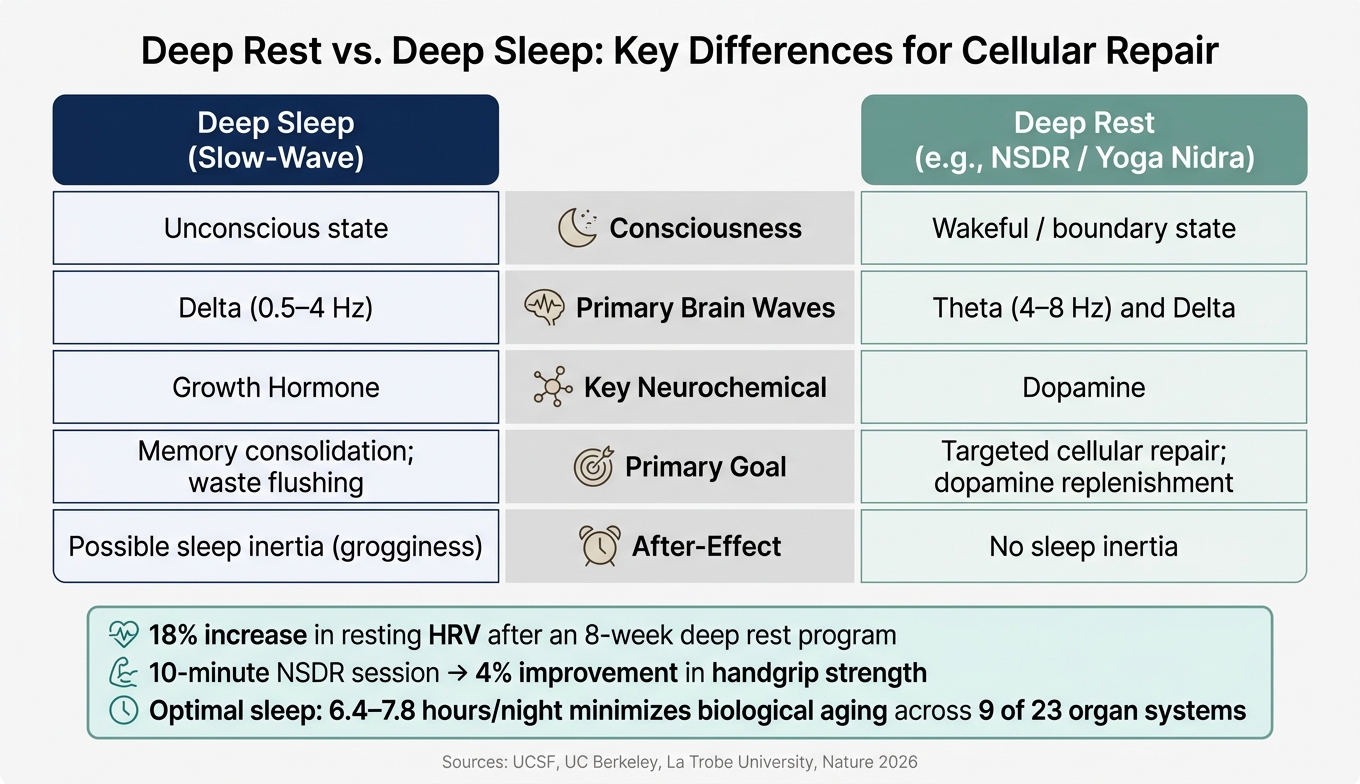
Deep Rest vs. Deep Sleep: Key Differences for Cellular Repair
Defining Deep Rest
Deep rest goes beyond simply relaxing or enjoying leisure time. It’s a unique state where your body’s stress response dials down, replaced by a profound sense of safety. This shift is crucial because it allows your body to redirect energy from managing stress to focusing on repair and recovery.
"By down regulating the threat response that is common in daily life, and increasing a sense of safety, mind-body practices allow the body to shift energy away from maintaining high stress arousal towards positive cellular restoration processes." - Dr. Alexandra Crosswell, Researcher, UCSF [4]
When you achieve deep rest, the parasympathetic nervous system takes control. This leads to a slower heart rate, relaxed muscles, and lower blood pressure. At the cellular level, energy (ATP) is redirected to essential repair mechanisms like autophagy (a process for recycling cellular components), mitochondrial repair, and telomere maintenance via the enzyme telomerase. Unlike typical leisure activities, which may not fully disengage the body's stress response, deep rest actively prioritizes restoration.
Next, let’s break down how deep rest differs from deep sleep to better understand its unique role.
Deep Rest vs. Deep Sleep: Key Differences
While deep rest and deep sleep share some restorative processes, they are fundamentally different. The biggest distinction lies in consciousness: deep sleep is an unconscious state with defined sleep cycles, whereas deep rest keeps you awake but deeply relaxed - teetering on the edge of sleep without fully drifting into it.
| Feature | Deep Sleep (Slow-Wave) | Deep Rest (e.g., NSDR) |
|---|---|---|
| Consciousness | Unconscious | Wakeful/Boundary state |
| Primary Brain Waves | Delta (0.5–4 Hz) | Theta (4–8 Hz) and Delta |
| Key Neurochemical | Growth Hormone | Dopamine |
| Primary Goal | Memory consolidation; waste flushing | Targeted cellular repair; dopamine replenishment |
| After-Effect | Possible sleep inertia (grogginess) | No sleep inertia |
Deep rest, often referred to as the hypnagogic state, allows for restorative low-frequency brain waves (theta and delta) while maintaining awareness. This unique combination offers neurochemical and physical benefits without the grogginess that sometimes follows deep sleep.
"NSDR keeps you hovering at the boundary of sleep without crossing over, which means you get the neurochemical and brain wave benefits of early sleep stages without the penalty of sleep inertia." - AJ Keller, CEO, Neurosity [5]
How Scientists Measure Deep Rest
Researchers use various tools to understand and quantify deep rest’s effects. These measurements help reveal the physiological changes that make deep rest so effective.
- EEG (electroencephalography): This tracks the brain’s transition from high-frequency beta waves (associated with stress and activity) to slower theta (4–8 Hz) and delta (0.5–4 Hz) waves, signaling a restorative state. Considering the brain uses about 20% of the body’s total energy, this shift represents a major energy reallocation [5].
- Heart Rate Variability (HRV): A higher HRV indicates stronger parasympathetic engagement, showing the body is genuinely at rest rather than just inactive. In one study, an 8-week deep rest program led to an 18% increase in resting HRV [5].
- Biochemical Markers: Researchers also measure levels of cortisol (the stress hormone), IL-12 (a pro-inflammatory cytokine), and telomerase activity to confirm that deep rest is activating cellular repair and improving immune function.
These measurable changes highlight the profound impact deep rest can have on the body’s ability to repair itself and enhance resilience.
This article is for informational purposes only and is not medical, health, fitness, or wellness advice. Always consult a qualified healthcare professional before making any decisions regarding your health.
How Deep Rest Triggers Cellular Repair
DNA Repair and Oxidative Stress Reduction
When your body enters deep rest, it shifts energy - stored as ATP - away from stress-related functions like cortisol production and elevated heart rate. Instead, this energy gets redirected to critical repair tasks such as fixing DNA, clearing out damaged proteins, and neutralizing harmful reactive oxygen species (ROS).
ROS are natural byproducts of energy production, but if they build up unchecked, they can damage cell membranes, proteins, and even DNA. Deep rest combats this through autophagy, a process where lysosomes (the cell’s recycling centers) break down and remove damaged components before they cause bigger issues. A more targeted version of this, known as mitophagy, focuses on clearing out malfunctioning mitochondria, which are a major source of ROS accumulation.
"Deep rest is a psychological and physiological state during which our bodies can recover on a cellular level... cells can redirect energy, in the form of ATP, to restoring themselves." - Elissa Epel, PhD, Professor of Psychiatry, UCSF [8]
This energy reallocation sets the stage for further tissue and mitochondrial recovery.
Stem Cells and Tissue Regeneration
Deep rest doesn’t just repair cells - it also supports the rebuilding of tissues. For example, during sleep, hematopoietic stem cells (HSCs) - which produce blood and immune cells - shift gears toward self-renewal instead of active production. This shift is largely guided by melatonin, a hormone that peaks during rest and protects stem cells from oxidative damage while preserving their ability to regenerate [10].
To put it into perspective, about 284 billion blood cells are replaced daily, and HSCs are the driving force behind this process [10]. The quality of your rest directly impacts how efficiently this system operates. Poor or fragmented sleep can push HSCs to produce inflammatory myeloid cells, increasing the likelihood of conditions like atherosclerosis over time [10]. Deep rest helps maintain a healthy balance.
Growth hormone plays a big role here too. In March 2025, researchers at UC Berkeley published findings in Cell showing how neural circuits in the hypothalamus regulate growth hormone release. They discovered that deep non-REM sleep triggers a surge in growth hormone, which fuels muscle and bone repair. Interestingly, this hormone also signals the brain to transition toward wakefulness, creating a finely tuned feedback loop for recovery and metabolic balance [7].
"Sleep drives growth hormone release, and growth hormone feeds back to regulate wakefulness, and this balance is essential for growth, repair and metabolic health." - Daniel Silverman, Postdoctoral Fellow, UC Berkeley [7]
Mitochondrial Energy Restoration
Beyond DNA and tissue repair, deep rest also rejuvenates mitochondria - the energy powerhouses of your cells. While mitochondria generate energy, they also experience wear and tear from oxidation. During wakefulness, polyunsaturated fatty acids (PUFAs) in mitochondrial membranes oxidize, gradually degrading their function. Deep rest provides the necessary time for the endoplasmic reticulum to restore those membranes with fresh, unoxidized lipids, effectively giving mitochondria a structural reset [2].
In February 2026, a study from the University of Pennsylvania using fruit fly models revealed that sleep acts as a metabolic cleanup operation. Neurons offload oxidized lipids to glial cells during sleep, which then transfer them into the bloodstream for disposal. Without this nightly process, toxic lipid buildup would impair the mitochondria that energize brain cells [11].
"One of the ways that sleep is helping the neurons stay healthy is by moving these lipids along to remove some of the oxidative damage." - Amita Sehgal, PhD, Molecular Biologist and Neuroscientist, University of Pennsylvania [11]
The hormonal environment during deep rest further supports repair. High levels of growth hormone and prolactin, combined with low levels of cortisol, create what researchers describe as a natural "adjuvant factor." This biological state primes cells for repair and strengthens the immune system’s long-term memory [1]. Without adequate deep rest, this repair window closes, and cellular damage accumulates.
This article is for informational purposes only and is not medical, health, fitness, or wellness advice. Always consult a qualified healthcare, medical, fitness, or wellness professional before making decisions, starting a new routine, changing your diet, using supplements, or acting on any health-related information.
Deep Rest, Immune Health, and Aging
How Chronic Stress Disrupts Immune Function
Chronic stress does more than leave you feeling drained - it accelerates cellular aging. When the body stays locked in a prolonged "fight-or-flight" mode, cortisol levels remain high, oxidative stress builds up, and the immune system weakens. Over time, this stress shortens telomeres (the protective caps on chromosomes) and triggers cellular senescence.
Deep rest can break this harmful cycle. By activating the parasympathetic nervous system through the vagus nerve, the body shifts out of survival mode and into a state that supports cellular repair. This process also boosts telomerase activity, an enzyme that helps restore telomere caps, slowing down cellular aging [9]. In essence, deep rest not only stops stress-related damage but also equips the immune system to repair more effectively.
This connection between chronic stress and immune health lays the groundwork for understanding how sleep quality impacts your ability to fight infections.
Sleep Quality, Deep Rest, and Infection Risk
The quality of your rest plays a key role in how well your immune system handles threats. Research published in Nature Communications in April 2026 used a mouse model to reveal that just two weeks of disrupted sleep before an influenza vaccination significantly impaired B cell maturation and reduced survival rates against severe viral challenges [12]. The study highlighted transcriptional stress in plasma cells and disrupted interactions between B and T cells, both of which are critical for immune memory.
Human studies echo these findings. According to a 2026 analysis by the MULTI Consortium, which reviewed data from 916,307 influenza-vaccinated adults, individuals with fragmented sleep had a 1.70 risk ratio for contracting influenza compared to matched controls (0.7% vs. 0.4%) [12]. In other words, poor sleep doesn’t just make you feel groggy - it leaves you more susceptible to infections.
Telomere Length and Cellular Aging
Beyond immune health, proper rest is essential for preserving telomere length and slowing cellular aging. Both insufficient sleep (less than 6 hours) and excessive sleep (more than 8 hours) are linked to increased oxidative stress, immune dysfunction, and higher mortality rates. However, consistently getting 6–8 hours of sleep supports optimal cellular repair and reduces risks associated with aging [3] [13]. The table below illustrates how sleep duration affects biological outcomes:
| Sleep Duration | Cellular Impact | Health Risks |
|---|---|---|
| Short (<6 hours) | Increased oxidative stress, impaired B cell function | Type 2 diabetes, hypertension, IHD |
| Normal (6–8 hours) | Optimal cellular repair, reduced biological aging | Lower all-cause mortality |
| Long (>8 hours) | Indirect organ-related disease pathways | MDD, schizophrenia, bipolar disorder |
The quality of rest, not just the number of hours, seems to be the critical factor. Activities like meditation and yoga, which promote deep rest, have been shown to enhance telomerase activity. This signals the body that it's safe to focus on long-term repair rather than short-term survival [9]. In this way, deep rest becomes an active process that supports both longevity and overall health.
This article is for informational purposes only and is not medical, health, fitness, or wellness advice. Always consult a qualified healthcare professional before making decisions related to your health.
Deep Rest Practices Backed by Research
Meditation and Mind-Body Practices
Structured mind-body practices can lead to measurable biological changes that passive activities simply don’t achieve.
Take Yoga Nidra, for example. A study published in Mindfulness in March 2026 by researchers from the University of the Bundeswehr Munich explored its effects on stress reduction. Over eight weeks, 255 participants engaged in either an 11-minute Yoga Nidra session, a 30-minute session, or listened to music as a control. The results? The 11-minute Yoga Nidra group showed notable stress reduction and healthier daily cortisol rhythms, outperforming those who passively listened to music [14].
For deeper impacts, intensive meditation retreats stand out. In April 2026, a UC San Diego study led by Professor Hemal H. Patel examined 20 adults who participated in a seven-day retreat. After 33 hours of guided meditation, their blood plasma showed increased neuroplasticity and glycolytic activity. Brain scans also revealed reduced neural background noise [15].
"We're seeing the same mystical experiences and neural connectivity patterns that typically require psilocybin, now achieved through meditation practice alone." - Hemal H. Patel, Professor of Anesthesiology, UC San Diego School of Medicine [15]
Other practices, like tai chi, qigong, forest bathing (Shinrin-yoku), and sensory-focused hobbies, also activate the parasympathetic nervous system. Techniques such as extending your exhalations can signal safety to the brain, helping to shift the body away from stress.
Pairing these practices with consistent sleep habits can further amplify the benefits of deep rest and promote cellular repair.
Sleep Habits That Support Deep Rest
Developing consistent sleep habits is one of the most effective ways to support cellular repair and overall well-being. Research spanning 17 organ systems suggests that sleeping between 6.4 and 7.8 hours per night is ideal for minimizing biological aging [3].
Here are some practical strategies backed by science:
- Stick to a routine: Irregular sleep-wake cycles can disrupt the body’s internal clock and weaken immune function.
- Create a restful environment: A dark, cool bedroom and avoiding screens at least an hour before bed can encourage natural melatonin production, aiding cellular repair.
- Incorporate sensory aids: Tools like nature sounds, essential oils, or tactile objects (like prayer beads) can help the nervous system transition into a restorative state.
"Sleep duration is a deeply embedded part of our entire physiology, with far-reaching implications across the body." - Junhao Wen, Assistant Professor of Radiology, Columbia University [16]
Short Rest Periods and Individual Differences
Even short, structured rest periods can deliver real benefits. For instance, a July 2024 study by Omar Boukhris at La Trobe University examined the effects of a single 10-minute NSDR session on 65 active participants. The results included a 4% improvement in handgrip strength and better reaction times in a psychomotor vigilance task compared to a passive control group [6]. Unlike naps, NSDR avoids the grogginess that often follows sleep, making it a practical option for quick recovery.
Individual differences also play a role in how effective these practices are. In the March 2026 Yoga Nidra study, participants with higher baseline mindfulness traits - specifically "Describing" and "Nonjudging" - experienced the most significant stress and rumination reductions. This highlights how personal mindfulness profiles can shape both mental and physical outcomes [14].
If you’re just starting, an 11-minute Yoga Nidra session is a simple and effective way to begin. For those managing high stress or nervous system imbalances, guided audio recordings with body scans and diaphragmatic breathing can help ease the transition into a restorative state.
Conclusion: What the Research Tells Us
Deep rest isn't just a nice-to-have - it’s a critical part of how our bodies function. When we enter a parasympathetic state, the body's energy shifts away from stress responses and focuses on repairing cells. This process supports key functions like autophagy (cellular cleanup), restoring mitochondrial health, and maintaining genetic stability through telomerase activity.
These repair mechanisms also play a crucial role in strengthening the immune system. During slow-wave sleep, the body creates an ideal hormonal environment - higher levels of growth hormone and prolactin, with reduced cortisol - which helps T-cells migrate to lymph nodes, boosting immunological memory. Missing out on sleep has real consequences: just one night of only 4–5 hours can lower Natural Killer cell activity by 70% [17], leaving us more vulnerable to illness.
A study published in Nature in 2026 analyzed data from the UK Biobank, covering hundreds of thousands of adults. It found that sleeping 6.4 to 7.8 hours per night slowed biological aging across nine out of 23 organ systems, including the brain and immune system [18].
As Dr. Elissa Epel pointed out earlier, the relentless pace of modern life without proper recovery speeds up aging. This makes it clear that rest isn’t optional - it’s a cornerstone of health.
Whether it’s through Yoga Nidra, meditation, maintaining a consistent sleep schedule, or short NSDR (non-sleep deep rest) sessions, research shows that prioritizing quality sleep and deliberate rest can enhance the body’s ability to repair itself. Incorporating these practices into daily life can unlock the full benefits of deep rest for cellular and immune health.
This article is for informational purposes only and is not medical, health, fitness, or wellness advice. Always consult a qualified healthcare or wellness professional before making changes to your routine or diet.
FAQs
How is deep rest different from a nap?
Deep rest refers to a state that promotes cellular repair and helps alleviate stress through activities such as meditation or spending time in nature. In contrast, a nap is a brief period of sleep that provides temporary rejuvenation but doesn’t fully engage restorative processes like slow-wave sleep (N3). This deeper sleep stage is essential for clearing brain waste and strengthening the immune system.
How long should an NSDR or Yoga Nidra session last?
An NSDR (Non-Sleep Deep Rest) or Yoga Nidra session usually takes between 10 to 30 minutes. Experts often recommend beginning with 10 to 12 minutes and then adjusting the length depending on how your body reacts. Even shorter sessions can be effective, so it’s all about finding the timing that suits you best.
Can deep rest help if I already sleep 7–8 hours?
Deep rest provides benefits that go beyond what regular sleep offers. It plays a role in cellular repair, helps lower stress levels, and strengthens your immune system. Even if you're already clocking 7–8 hours of sleep each night, adding deep rest practices to your routine can significantly boost your overall well-being.


