

Checklist for Choosing Green Accommodations
Short checklist to identify genuine eco-friendly stays: check certifications, visible practices, energy and waste data, and avoid greenwashing.


When booking a stay, your choice can impact the planet. With tourism contributing 8% of global carbon emissions, picking eco-friendly lodging is a simple step toward reducing that footprint. But with only 39% of travelers confident in identifying truly sustainable properties, how can you make informed decisions? Here's a quick guide:
- Look for trusted certifications like GSTC, Green Seal, or EarthCheck.
- Ask direct questions about energy sources, waste management, and local hiring.
- Check visible practices: solar panels, bulk dispensers, rainwater systems, and local sourcing.
- Beware of greenwashing: Avoid vague claims or self-awarded eco-logos.
Use this checklist to verify claims and prioritize stays that align with your values. Your informed choices can encourage the hospitality industry to adopt better practices.
What Makes an Accommodation Green?
Defining Green Accommodations
A green accommodation goes beyond vague claims of being eco-friendly by implementing real, measurable practices in areas like energy use, water conservation, waste management, sustainable materials, and community engagement. This could include installing solar panels, using water-saving fixtures, composting waste, or sourcing food from local producers.
Take Feynan Ecolodge in Jordan, for example. It generates all its electricity from solar power and reduces plastic waste by using clay jars and refill stations instead of disposables [2].
Types of Eco-Friendly Stays
Eco-friendly accommodations come in many forms, each with its own approach to sustainability. Here’s a closer look at some common types:
| Type | Key Eco Practices | Best For |
|---|---|---|
| Eco-Lodges | Off-grid energy systems, habitat conservation, environmental education | Nature lovers and remote explorers |
| Biohotels | Organic food, health-focused design, locally sourced materials | Wellness enthusiasts |
| Eco-Glamping | Low-impact structures like yurts or domes, composting toilets, solar-powered showers | Adventure seekers looking for minimal environmental impact |
| Regenerative Inns | Local hiring, transparent economics, reinvestment in the community | Travelers prioritizing cultural and social impact |
| Homestays | Small-scale operations, support for local economies, cultural exchanges | Budget-conscious travelers and those seeking authentic experiences |
For instance, Fuego Atitlan in Guatemala uses local natural materials to construct buildings with 90% less concrete, earning glowing reviews with a 4.7/5 rating from over 500 verified guests [4]. Similarly, Fogo Island Inn in Newfoundland, Canada, operates on a regenerative model where all furniture is handcrafted locally, and textiles are sewn on the island [3].
"Sustainability isn't an amenity; it's the foundation." - Hotel Rivel [5]
These categories can help you find the type of eco-stay that aligns with your goals for sustainable travel.
Matching Accommodations to Your Values
Once you understand the different eco-friendly options, the next step is to identify which practices resonate most with your personal values. Think about what sustainability means to you and focus on properties that reflect those priorities. Here are some key factors to consider:
- Carbon footprint: Look for places powered by renewable energy or offering carbon offset programs, like Fogo Island Inn [3].
- Plastic reduction: Choose accommodations that provide refill stations and have clear policies to eliminate single-use plastics.
- Community impact: Opt for properties that hire local staff and source the majority of their food from nearby producers [3].
sbb-itb-3d8e4fc
Checklist for Checking Sustainability Credentials
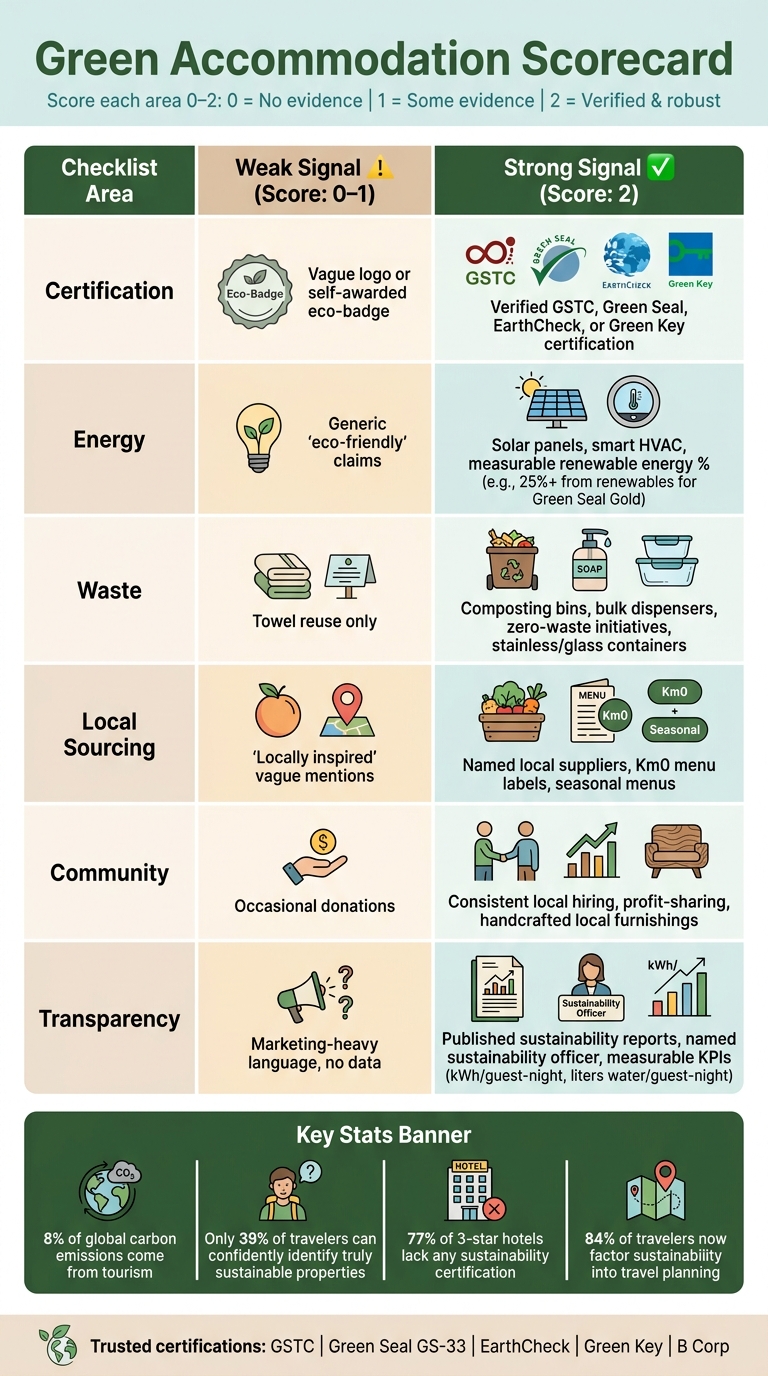
How to Spot Green vs. Greenwashed Hotels: A Visual Checklist
This checklist transforms vague eco-friendly claims into clear, actionable criteria to help you evaluate your stay.
Certifications Worth Trusting
When assessing eco-labels, look for third-party accreditation by the Global Sustainable Tourism Council (GSTC). Use the GSTC Certified Hotels Directory to confirm if a certification comes from a GSTC-accredited organization. It's worth noting that the GSTC itself does not certify hotels. Instead, it accredits organizations that certify properties, ensuring a higher standard of neutrality and thoroughness.
"GSTC Certification is a third-party audited certification with the highest level of impartiality and credibility. In light of the publications of regulations such as EU Green Claims, it is important for businesses to verify their sustainable claims by a third party." - Global Sustainable Tourism Council [6]
In the U.S., Green Seal (GS-33) offers Bronze, Silver, and Gold certifications. For the Gold level, properties must meet advanced benchmarks, such as sourcing at least 25% of energy from renewables or achieving a 10% reduction in waste [8]. EarthCheck uses a scientific approach, beginning with a benchmarking phase that tracks energy, water, waste, and carbon emissions before granting full certification [7]. Meanwhile, Green Choice caters to smaller or independent hotels, evaluating factors like environmental impact, social responsibility, and operational practices [9].
Interestingly, about 77% of 3-star hotels still lack any sustainability certification [9]. Even one credible, independently-audited certification can significantly distinguish a property from its competitors.
Once you’ve verified certifications, you can dig deeper by asking specific questions.
Questions to Ask Before You Book
The way a property responds to your questions can reveal a lot. Vague or rehearsed answers might signal greenwashing, while detailed and confident responses suggest genuine efforts [10].
Here are some key questions to consider:
- What percentage of your energy comes from renewable sources?
- What is your current waste diversion rate?
- Which local farms or suppliers do you partner with?
- Do any buildings on your property have LEED certification? If so, at what level?
- What portion of your staff, including management, is hired locally?
Be cautious of properties promoting activities like elephant rides or swimming with captive dolphins - these often contradict claims of ethical or sustainable practices [11].
Once you’ve gathered this information, you can compare properties systematically.
How to Compare Properties Side by Side
A straightforward scoring system can help you evaluate sustainability across different properties. Use a 0–2 scale for each area: 0 means no evidence of sustainable practices, 1 indicates some evidence, and 2 reflects verified, robust efforts [10].
| Checklist Area | Weak Signal | Strong Signal |
|---|---|---|
| Certification | Vague logo or no badge | Verified certification from a recognized organization |
| Energy | Generic eco-claims | Solar panels, smart HVAC systems, or measurable energy data |
| Waste | Limited efforts (e.g., towel reuse) | Composting, bulk dispensers, or zero-waste initiatives |
| Local Sourcing | Generic "locally inspired" mentions | Named local suppliers or seasonal menus |
| Community | Occasional donations | Consistent local hiring and profit-sharing initiatives |
| Transparency | Marketing-heavy language | Published sustainability reports with clear, measurable goals |
The higher the combined score, the more a property demonstrates genuine commitment to sustainability. A lower score might indicate the need for further investigation.
Green Practices You Can See and Verify
Once you've scored a property on its sustainability claims, it's time to verify them with visible, on-site indicators. These tangible features help confirm whether a property is genuinely eco-conscious or just making empty promises.
Energy and Water Efficiency Indicators
When it comes to energy efficiency, the signs are often easy to spot. Look for LED lighting in guest rooms and common areas, occupancy sensors that turn off lights and adjust power when rooms are empty, and rooftop solar panels in photos or even on satellite maps. A standout example is Bardessono Hotel and Spa in Napa Valley, which operates 940 rooftop solar panels and a geothermal system with 72 wells drilled 300 feet deep. This system powers heating, cooling, and hot water for the property, earning it a LEED Platinum certification [12]. They also use Inncom Systems' occupancy sensors to automatically manage lighting and thermostats in unoccupied rooms [12].
"A hotel can provide a fully luxurious guest experience and be green at the same time." - Bardessono Hotel and Spa [12]
For water conservation, check for aerators on faucets, high-efficiency showerheads, and dual-flush toilets. Some properties go a step further, incorporating rainwater harvesting systems for irrigation or decorative water features [14]. For instance, The Scarlet in Cornwall uses reed-bed treatment systems to recycle wastewater, which is then reused for irrigation and toilet flushing [14]. If you see reed beds, constructed wetlands, or visible water storage tanks, these are strong indicators of an active water recycling program.
Beyond energy and water efficiency, waste reduction practices offer another layer of visible proof.
Waste Reduction and Materials
In the bathroom, the presence of bulk dispensers for soap and shampoo signals a serious effort to cut down on plastic waste. Properties that replace single-use plastic bottles with glass carafes, stainless steel containers, or clay jars are actively reducing their environmental impact.
Dining areas also reveal a lot. Look for compostable take-out containers, "Km0" labels on menus (indicating locally sourced ingredients), and composting bins. Post Ranch Inn in Big Sur provides guests with reusable stainless steel water bottles to take home and operates a comprehensive recycling program for paper, cardboard, cans, glass, and aluminum [15]. Meanwhile, Fogo Island Inn uses flax-based linens instead of traditional cotton and collects rainwater for use in toilets, laundry, and kitchen appliances [3].
Indoor Air Quality and Guest Health
Indoor air quality is often overlooked but plays a huge role in guest comfort. Key indicators include smoke-free rooms, natural ventilation, and the use of fragrance-free or non-toxic cleaning products. Windows that open to balconies or patios suggest the property prioritizes fresh air over mechanical cooling systems. Fogo Island Inn, for example, uses heat recovery ventilators (HRVs) to exchange the air every 15 minutes, ensuring fresh air circulation without wasting energy [3].
For laundry and cleaning, ask the front desk if they use biodegradable, hypoallergenic detergents. Properties that can provide specific product names or supplier details are far more trustworthy than those offering vague assurances. As The Sakala Resort Bali wisely states:
"Sustainability without measurement is just intention." [13]
This principle applies to air quality just as much as it does to energy or water use. By paying attention to these visible and verifiable practices, you can make more informed choices when booking eco-friendly accommodations.
How to Spot Greenwashing and Check Real Claims
Understanding how to spot greenwashing is key to ensuring your stay is genuinely eco-friendly. True sustainability goes beyond flashy marketing and vague promises. Unfortunately, greenwashing is common in the hospitality industry, and it’s becoming harder to detect as tactics grow more sophisticated.
Signs of Greenwashing
One major red flag is the use of vague language without concrete evidence. Terms like "eco-friendly" or "green" are often thrown around without any real explanation. As Impact Travel Alliance aptly explains:
"The words 'eco', 'green', 'sustainable', and 'responsible', on a hotel website or a tour brochure, mean almost nothing on their own. They are decorative. A leaf icon, a soft green palette... None of that is evidence. It is mood lighting." – Impact Travel Alliance
Another common tactic is the "towel card" approach, where a property highlights linen reuse as its primary sustainability effort. While this reduces laundry costs, it often masks a lack of deeper environmental initiatives.
Also, watch out for properties that shift the burden of environmental responsibility to guests. For example, charging extra for carbon offsets or asking guests to opt out of housekeeping services "to help the planet" might indicate the property itself hasn’t made meaningful operational changes, like upgrading energy systems or adopting renewable resources.
Finally, be wary of self-awarded eco-badges. If an eco-logo doesn’t link to an independent certifying body, it might lack credibility. A notable example is Booking.com’s "Travel Sustainable" badge program, which faced backlash in 2024 for using lax criteria that allowed minimally sustainable properties to appear environmentally responsible.
To avoid falling for these tactics, use the following steps to verify green claims.
3 Steps to Verify a Property's Green Claims
Here’s how you can ensure a property’s sustainability efforts are genuine:
-
Check for Specific Data on the Website
Look for a dedicated sustainability page that provides measurable data, like renewable energy usage percentages, water consumption rates, or waste management metrics. A named sustainability officer is also a good sign. Vague adjectives won’t cut it - ask direct questions via email about renewable energy, audits, or local hiring practices before booking. -
Verify Certifications with Trusted Sources
Check if eco-certifications are linked to independent organizations like GSTC, Green Key, EarthCheck, or B Corp. Make sure the certification is current and applies to the specific property, not just the parent company. -
Evaluate During Your Stay
Once you’re on-site, see if the property’s claims hold up. Are they using bulk dispensers instead of single-use toiletries? Is there a recycling system in place? Engage with staff to learn more about their sustainability efforts. If their responses are vague or inconsistent, it’s a sign that the green claims might not be genuine.
Conclusion: Putting the Checklist to Use
Choosing eco-friendly accommodations doesn't have to be overwhelming. It boils down to a few straightforward habits: define your priorities before you start searching, focus on specific and measurable details instead of vague claims, and cross-check those claims with independent certifications and guest reviews.
Think of each booking as a mini-audit. Before you hit "reserve", take about 15 minutes to look into the property's energy and water policies, read guest feedback for authentic insights, and confirm that any eco-certifications are tied to recognized organizations like GSTC, Green Key, or EarthCheck. Sustainability expert Ava Marlowe puts it best:
"Prioritize measurable commitments over aesthetic cues. Ask for kWh/guest-night, liters of water/guest-night, percent of food purchased locally, and the latest audit date - these numbers tell the real story." [16]
This approach not only reinforces your dedication to sustainable travel but also ensures you're making informed decisions.
Over time, this checklist becomes an even more powerful tool. Each trip helps you identify patterns - whether certain regions, property types, or brands consistently deliver on their promises or just rely on surface-level gestures. Keeping a personal list of properties that truly meet their sustainability claims can save you time and make future planning more efficient.
By using this checklist, your travel decisions extend beyond personal benefits. They contribute to a larger demand for genuine sustainability in the industry. With 84% of travelers now factoring sustainability into their planning [1], this growing demand pushes the hospitality sector to adopt more meaningful and transparent practices. Every booking rooted in evidence - not just a flashy logo - sends a clear signal to the industry.
"Choosing eco-friendly accommodation isn't about perfection; it's about making better choices wherever you can." - Letitia Smith, Travel Insurance Expert [17]
FAQs
Which eco-certifications actually matter?
When evaluating sustainability efforts, it's better to prioritize third-party, independently audited certifications rather than relying on self-declared claims. Some well-regarded programs include LEED (for energy efficiency), EarthCheck (focused on operational impact), Green Globe, Green Key, B Corp, and certifications recognized by the Global Sustainable Tourism Council (GSTC).
To ensure authenticity, check certifications in their official directories - this helps you avoid outdated or even fraudulent badges. Additionally, look for clear, transparent practices such as waste reduction, use of renewable energy, and water conservation to confirm that the sustainability efforts are legitimate.
How can I verify a hotel’s green claims fast?
To verify a hotel's environmental claims, start by checking for third-party certifications such as EarthCheck, Green Key, LEED, or B Corp. Make sure these certifications are up-to-date and specifically linked to the property you're researching. Next, visit the hotel's website and look for concrete data - like waste reduction or energy usage metrics - rather than relying on generic phrases like "eco-friendly." Finally, dive into guest reviews to see if their practices hold up in reality. Look for mentions of things like refillable toiletries or proper waste sorting to gauge their actual commitment.
What are the biggest greenwashing red flags?
Keep an eye out for signs of greenwashing, especially when companies use vague buzzwords like "eco-friendly" or "sustainable" without offering concrete evidence to support their claims. These terms can sound impressive but often lack the data to back them up.
Another common tactic is emphasizing minor, symbolic gestures - like encouraging towel reuse in hotels - while ignoring larger environmental issues such as energy consumption or water usage. These efforts may appear responsible but can distract from the bigger picture.
Be wary of outdated certifications or claims that can't be verified. Instead of relying on flashy adjectives or marketing jargon, focus on measurable outcomes and transparent data to determine whether a company is genuinely committed to sustainability.


