

10 Science-Backed Ways to Improve Sleep Quality
Small, science-backed habit changes—light timing, screen limits, routine, exercise and bedroom setup—can dramatically improve sleep quality.


Improving your sleep doesn't have to be complicated. Here are 10 proven tips backed by science to help you sleep better:
- Get Bright Light During the Day: Morning sunlight or a light therapy lamp can regulate your sleep-wake cycle.
- Cut Down on Blue Light at Night: Dim lights, use warm-tone filters, or try blue light-blocking glasses before bed.
- Stick to a Sleep Schedule: Go to bed and wake up at the same time daily to align your body clock.
- Exercise Regularly: Aim for 30 minutes of moderate activity, but avoid intense workouts close to bedtime.
- Use Relaxation Techniques: Try deep breathing, progressive muscle relaxation, or journaling to calm your mind.
- Set Up a Sleep-Friendly Bedroom: Keep your room dark, quiet, and cool (60–67°F) for optimal rest.
- Limit Caffeine and Alcohol at Night: Avoid caffeine 6+ hours before bed and finish alcohol 3–4 hours prior.
- Keep Naps Short: Limit naps to 20–30 minutes and avoid late-afternoon snoozing.
- Eat Sleep-Supporting Foods: Incorporate magnesium-rich and tryptophan-packed foods like almonds or turkey.
- Consider Melatonin Supplements: Use low doses (0.3–0.5 mg) short-term for jet lag or irregular schedules.
Even small changes can improve your sleep quality significantly. Focus on consistency and build habits that support your natural rhythms.
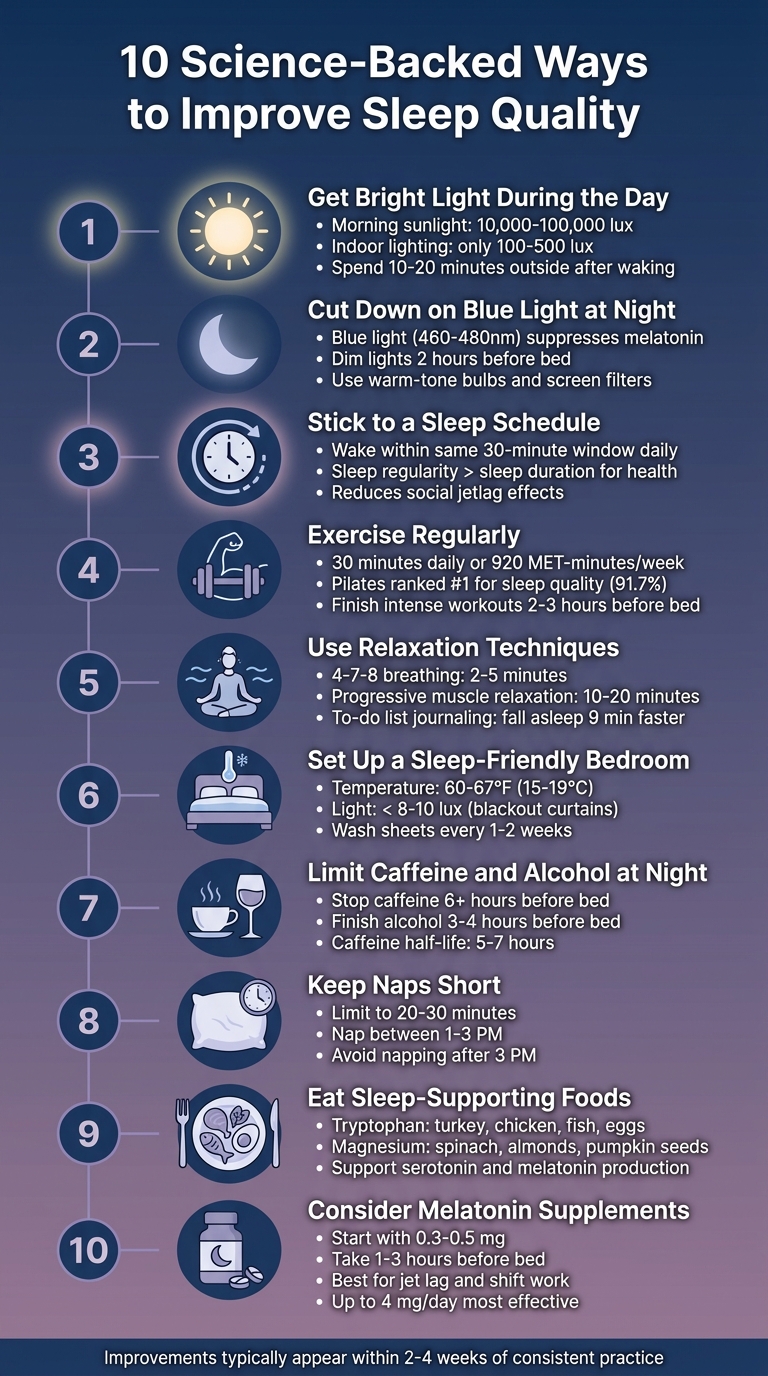
10 Science-Backed Ways to Improve Sleep Quality
1. Get More Bright Light During the Day
Why Light Exposure Matters for Sleep
Your body's internal clock, known as the circadian rhythm, relies heavily on light to stay in sync. Bright light exposure, especially in the morning, plays a crucial role in regulating this rhythm by influencing the brain's suprachiasmatic nucleus (SCN). When you're exposed to bright light early in the day, it signals the SCN to reduce melatonin - a hormone that promotes sleep - and activate the cortisol awakening response, which helps you feel alert and awake[2][4].
The intensity of the light you encounter is key. For instance, direct sunlight on a clear morning can range from 10,000 to 100,000 lux, while even a cloudy day provides around 1,000 to 10,000 lux. Compare this to indoor lighting, which typically only emits 100–500 lux[2][4]. As the Sleep Foundation highlights:
"Light is the most important external factor affecting sleep."[4]
How to Incorporate Morning Light Into Your Routine
Making this a part of your day is simple. Spend 10–20 minutes outside shortly after waking up. If the weather is overcast, aim for 20–30 minutes instead. For those unable to get natural sunlight - like individuals working in windowless environments - a high-powered light therapy lamp can be an effective alternative[4].
What You Can Expect
Morning light exposure not only helps regulate your circadian rhythm but also makes it easier to fall asleep consistently at night. Over time, you'll likely notice feeling more alert during the day and naturally sleepier in the evening[2].
Things to Keep in Mind
While morning light is generally safe, timing is everything. Exposure at the wrong time of day could disrupt your circadian rhythm instead of stabilizing it[6]. Additionally, people with chronic sleep issues, bipolar disorder, or epilepsy should consult a healthcare provider before trying light therapy, as it might trigger unwanted effects[2][5].
This article is for informational purposes only and is not medical, health, fitness, or wellness advice. Always consult a qualified healthcare professional before making changes to your sleep routine or health practices.
sbb-itb-3d8e4fc
2. Cut Down on Blue Light at Night
Scientific Evidence Supporting the Method
Blue light, particularly wavelengths between 460–480 nanometers, plays a key role in how your brain prepares for sleep. The photoreceptors in your eyes are especially sensitive to this range of light and send signals to the brain's master clock, known as the SCN (suprachiasmatic nucleus) [2]. Exposure to blue light in the evening suppresses melatonin - a hormone that tells your body it's time to wind down.
Research from Chuck Czeisler's lab at Harvard revealed that just 15 seconds of bright light in the evening can significantly suppress melatonin [3]. Even dim light, as low as 10 lux (barely noticeable to the human eye), can reduce melatonin levels in a dark-adapted eye [2]. For perspective, typical indoor lighting ranges from 100 to 500 lux, making it easy to see how evening light exposure can disrupt your sleep cycle.
Ease of Implementation in Daily Life
Cutting back on blue light exposure doesn’t have to be complicated. A few simple adjustments can make a big difference:
- Dim overhead lights a couple of hours before bedtime.
- Replace blue-spectrum LED bulbs with warm-toned options, like amber or red, in your bedroom and living areas.
- Use night mode or warm-tone filters on your devices and lower screen brightness to a comfortable level.
Eliminate other sources of light in your bedroom, such as LED indicators on electronics or chargers. Blackout curtains - rated to block at least 99% of light - can be particularly useful if streetlights shine into your room. If blackout curtains aren’t feasible, a sleep mask can serve as a portable and effective alternative. These small steps can help align your body’s natural rhythms with your environment.
Potential Benefits for Sleep Quality
Reducing exposure to blue light in the evening allows your body to produce melatonin as it should, making it easier to fall asleep and stay asleep. Over time, this can help establish a more consistent sleep-wake cycle, leaving you naturally drowsy as bedtime approaches and more refreshed in the morning.
Possible Limitations or Risks
While blue light–blocking glasses are heavily marketed, their effectiveness varies. Many clear-lens options block only a small amount of blue light, offering little improvement for sleep [7]. A 2026 Cochrane review found that these lenses don’t significantly reduce eye strain or improve sleep compared to regular lenses [7]. For noticeable results, glasses need a distinct amber or yellow tint to filter the blue light emitted by LEDs effectively, but this can noticeably alter color perception [7].
It’s also important to avoid blocking blue light during the day. Daytime exposure to natural blue light is crucial for regulating your sleep-wake cycle, keeping you alert, and boosting your mood [8][9]. Wearing blue light blockers all day can disrupt your circadian rhythm rather than help it. Timing is everything: embrace blue light in the morning and shield yourself from it in the evening.
This article is for informational purposes only and is not medical, health, fitness, or wellness advice. Always consult a qualified healthcare, medical, fitness, or wellness professional before making decisions, starting a new routine, changing your diet, using supplements, or acting on any health-related information.
3. Keep a Regular Sleep Schedule
Scientific Evidence Supporting the Method
Your body’s internal clock, known as the suprachiasmatic nucleus (SCN), plays a key role in regulating sleep and alertness. For it to function properly, consistency is essential. When you frequently change your bedtime and wake-up times, the release of hormones like melatonin and cortisol gets out of sync, disrupting your natural rhythm.
A 2024 U.K. Biobank study revealed that sleep regularity is a stronger predictor of mortality risk than the total amount of sleep you get [11]. Similarly, a five-year Harvard review analyzing over 40,000 studies linked consistent bedtimes to better alertness, improved cardiovascular health, and reduced inflammation [11].
"Sleep regularity is a stronger predictor of all-cause mortality compared to sleep duration."
- Shadab Rahman, Neuroscientist, Brigham and Women's Hospital [11]
Another common issue is "social jetlag", which happens when your weekday and weekend sleep schedules don’t align. Research from Ludwig Maximilian University of Munich shows that most people in industrialized societies experience about two hours of social jetlag on average [2]. This inconsistency can create stress and impair cognitive function, similar to the effects of crossing multiple time zones.
Ease of Implementation in Daily Life
The easiest and most impactful change you can make is to anchor your wake-up time. Aim to wake up within the same 30-minute window every day, even on weekends, and set your bedtime at least seven hours earlier [13]. Interestingly, your wake time plays a bigger role in stabilizing your circadian rhythm than your bedtime [2]. Even after a late night, resist the urge to sleep in.
If you need to shift your sleep schedule, do it gradually. Adjust your bedtime or wake-up time by 15 to 30 minutes over several days to avoid shocking your system [10][13]. Also, expose yourself to natural outdoor light for 10–20 minutes shortly after waking up. This simple habit helps reinforce your internal clock [2][10].
Potential Benefits for Sleep Quality
A consistent sleep schedule doesn’t just keep your internal clock in check - it also boosts your overall health. Just like exposure to morning light and limiting blue light at night can improve your sleep, regularity strengthens these effects. When your body can predict sleep times, it optimizes processes like melatonin production, cell repair, memory consolidation, and even brain detoxification.
In a 2025 University of Tsukuba study involving 458 older adults, those with regular sleep routines had higher levels of brain-derived neurotrophic factor (BDNF) - a protein essential for memory and brain adaptability - compared to those with irregular schedules [11].
"Maintaining a consistent sleep-wake schedule may serve as one of the simplest, most overlooked ways to protect long-term health."
- Wendy Troxel, Senior Behavioral Sleep Scientist, RAND Corporation [11]
Possible Limitations or Risks
Maintaining a regular sleep schedule isn’t always easy. Shift work, frequent travel across time zones, or social obligations that push your bedtime later can make consistency difficult. Additionally, your natural chronotype - whether you’re more of a morning person or a night owl - can make sticking to a set schedule feel unnatural [2][10].
A 2023 consensus from the National Sleep Foundation suggests that catching up on sleep during the weekend can help if you’ve had a particularly sleep-deprived week. However, relying on this strategy long-term can disrupt your circadian rhythm if it leads to large swings in your schedule [12]. Gradual changes and a focus on long-term consistency are key to overcoming these challenges.
This article is for informational purposes only and is not medical, health, fitness, or wellness advice. Always consult a qualified healthcare professional before making changes to your sleep habits or health routine.
4. Exercise Regularly
Scientific Evidence Supporting the Method
Regular exercise plays a vital role in preparing your body for restful sleep, much like keeping a consistent sleep schedule or managing light exposure.
When you exercise, your core body temperature rises, and the subsequent cooling (a drop of about 0.9–1.8°F) signals your body that it's time to wind down [16]. Exercise also helps regulate your internal clock, boosts melatonin and growth hormone production, and reduces cortisol levels - all of which contribute to deeper, more restorative sleep [16][18].
A study analyzing over 4 million nights of data from 14,689 WHOOP platform users (September 2021 to August 2022) found that high-intensity exercise, especially when done within four hours of bedtime, could increase nocturnal resting heart rate and lower heart rate variability. More specifically, intense workouts ending two hours after your usual bedtime were associated with a 42.6-minute reduction in sleep duration [14]. These findings highlight the importance of timing and intensity when it comes to exercise and sleep quality.
Even moderate physical activity, when incorporated thoughtfully into your routine, can make a noticeable difference in how well you sleep.
Ease of Implementation in Daily Life
To enjoy the sleep benefits of exercise, aim for 30 minutes of moderate activity daily, or about 920 MET-minutes per week [17][15]. A 2025 meta-analysis of 86 randomized controlled trials involving 7,276 participants ranked Pilates as the most effective exercise for improving sleep quality (91.7% ranking probability), followed by aerobic exercise at 69.7% [19].
Timing your workouts is equally important. Moderate evening exercise is generally fine if it ends at least 90 minutes before bedtime [20]. However, vigorous workouts should wrap up two to three hours before bed to allow your heart rate and body temperature to settle [22]. A simple "talk test" can help you gauge intensity: if you can talk but not sing during your workout, you're likely at a moderate level [15].
"Individuals aiming to improve sleep health may benefit from concluding exercise at least 4 hours before sleep onset or electing lighter strain exercises within this window."
- Nature Communications [14]
Potential Benefits for Sleep Quality
Consistent exercise can lead to measurable improvements in sleep. For instance, 12 weeks of high-intensity interval training (HIIT) has been shown to increase total sleep time by 51 minutes and improve sleep efficiency by 12% [18]. For individuals with sleep apnea, regular physical activity may reduce the Apnea-Hypopnea Index by around 32% [18]. Women with insomnia who engage in at least 30 minutes of daily exercise may gain an average of 15 extra minutes of sleep per night [21]. These benefits create a positive cycle: better sleep provides the energy needed to maintain an active lifestyle.
Possible Limitations or Risks
The relationship between exercise and sleep follows a U-shaped curve, meaning there's a sweet spot for activity. Overtraining can overactivate your sympathetic nervous system, impairing sleep quality [16]. For those with chronic insomnia, exercising within four hours of bedtime may lead to overstimulation and difficulty falling asleep [20]. Your chronotype also plays a role: while "night owls" may handle evening workouts well, "early birds" might find them disruptive [20]. If evening exercise interferes with your sleep, consider shifting your workouts to the morning or afternoon to better align with your body's natural rhythm [20].
This article is for informational purposes only and is not medical, health, fitness, or wellness advice. Always consult a qualified healthcare professional before making decisions regarding your health or exercise routine.
5. Use Relaxation Techniques Before Bed
Scientific Evidence Supporting the Method
When stress activates your body's HPA axis, it leads to elevated cortisol levels. This can suppress melatonin production and raise core body temperature, both of which interfere with sleep. Relaxation techniques counter this by engaging the parasympathetic nervous system, which helps the body shift into a calmer state.
The American Academy of Sleep Medicine suggests relaxation therapy as a possible treatment for chronic insomnia in adults [25]. Studies show these techniques address hyperarousal - a state of heightened mental and physical activity - that contributes to sleep struggles in about one-third of adults [23]. Specific breathing patterns, like the physiological sigh (a double inhale followed by a long exhale), can quickly calm the body by stimulating the vagus nerve [2].
A 2019 meta-analysis, which reviewed 18 studies with 1,654 participants, found that mindfulness meditation significantly improved sleep quality compared to educational approaches [25]. Even simple actions, such as writing a detailed to-do list for the next day, can help people fall asleep about 9 minutes faster than journaling about completed tasks. Interestingly, the more specific the list, the more effective it was in reducing the time it took to fall asleep [24].
These findings highlight practical ways to lower stress and promote better sleep.
Ease of Implementation in Daily Life
Relaxation techniques are easy to incorporate into your routine and can be adjusted to fit your schedule. For example:
- 4-7-8 Breathing Method: This takes just 2–5 minutes. Breathe in for 4 seconds, hold for 7 seconds, and exhale for 8 seconds. Repeat four times to help lower your heart rate and blood pressure [26].
- Progressive Muscle Relaxation (PMR): Focus on tensing each muscle group for 5 seconds, then relaxing for 10–20 seconds, starting from your toes and working upward [26].
- To-Do List Journaling: Spend 5 minutes writing down tasks for the next day. This can help you unload worries and reduce mental chatter [24].
- Warm Bath or Shower: Taking one at around 104°F, 60–90 minutes before bed, helps cool your core body temperature by 2–3°F - a natural signal for sleep [24].
Potential Benefits for Sleep Quality
Different methods can address specific sleep challenges. The table below breaks down the best techniques based on common issues:
| Technique | Time Required | Best For |
|---|---|---|
| 4-7-8 Breathing | 2–5 min | Anxiety, racing thoughts |
| Progressive Muscle Relaxation | 10–20 min | Physical tension |
| Warm Bath/Shower | 10–15 min | Regulating body temperature |
| To-Do List Journaling | 5 min | Racing thoughts, unfinished tasks |
| Mindfulness Meditation | 5–20 min | Anxiety, mental overactivity |
Research backs these approaches. For example, a 2015 study involving 60 older adults with chronic insomnia found mindfulness-based stress reduction (MBSR) programs effective in improving sleep. Similarly, a 2018 analysis of 2,776 college students showed that relaxation and mindfulness practices enhanced both sleep quality and mental health [25].
Possible Limitations or Risks
While relaxation techniques are generally safe, they may not work for everyone and are not a replacement for professional treatment of serious sleep disorders like obstructive sleep apnea [25]. Overexerting yourself to "force" sleep can also backfire by increasing stress.
If sleep doesn't come within 15–20 minutes, leave the bed and engage in a quiet, dimly lit activity to avoid associating your bed with frustration [26]. Additionally, individuals with epilepsy, certain psychiatric conditions, or a history of trauma should consult a healthcare provider before starting intensive relaxation or meditation practices [26]. Physical activities like yoga also carry a small risk of minor injuries, such as strains in the knees or legs [25].
"Insomnia is not primarily a sleep problem; it is an arousal problem."
This article is for informational purposes only and does not constitute medical, health, fitness, or wellness advice. Always consult a qualified healthcare professional before making changes to your sleep habits or trying new treatments.
6. Set Up Your Bedroom for Better Sleep
Scientific Evidence Supporting the Method
The environment in your bedroom plays a big role in how well you sleep. Adjusting factors like light, noise, and temperature can help your body naturally prepare for rest. Studies have found that noise (75%), lighting (72%), and bedding (70%) are among the most common environmental factors that disturb sleep [29]. For instance, your core body temperature needs to drop by 1–2°F before you can fall asleep, and darkness is key for melatonin production [2].
Even light levels as low as 10 lux can suppress melatonin and trigger your body's stress responses, making it harder to achieve deep sleep [2][29]. On the flip side, optimizing your bedroom setup can improve how quickly you fall asleep by 30–55% [29].
"A relaxing environment is essential for a good night's rest. Studies have shown people simply sleep better when their bedroom is optimized for temperature, noise and light levels, and comfort." - Sleep Foundation [27]
Ease of Implementation in Daily Life
Making your bedroom more sleep-friendly doesn’t require a complete overhaul. A few small changes can make a big difference. Start by setting your thermostat to 60–67°F - this range supports the natural drop in body temperature needed for sleep [29]. If the room feels too cold, layering with extra blankets is better than raising the temperature, as a warm room can disrupt sleep [2].
For lighting, blackout curtains that block 99% or more of light are highly effective, but if they’re not an option, a sleep mask works too [2]. To manage noise, try a white noise machine or a fan to help mask sudden disruptions [29].
Bedding also matters. Wash your sheets every 1–2 weeks and choose breathable fabrics like organic cotton, bamboo, or Tencel lyocell to reduce allergens and prevent overheating [27][30]. These simple adjustments can make falling asleep easier and improve the quality of your rest.
Potential Benefits for Sleep Quality
Optimizing your bedroom not only helps physically but also mentally. Using your bedroom only for sleep strengthens the connection between your bed and rest.
| Element | Ideal Specification | Benefit |
|---|---|---|
| Temperature | 60–67°F (15–19°C) | Helps lower core body temperature [29] |
| Light | < 8–10 lux | Prevents melatonin suppression [2] |
| Noise | Consistent/Masked | Reduces stress responses [29] |
| Hygiene | Wash sheets every 1–2 weeks | Keeps allergens like dust mites at bay [27] |
Another key tip is stimulus control. If you can’t fall asleep within 20 minutes, leave the bedroom and do something calming in dim light until you feel drowsy. This prevents your brain from associating the bed with wakefulness [28].
Possible Limitations or Risks
While creating a sleep-friendly bedroom is effective for most, it’s not a cure-all. Conditions like obstructive sleep apnea require medical attention [28]. Additionally, some people may develop orthosomnia - anxiety about achieving perfect sleep conditions - which can backfire. The goal is steady improvement, not perfection.
It’s also worth noting that tools like blackout curtains and white noise machines aren’t universally effective. For example, some people find pink or brown noise more soothing than white noise, but recent studies suggest pink noise might disrupt REM sleep [2].
"We are creatures of habit and finding ways to internalize a routine is the path to success." - David Rosen, MD, Sleep Medicine Physician [28]
This article is for informational purposes only and is not medical, health, fitness, or wellness advice. Always consult a qualified healthcare, medical, fitness, or wellness professional before making decisions, starting a new routine, changing your diet, using supplements, or acting on any health-related information.
7. Reduce Caffeine and Alcohol in the Evening
Scientific Evidence Supporting the Method
Cutting back on caffeine and alcohol in the evening can make a big difference in improving your sleep. Both substances affect your body in ways that disrupt restful sleep. Caffeine, as a stimulant, not only delays the time it takes to fall asleep but also reduces the amount of deep sleep you get. Research shows that consuming caffeine as much as 6 hours before bed can interfere with falling asleep [32]. With a half-life of 5 to 7 hours, even a 200 mg dose of caffeine at 2 PM can leave 25–50 mg active in your system by midnight [2].
Alcohol, on the other hand, may seem like it helps you fall asleep faster, but it ultimately lowers the quality of your sleep. Nearly 90% of evening drinkers report sleep-related issues [31]. Alcohol reduces REM sleep - essential for memory and emotional health - and causes "rebound activation" later in the night, leading to frequent wake-ups, night sweats, and even nightmares [6,39].
"Alcohol and sleep are not friends. They do not mix well." - Abhinav Singh, MD, MPH, FAASM [31]
Both caffeine and alcohol also act as diuretics, which can lead to more nighttime trips to the bathroom. Additionally, alcohol relaxes the muscles in your throat, potentially worsening snoring and sleep apnea [31].
Ease of Implementation in Daily Life
Adjusting your daily habits to reduce caffeine and alcohol intake is straightforward with a little planning. For caffeine, aim to stop consuming it at least 4 to 6 hours before bedtime. Some experts even recommend a longer gap - up to 10–12 hours - to fully protect your deep sleep cycles [2]. With alcohol, finishing your last drink 3 to 4 hours before bed gives your liver enough time to metabolize it properly [36,39]. Typically, the liver processes about one drink per hour [31].
If you're particularly sensitive to caffeine, consider setting an earlier cutoff time. Stick to standard drink sizes - 5 oz of wine, 12 oz of beer, or 1.5 oz of spirits - and limit alcohol to one drink per day for women and two for men [33]. Keep in mind that factors like genetics and medications can amplify the effects of both caffeine and alcohol, so adjust your habits accordingly. Like managing light exposure and creating a calming sleep environment, these changes work together to support your natural sleep cycle.
Potential Benefits for Sleep Quality
Reducing caffeine and alcohol in the evening can lead to noticeable improvements in sleep quality. Many individuals have reported resolving sleep issues after cutting back, as noted by Dr. Nancy Foldvary-Schaefer from the Cleveland Clinic. She observed that some of her patients completely overcame their sleep disorders by reducing alcohol consumption [33]. By avoiding these substances before bed, you’re more likely to fall asleep faster, stay asleep longer, and enjoy restorative REM and deep sleep.
Possible Limitations or Risks
Using alcohol as a sleep aid often leads to a cycle of poor sleep, daytime fatigue, and increased caffeine consumption. Breaking this cycle can be tough, especially since up to 75% of people with alcohol dependence experience insomnia during withdrawal and recovery [31].
If you feel dependent on alcohol to fall asleep or experience anxiety when trying to reduce your intake, it’s important to seek professional help. Dr. Abhinav Singh emphasizes, "Don't drink away your sleep problems. Seek help sooner" [31]. Taking small, gradual steps can make these changes more manageable and less stressful.
This article is for informational purposes only and is not medical advice. Always consult a qualified healthcare professional before making any changes to your routine or diet.
8. Limit Long Naps During the Day
Scientific Evidence Supporting the Method
Keeping naps short is a simple yet powerful way to maintain a steady sleep cycle. Quick naps can recharge your energy, but longer ones might throw off your natural sleep rhythm. Here's why: naps over 30 minutes often lead to deeper sleep stages, and waking up from those can leave you feeling groggy instead of refreshed[34][35]. Plus, napping too late in the day - after 3 p.m. or within eight hours of bedtime - can make falling asleep at night an uphill battle[34]. For most people, the sweet spot is a nap lasting 30 minutes or less, ideally taken between 1 p.m. and 3 p.m.[34].
"A short early afternoon nap can help you feel more alert and boost memory and performance. If your naps are getting longer and more frequent, it can be a sign that you are sleep deprived or not getting enough quality sleep." - Pranshu Adavadkar, MD, Sleep Medicine Physician[34]
Ease of Implementation in Daily Life
Keeping naps brief doesn't have to be complicated. A few small adjustments can help you stick to this habit. For instance, set a timer for 15–30 minutes to ensure you wake up before slipping into deeper sleep stages[34][35]. Creating a cozy nap environment can also make a difference - try using blackout curtains, an eye mask, or white noise to fall asleep faster and make the most of your short rest[34].
Potential Benefits for Sleep Quality
Short naps, when timed right, can do wonders for your overall sleep strategy. These quick rests can improve focus, memory, and mood without leaving you feeling groggy[35]. Studies even show that a brief nap can boost problem-solving skills by 2.7 times compared to skipping a nap altogether[37]. On top of that, regular short naps have been linked to maintaining greater brain volume, which equates to preserving brain health by as much as 2.6 to 6.5 years[37].
Possible Limitations or Risks
On the flip side, long naps can interfere with your ability to get quality sleep at night, potentially leading to chronic insomnia[36].
"Long naps undermine nighttime sleep, which is when we get our most restorative sleep. This can set you up for chronic insomnia." - Dr. Nancy Foldvary-Schaefer, Cleveland Clinic[36]
If you find yourself needing long naps frequently, it might point to a deeper issue, such as a sleep disorder like narcolepsy or sleep apnea[34][36].
Fix Your SLEEP NATURALLY: 10 Proven Tips Doctor Explains
9. Eat Foods That Support Sleep
When it comes to improving sleep, what you eat can be just as important as light exposure, exercise, and relaxation techniques.
Scientific Evidence Supporting the Method
Certain foods can make a noticeable difference in sleep quality. Nutrient-rich options containing tryptophan, magnesium, and compounds that aid serotonin and melatonin production are particularly helpful. For example, lean proteins like turkey, chicken, fish, and egg whites are packed with tryptophan, an amino acid that supports serotonin production. Magnesium-rich foods, such as spinach, pumpkin seeds, almonds, and black beans, also
10. Try Natural Supplements Like Melatonin
Adding melatonin to your sleep routine can complement other strategies, like managing light exposure and practicing relaxation techniques. This supplement, known for its role in regulating sleep cycles, can be especially helpful when other methods need a boost.
Scientific Evidence Supporting the Method
Melatonin works by signaling your brain that it's time to wind down, functioning more like a dimmer switch than a strong sedative [2].
Research backs its effectiveness. A review of 19 randomized controlled trials found that melatonin reduced the time to fall asleep by 7–23.5 minutes and slightly increased total sleep time by 8 minutes [38][39]. Another analysis from 2024, which reviewed 26 studies, showed that doses of up to 4 mg per day deliver the best results [39][40].
This supplement is particularly effective for addressing disruptions to your circadian rhythm, such as jet lag, shift work, or delayed sleep phase syndrome. However, it’s less helpful for chronic insomnia, and the American Academy of Sleep Medicine advises against its use for this condition in adults [2][40].
If your sleep struggles are tied to irregular schedules or time zone changes, melatonin might be a practical addition to your routine.
Ease of Implementation in Daily Life
Melatonin is widely used - more than 27% of U.S. adults report taking it for sleep [42]. It’s available over-the-counter in various forms, including tablets, gummies, liquid drops, and even patches, with an average monthly cost of $5 to $15 [40].
For beginners, start with a low dose of 0.3–0.5 mg, taken 1–3 hours before bedtime, to allow your body to adjust gradually [39][40]. Keep in mind that most commercial products contain doses between 5 and 10 mg, which can result in blood levels far exceeding the natural production of melatonin (0.01–0.08 mg daily) [2][40].
"Melatonin levels rise about two hours before bedtime. Create optimal conditions for it to do its job by keeping the lights low before bed." – Luis F. Buenaver, Ph.D., C.B.S.M., Johns Hopkins sleep expert [43]
Possible Limitations or Risks
While melatonin is generally safe and easy to access, there are some concerns to consider.
Product quality can vary significantly. A 2023 study found that 88% of tested melatonin gummy products contained inaccurate amounts, with actual melatonin levels ranging from 74% to 347% of what was listed on the label [42]. To ensure you’re getting a reliable product, look for third-party certifications from organizations like USP, NSF, or ConsumerLab [38][40].
Side effects are usually mild but can include morning grogginess, vivid dreams, headaches (2.7%), dizziness (2.2%), and nausea (1.8%) [38]. Though non-habit forming, melatonin can interact with certain medications, including blood thinners, diabetes drugs, and immunosuppressants [38]. It’s also not recommended for individuals with depression, bleeding disorders, or seizure disorders, or for those who are pregnant or breastfeeding [44]. Always consult a healthcare provider before starting melatonin, especially if you’re on other medications.
"It's important to note that it's really easy to overcome the effect of melatonin. If you take it and then get on your phone... you will likely overpower the effect." – Lauren Goldman, MD, Sleep-medicine physician [41]
Use melatonin as a short-term solution, ideally for one to two months. If sleep issues persist, seek advice from a healthcare professional to address any underlying causes. When used wisely, melatonin can be a helpful addition to your overall sleep strategy.
This article is for informational purposes only and is not medical, health, fitness, or wellness advice. Always consult a qualified healthcare professional before making changes to your routine, diet, or supplement regimen.
Conclusion
Improving sleep quality doesn’t mean overhauling your entire lifestyle. The ten strategies discussed - from managing light exposure and sticking to a consistent schedule to creating a better bedroom environment and exploring natural supplements - work best when applied regularly. Many adults struggle with getting enough sleep, but practicing good sleep habits can reduce the time it takes to fall asleep by 15–20 minutes and enhance sleep quality by up to 30% [45].
Each tip complements the others to help you build a well-rounded sleep routine. It’s not just about sleeping more hours - it’s about syncing with your body’s natural rhythms. As sleep experts often say:
"The most important structural decision you make about your sleep is your wake time" [2].
Start small, like setting a consistent wake time within a 30-minute range each day. Once that becomes a habit, add other practices like morning light exposure or an evening wind-down routine. Noticeable improvements usually appear within 2 to 4 weeks of consistent effort [45].
Sleep impacts every part of your body, from your immune system and mood to brain function and heart health. Dr. Virend Somers, a cardiologist at Mayo Clinic, puts it bluntly:
"When you don't sleep well, bad things happen" [1].
Even a minor disruption, like a 2-hour difference between weekday and weekend wake times (known as "social jetlag"), can lead to cognitive issues and increase risks of obesity, depression, and heart disease [2].
These strategies are backed by science and act as a long-term investment in your health rather than a quick fix. Dr. Wendy Troxel, a sleep scientist, explains:
"Think of sleep hygiene as an investment in your health" [45].
Track your progress over time and give your body the chance to adjust. The benefits of better sleep habits build over weeks, leading to stronger physical health, sharper mental focus, and improved emotional well-being. Stick with these steps, and you’ll notice lasting improvements in your sleep and overall quality of life.
This article is for informational purposes only and is not medical, health, fitness, or wellness advice. Always consult a qualified healthcare, medical, fitness, or wellness professional before making decisions, starting a new routine, changing your diet, using supplements, or acting on any health-related information.
FAQs
Which sleep tip should I start with first?
Fixing your sleep schedule is the first step toward better rest. Start by setting a consistent routine: go to bed and wake up at the same time every day - even on weekends. This helps regulate your body’s natural sleep-wake cycle. Once your schedule is in place, other strategies, like managing light exposure and creating a calm, restful environment, will work even better.
How long does it take to see better sleep?
It typically takes around three weeks of regular use to see improvements in sleep quality with CPAP therapy. However, the timeline can differ based on personal factors and how consistently the treatment is followed.
When should I see a doctor about my sleep?
If sleep problems persist for more than a few weeks, disrupt your daily routine, or lead to symptoms like daytime fatigue, difficulty focusing, or mood swings, it’s time to consult a doctor. Ongoing sleep issues could signal an underlying condition that requires professional attention.


