

How Plant-Based Diets Support Healthy Aging
Whole-food plant-based meals—beans, whole grains, vegetables, nuts, and seeds—support heart, brain, and metabolic health while monitoring B12 and protein.


A plant-based diet can help you age with better heart, brain, and metabolic health - and it does not have to be fully vegan to help.
I’d sum up the article this way: if you build most meals around beans, lentils, whole grains, vegetables, fruit, nuts, and seeds, and keep ultra-processed foods low, you give yourself a better shot at staying active and mentally sharp as you get older. In one 30-year study, people with the best plant-forward diet quality had 86% higher odds of healthy aging, while higher ultra-processed food intake was tied to 32% lower odds.
Here’s the short version:
- Diet quality matters most. Long-term eating patterns matter more than short-term diet rules.
- Whole plant foods do the heavy lifting. Think oats, beans, greens, berries, brown rice, walnuts, and seeds.
- Heart and blood sugar health may improve. Well-planned vegan diets may lower LDL cholesterol by 10% to 25%, and plant-based eating patterns are linked to 20% to 50% lower type 2 diabetes rates.
- Brain health may improve too. Healthful plant-based eating is linked to 12% lower risk of Alzheimer’s disease and related dementias.
- Some nutrients need planning. Pay close attention to protein, calcium, vitamin D, vitamin B12, and omega-3s, especially after age 50 or 60.
- You do not need to change everything at once. Start with one meal, one swap, or a simple plate formula you can repeat.
A simple way I’d think about it: fill half your plate with vegetables, one-quarter with plant protein, and one-quarter with whole grains, then add a healthy fat like olive oil, avocado, nuts, or seeds.
That’s the core message of the article in plain English.
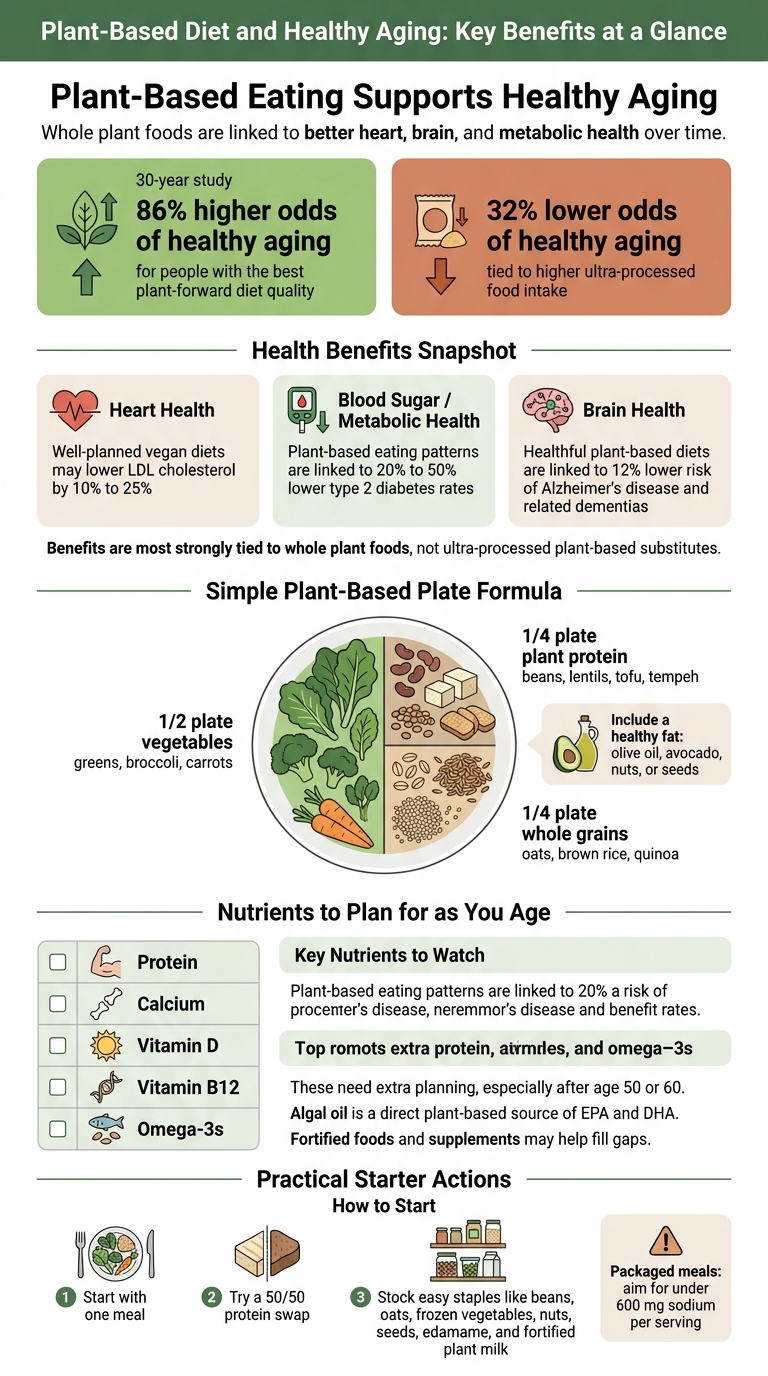
Plant-Based Diet and Healthy Aging: Key Benefits at a Glance
Why a Plant-Based Diet Helps You Age Healthfully
sbb-itb-3d8e4fc
Why plant-based eating supports aging well
Plant-based diets can support aging well because they bring in fiber, antioxidants, and unsaturated fats while tending to stay lower in saturated fat and sodium. That mix helps support heart, brain, and metabolic health as the years add up. And that matters for the things most people care about as they get older: mobility, cognition, and independence.
The biggest upside tends to show up in three places: heart health, brain health, and nutrient intake.
Heart and metabolic benefits that matter with age
Soluble fiber from foods like oats, lentils, apples, and barley helps lower LDL cholesterol and keep blood sugar on a more even path. A well-planned vegan diet can reduce LDL by 10% to 25% [1], and plant-based eating patterns are linked to a 20% to 50% lower incidence of type 2 diabetes [1]. Leafy greens and beets can also help support healthy blood pressure.
That’s a big deal with aging. Heart and metabolic health don’t sit in separate boxes. They shape energy, stamina, and day-to-day function.
Those same plant compounds may help the brain too.
Brain health and cognitive aging
Healthful plant-based diets are linked to a 12% lower risk of Alzheimer's disease and related dementias and to better cognitive test scores in older adults [2] [3]. That’s one reason whole plant foods matter more than packaged plant-based products.
In plain English: a bowl of lentils, greens, and brown rice is not the same as a plant-based frozen entrée with a long ingredient list. These effects are tied to whole plant foods, not ultra-processed substitutes.
Bone health and nutrients that need planning
Plant-based eating can work well long term, but it does ask for some planning. If you eat mostly or fully plant-based, pay close attention to calcium, vitamin D, vitamin B12, protein, and omega-3s.
Here’s why they matter:
- Calcium and vitamin D help support bone density.
- Vitamin B12 is needed for nerve function and DNA health.
- Protein helps preserve muscle mass as you age.
- Omega-3s play a role in healthy aging, but the plant form, ALA, converts poorly in the body.
Because of that poor conversion, algal oil is a direct plant-based source of EPA and DHA worth thinking about [4]. Fortified foods and supplements can also help fill nutrient gaps. That matters most if you want a long-term eating pattern, not just a short stretch of “eating clean.” A healthcare provider can help you review your intake so you know where you stand.
This article is for informational purposes only and is not medical, health, fitness, or wellness advice. Always consult a qualified healthcare, medical, fitness, or wellness professional before making decisions, starting a new routine, changing your diet, using supplements, or acting on any health-related information.
How to build a plant-based plate for long-term health
Put those nutrient goals into a routine you can stick with. A simple setup makes plant-based meals much easier to repeat: fill half your plate with vegetables, one-quarter with plant protein, and one-quarter with whole grains, then add a source of healthy fat [6].
A simple plate formula for breakfast, lunch, and dinner
This same formula works all day. For breakfast, that might look like oats or toast with berries and nut butter or hemp seeds. Lunch could be lentil soup or a grain bowl with greens and avocado. Dinner can be rice or quinoa, chickpeas or tempeh, and vegetables with olive oil [6].
It also helps to spread protein across all three meals. That matters more than many people think. One cup of cooked lentils provides about 18 grams of protein, and a half-cup of tofu provides about 22 grams of protein [5][6]. Protein helps support muscle, balance, mobility, and independence as you age.
From there, focus on the least processed version of each food.
Choose more whole plant foods and limit ultra-processed options
Use minimally processed ingredients when you can. The plate formula is only as good as what goes on the plate.
| Include More | Limit More |
|---|---|
| Vegetables: Leafy greens, cruciferous veg, root vegetables | Refined Grains: White bread, white rice, sugary cereals |
| Fruits: Berries, apples, citrus | Sugary Snacks: Sweets, sugar-sweetened beverages |
| Legumes: Lentils, chickpeas, black beans, edamame | Sodium-Heavy Foods: Packaged meals with more than 600 mg sodium per serving |
| Intact Whole Grains: Quinoa, farro, brown rice, oats | Highly Processed Convenience Foods: Packaged meals with long ingredient lists |
| Healthy Fats/Nuts: Walnuts, flaxseeds, chia seeds, avocado | Ultra-Processed Convenience Foods: Highly refined meat alternatives with long ingredient lists |
If you're buying packaged plant foods, check sodium and added sugar first. Aim for under 600 mg of sodium per serving, and pass on products that list sugar or sodium near the top of the ingredient list [6].
Key nutrients to build into meals as you age
Once your plate is balanced, fine-tune the nutrients that matter more with age. After 60, put extra focus on protein, calcium, iron, and omega-3s. Fortified plant milks and cereals can help with calcium, vitamin D, and B12, and it makes sense to ask a clinician about B12 supplementation if you eat mostly or fully plant-based [6].
How to shift to a plant-based lifestyle without feeling overwhelmed
Knowing what to eat is the easy part. Doing it often enough for it to feel normal is where most people get stuck.
That’s why the next step isn’t making your whole diet perfect overnight. It’s making good choices easier to repeat.
Start with one meal or one swap at a time
Use the same plant-forward approach, but tie it to just one habit first. A simple place to start is one plant-based breakfast on weekdays. Pick something easy, repeat it, and let it become automatic.
Another low-stress move is the 50/50 plate swap. Take a dinner you already make and replace half of the animal protein with a plant-based option. For example, a stir-fry with half chicken and half tofu still feels familiar, but the balance starts to shift. Then, over time, you can move a little more toward the plant side without feeling like anything was taken away. This is about changing the ratio, not putting yourself on a strict set of rules.
Stock your kitchen for easier weekday meals
Once a habit starts to stick, make home cooking easier. A stocked kitchen cuts down one of the biggest weekday problems: staring into the fridge and having no clue what to make.
Keep a few basics around, and meals get much simpler:
| Pantry & Fridge Staples | Why They Help |
|---|---|
| Canned beans and lentils | Fast protein with no prep; rinse and use |
| Oats and brown rice | Filling grain base for any meal |
| Frozen vegetables | Easy add-in for quick meals |
| Nuts and seeds (walnuts, chia, flaxseed) | Easy add-ins for protein and healthy fats |
| Edamame | Quick protein staple with minimal prep |
| Fortified plant milk (oat, soy, or almond) | Convenient source of calcium and vitamin D |
| Seasoned tempeh | Ready-to-cook protein that takes little time |
On busy nights, canned lentil soup, frozen grain bowls, or seasoned tempeh can help you get dinner on the table in under 10 minutes. Just check sodium first.
When fortified foods or supplements make sense
If you eat mostly plant-based, it helps to think ahead about a few common nutrient gaps. Vitamin B12 needs planning on a plant-based diet, especially after age 50. Plant foods do not provide B12, and absorption declines with age [6].
Vitamin D and omega-3 needs can differ from person to person. So before you add a supplement, it makes sense to talk it through with a healthcare provider, especially if you take medications [6].
Conclusion: Build a plant-based pattern you can stick with
The big idea is simple: healthy aging comes from the quality of your overall eating pattern, repeated over time. Put plainly, the practical next step is clear: choose a plant-based pattern you can keep coming back to.
A healthful plant-based pattern built around whole grains, legumes, leafy greens, nuts, and fruit supports healthy aging best when it takes the place of ultra-processed foods. Start with one meal, use the plate formula, keep a few staples on hand, and build from there. The goal isn't a perfect diet. It's a pattern you can maintain for years.
This article is for informational purposes only and is not medical, health, fitness, or wellness advice. Always consult a qualified healthcare, medical, fitness, or wellness professional before making decisions, starting a new routine, changing your diet, using supplements, or acting on any health-related information.
FAQs
Do I need to go fully vegan to benefit?
No. You do not need to go fully vegan to get the upsides of a plant-based diet.
What matters most is eating more plant foods, like vegetables, fruits, whole grains, legumes, nuts, and seeds. A lot of people do well with a plant-forward or flexitarian way of eating. And even small changes that you can stick with over time may support long-term health and healthy aging.
What nutrient gaps should you watch for most?
Watch for four main nutrient gaps: vitamin B12, vitamin D, protein, and calcium.
Vitamin B12 usually comes from animal foods. If you eat plant-based, get it from fortified foods or take a daily supplement.
Vitamin D can be tricky too, especially in winter, when sun exposure drops. In many cases, a supplement helps fill that gap.
For protein, aim for 1.2 to 1.8 grams per kilogram of body weight. That gives you a clear target instead of guessing.
For calcium, build meals around foods like:
- Tofu
- Kale
- Fortified plant milks
It’s a simple checklist, but it matters. These four nutrients tend to need the most attention on a plant-based diet.
How can I start eating more plant-based without overhauling everything?
You don’t need to change your whole diet to get more from plant-based eating. As Ritual Brief notes, it is a journey rather than a destination.
A simple way to start is to focus on what you add to your plate. Try the 50/50 approach: swap half the meat in your favorite meals for lentils, tofu, or tempeh.
Small steps can help too:
- Meatless Mondays
- One extra serving of fruits and vegetables each day
- Adding beans or tofu to meals you already make
That kind of slow, steady shift can make plant-based eating feel a lot less like a big leap and more like a natural next step.


