

How to Recover Faster After Illness or Injury
Balanced nutrition, sleep, mindful activity, and targeted therapy speed healing faster than rest alone.


Recovery from illness or injury requires more than just rest. To heal effectively, you need the right balance of nutrition, activity, sleep, and mental well-being. Here's a quick breakdown of what works best:
- Nutrition: Focus on protein, vitamin C, zinc, omega-3s, and hydration to repair tissues and reduce inflammation.
- Controlled Activity: Gradually increase movement, starting with gentle exercises. Use methods like RICE (Rest, Ice, Compression, Elevation) in the early stages.
- Sleep: Aim for 7–9 hours of quality sleep to support hormonal and cellular repair.
- Mental Health: Manage stress with mindfulness and set small, achievable recovery goals.
- Supplements: Consider options like collagen, omega-3s, and vitamin D under professional guidance.
Recovery happens in phases - each requiring a tailored approach. By combining these strategies and consulting with professionals, you can create the ideal conditions for your body to heal effectively.
Injured? Do This to Recover Faster and Stronger
sbb-itb-3d8e4fc
Finding the Right Balance Between Rest and Activity
Balancing rest and activity is a key part of recovery. Controlled movement helps kickstart cellular repair and prevents muscle loss, but overdoing it can lead to setbacks. Experts often refer to the "Goldilocks Zone" - finding that sweet spot where activity aids healing without causing harm [7][8].
Know What Your Body Needs
Healing happens in three stages: inflammation (0–4 days), proliferation (4–21 days), and remodeling (21+ days). Each phase requires a different approach [7]. To figure out where you are in the process, consult your healthcare provider. A helpful rule of thumb is the 3/10 pain rule: mild discomfort (around a 3 out of 10 on the pain scale) is acceptable during recovery, but sharp pain indicates you’re pushing too hard.
Add Gentle Movement to Your Day
Consider relative rest, which means protecting the injured area while staying active in other ways [8]. For instance, if you have a foot injury, swimming might be a good option. If your upper body is affected, walking could keep you moving without risking further harm to the injured area.
Start with simple range-of-motion exercises. Try 10 shoulder circles (both forward and backward) or perform 10 cycles of the cat-cow stretch on your hands and knees. For knee injuries, quad sets - where you contract your thigh muscle for 5–10 seconds while seated - can help with stability [10]. Research shows that athletes who begin rehabilitation just two days after a soft-tissue injury return to sports 20 days sooner on average than those who wait nine days (63 days vs. 83 days) [11].
"Motion is the potion, and rest is no longer the best."
- Lydia Denworth, Science Writer [11]
Avoid the extremes of overactivity and complete rest, as both can hinder recovery. Instead, increase your activity level gradually - no more than 10% per week. This steady approach helps build strength and flexibility while avoiding reinjury.
Apply the RICE Method
In the first 24–72 hours after an injury, controlled care is crucial. Elevate the injured limb above your heart, apply compression, and use ice to manage swelling. Be cautious with excessive icing, as it can interfere with the body’s natural inflammatory response, which is essential for early healing [7][4].
After the initial phase, transition to a more active recovery. The PEACE & LOVE protocol provides a well-rounded strategy: start with Protection, Elevation, avoiding anti-inflammatories, Compression, and Education. Then, shift your focus to Load, Optimism, Vascularization, and Exercise for long-term recovery [7][9]. By balancing activity with rest, you’ll create a solid foundation for the next steps in your healing journey.
Nutrition and Hydration for Faster Healing
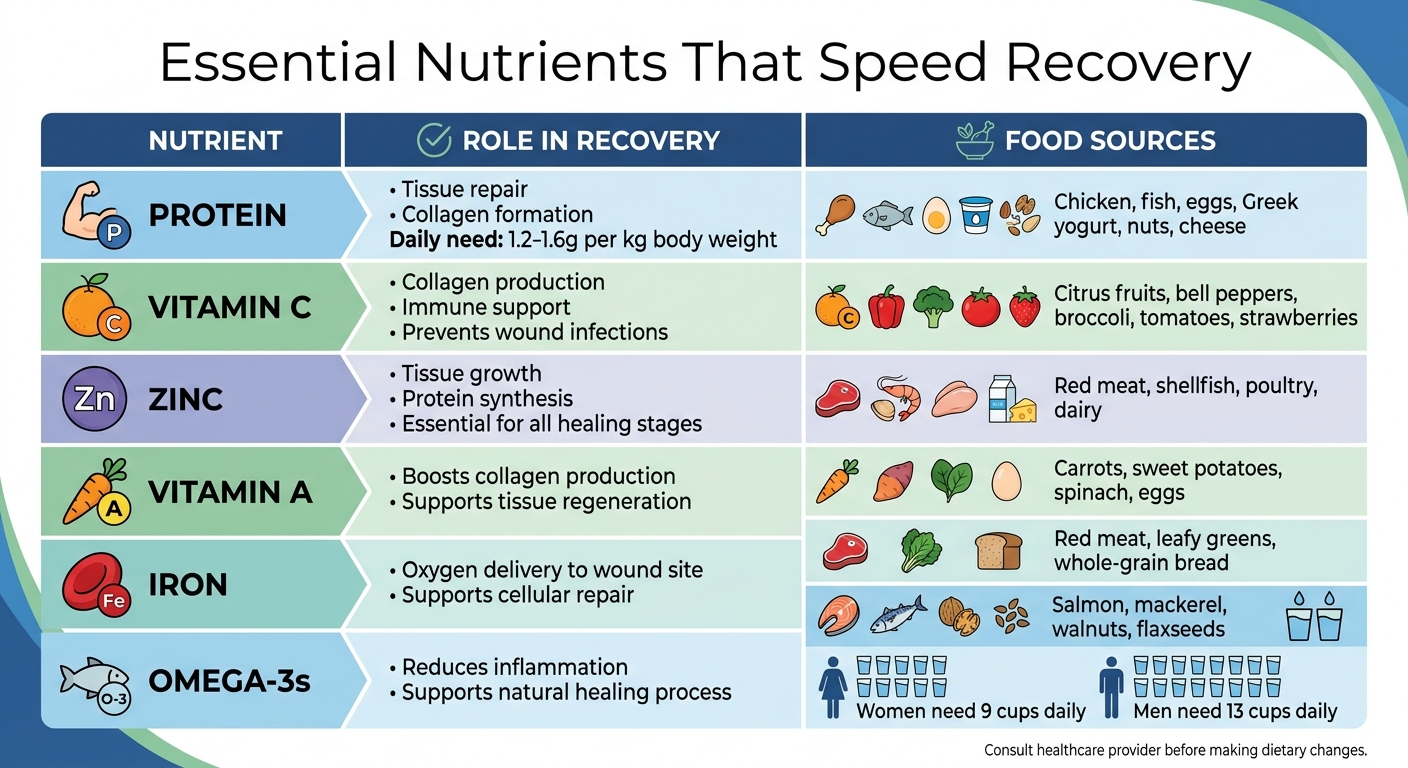
Essential Nutrients for Faster Injury and Illness Recovery
What you eat and drink plays a huge role in how quickly your body recovers. Good nutrition provides the building blocks for tissue repair, while staying hydrated ensures your body can transport those nutrients where they’re needed most. Without enough calories, nutrients, or water, healing slows down, and your immune system weakens[12][13].
Nutrients That Support Healing
Protein is essential for rebuilding tissues. During recovery, aim for 1.2–1.6 grams of protein per kilogram of body weight daily. For example, if you weigh 150 pounds (about 68 kg), you’d need around 82–109 grams of protein each day. Kavitha Krishnan, a registered dietitian at Cleveland Clinic, emphasizes that "inadequate protein intake will impair collagen formation and slow down the wound healing process"[13]. To meet your protein needs, start meals with options like chicken, fish, eggs, or Greek yogurt.
Vitamin C is another key player. It’s vital for collagen production, which forms the foundation of new tissue. A lack of vitamin C can increase your risk of wound infections[13]. Add foods like citrus fruits, bell peppers, strawberries, and broccoli to your meals. Pair these with iron-rich foods, such as beans or lentils, for better iron absorption.
Zinc is crucial for every stage of wound healing. It supports protein synthesis and tissue growth, making it an important nutrient during recovery[13]. Foods like red meat, shellfish, poultry, and dairy are rich in zinc.
Omega-3 fatty acids, found in salmon, walnuts, and flaxseeds, help manage inflammation without interfering with the natural healing process[12].
| Nutrient | Role in Recovery | Food Sources |
|---|---|---|
| Protein | Tissue repair, collagen formation | Chicken, fish, eggs, Greek yogurt, nuts, cheese |
| Vitamin C | Collagen production, immune support | Citrus fruits, bell peppers, broccoli, tomatoes |
| Zinc | Tissue growth, protein synthesis | Red meat, shellfish, poultry, dairy |
| Vitamin A | Boosts collagen production | Carrots, sweet potatoes, spinach, eggs |
| Iron | Oxygen delivery to wound site | Red meat, leafy greens, whole-grain bread |
| Omega-3s | Reduces inflammation | Salmon, mackerel, walnuts, flaxseeds |
Switching to whole grains instead of refined ones can add more protein, fiber, and healthy fats to your diet[13]. If your appetite is low, try eating smaller meals more often. And don’t forget: staying hydrated is just as important as eating the right foods.
Drink Enough Water
Dehydration can slow healing by reducing your skin’s elasticity, making it more prone to breakdown and infection[13]. Water helps with circulation, waste removal, and temperature regulation - critical functions when you’re recovering[14]. Even though water makes up about 65% of the human body, nearly 75% of Americans are chronically dehydrated[14].
Women should aim for 9 cups of water daily, while men need about 13 cups[14]. To stay on track, build hydration into your routine: drink a cup of water when you wake up, before meals or snacks, and before and after physical therapy[14]. Keep a reusable water bottle handy to remind yourself to sip throughout the day.
You can also boost your fluid intake with water-rich foods like watermelon, cucumbers, strawberries, and celery[14]. If plain water feels boring, add natural flavor with berries, lemon slices, or herbs like basil or rosemary. Avoid alcohol, as it dehydrates your body and can hinder recovery[14].
This article is for informational purposes only and is not medical, health, fitness, or wellness advice. Always consult with a qualified healthcare professional before making changes to your diet, exercise routine, or supplement regimen.
Sleep and Physical Therapy for Recovery
Healing and recovery thrive on two key pillars: restful sleep and structured physical therapy. While sleep supports hormonal and cellular repair, physical therapy focuses on regaining strength, flexibility, and mobility lost to illness or injury.
Get Enough Quality Sleep
Deep sleep is when your body performs some of its most critical repair work. During this stage, it releases Human Growth Hormone (HGH) and testosterone, ramps up cytokine and white blood cell production to combat infections, slows metabolism by up to 10% to conserve energy for tissue repair, and releases endorphins, which act as natural pain relievers [15].
To support recovery, aim for 7–9 hours of uninterrupted sleep each night. This allows your body to complete essential deep sleep and REM cycles [16][17]. To enhance sleep quality:
- Keep your room dark, cool, and quiet.
- Avoid caffeine for at least 8 hours before bedtime.
- Turn off screens an hour before sleep.
- Stick to a consistent sleep schedule to regulate your circadian rhythm.
A well-rested body is better prepared for physical therapy and overall recovery.
Stick to Your Physical Therapy Routine
Once you've established good sleep habits, consistent physical therapy becomes the next critical step. Physical therapy helps rebuild strength, improve flexibility, and restore mobility while alleviating pain through techniques like manual therapy and electrical stimulation. A 2024 systematic review highlights the importance of sticking to prescribed physiotherapy routines for achieving recovery goals and better clinical outcomes [3].
Paul Pursley, PT, OCS, CSCS, Clinical Supervisor at UI Health Care, emphasizes:
"Physical therapy is a really important step in maximizing outcomes after an injury or surgery." [1]
He further explains:
"A skilled sports therapist helps you find the right balance to rebuild strength and flexibility - without risking a setback." [1]
To stay on track, attend all therapy sessions and follow your home exercise plan. For athletes, therapists often require the injured side to regain at least 90% of the strength of the non-injured side before returning to sports [1]. To complement therapy, consider adding 5–10 minutes of foam rolling to reduce muscle soreness and improve tissue elasticity. Low-impact activities like swimming or cycling can also help maintain cardiovascular fitness without overloading healing joints.
Use Cold Therapy for Pain Relief
Cold therapy, such as ice packs or cryotherapy, is an effective way to manage swelling and pain, especially within the first 24–72 hours after an injury. By causing vasoconstriction, it reduces acute swelling and discomfort [17]. For best results, apply ice for 15–20 minutes several times a day during this period. After each application, allow passive rewarming with a towel or light clothing to extend the anti-inflammatory effects. However, avoid using ice immediately after strength training, as it may hinder muscle growth [2].
This article is for informational purposes only and is not medical, health, fitness, or wellness advice. Always consult a qualified healthcare, medical, fitness, or wellness professional before making decisions or changes related to your health.
Supporting Mental and Emotional Health During Recovery
While physical healing takes center stage during recovery, addressing your mental and emotional well-being is just as important.
Recovery isn't just about regaining physical strength - it’s a holistic process that involves your emotional state too. The National Collegiate Athletics Association (NCAA) found that 44% of female student-athletes and 17% of male student-athletes report feeling "constantly overwhelmed", a feeling that often worsens when sidelined by injury [18]. Your mindset plays a huge role here: positive thinking can boost healing, while stress hormones like cortisol can slow it down [5][19]. As Dr. Bridger Battaglia, a Sports Psychiatrist at the University of Utah Health, puts it:
"Recovery isn't just about healing tissue. It's about restoring the entire system. Pain, sleep, stress, and mindset are all connected. When one area is off, it affects everything else." [18]
Practice Mindfulness and Relaxation
Mindfulness techniques are powerful tools for managing anxiety and staying focused during recovery. For instance, diaphragmatic breathing helps shift your body from a "fight-or-flight" mode to a "rest-and-digest" state, which is crucial for healing [5]. Spending just 5–10 minutes a day visualizing your injury healing - imagine increased blood flow, regenerating cells, and stronger tissues - can make a difference. This practice stimulates neural pathways in a way that mimics physical movement, which may even speed up recovery [19].
Other helpful approaches include spending time outdoors to lower cortisol levels and blood pressure, scheduling screen-free periods to reduce mental overload, or engaging in gentle movements like tai chi [5]. As Katie Frushour, MS, RD, CSSD, and Dietitian at Mend, explains:
"Movement becomes healing when it is intentional rather than performance-driven." [5]
Mindfulness lays the groundwork for a positive mindset, which can be further supported by setting achievable goals.
Stay Positive and Set Small Goals
Breaking recovery into smaller, manageable steps can help maintain motivation and keep you on track. Achieving these milestones releases dopamine, which reinforces positive habits and thinking [18][19]. If you hit setbacks, try reframing them as opportunities to learn more about your limits [19]. Setting SMART goals - Specific, Measurable, Attainable, Relevant, and Time-bound - can boost your confidence and give you a sense of progress.
When your regular routine is disrupted, create a new schedule that prioritizes therapy, rest, and healthy meals. Be kind to yourself - treat yourself with the same compassion you’d offer a close friend. This self-compassion creates a safe psychological space for healing [19]. Dr. Battaglia highlights the shift in mindset needed for recovery:
"We help athletes shift their focus from 'How fast can I get back?' to 'How strong and stable can I be when I return?'" [18]
This article is for informational purposes only and is not medical, health, fitness, or wellness advice. Always consult a qualified healthcare, medical, fitness, or wellness professional before making decisions, starting a new routine, changing your diet, using supplements, or acting on any health-related information.
Supplements That May Support Recovery
Beyond a balanced diet and physical recovery techniques, certain supplements can help bridge nutritional gaps and promote healing. These supplements can play a role in supporting recovery, especially when tailored to individual needs. For example, collagen, a major protein in the body, starts to decline naturally after age 25 [20]. Collagen peptides can aid in maintaining the health of joints, tendons, and ligaments. Pairing collagen with vitamin C is particularly effective since vitamin C is crucial for collagen production. For optimal results, take these supplements about 60 minutes before activity to support ligament repair [28,29].
Supplements for Healing
Omega-3 fatty acids (EPA/DHA), commonly found in fish oil, are known for their ability to regulate inflammation and improve joint flexibility. This can potentially reduce recovery time [29,31]. However, it’s best to avoid high doses of omega-3s in the first 48 hours after an injury, as they might suppress the initial inflammatory response needed for repair [22].
Zinc is another supplement that has been linked to faster wound healing when taken in supplemental form. Zinc is essential for every phase of wound recovery, including protein synthesis and tissue growth. A 2025 meta-analysis even highlights its potential to speed up the healing process [30,31]. However, high doses of zinc should not be taken long-term without professional oversight, as this could lead to nutrient imbalances.
Other helpful supplements include:
- Vitamin D: Supports bone metabolism and immune function, especially when dietary intake is insufficient.
- Bromelain and curcumin: Help reduce swelling and manage inflammation. Curcumin absorption can be enhanced significantly (up to 2,000%) when combined with black pepper [22].
- Glucosamine and chondroitin: Often used to support cartilage health and improve joint lubrication, making them particularly useful for injuries involving cartilage tears [28,29].
These supplements are most effective when used as part of a comprehensive recovery plan and under professional guidance.
Consult a Professional First
Before adding any supplements to your routine, consult a healthcare provider or registered dietitian. This is especially important if you’re on medications or managing a chronic condition. As Kavitha Krishnan, a Registered Dietitian at Cleveland Clinic, advises:
"Poor nutrition can delay recovery. While eating well can help the body heal faster and fight infection." [21]
A professional can help determine whether supplements are necessary, ensure they don’t interact with medications, and recommend the right dosage for your needs. For instance, around 90% of people start their recovery journey with insufficient vitamin D levels, which can reduce calcium absorption by up to 75% [22].
To ensure safety and effectiveness, choose supplements from reputable brands that undergo third-party testing. Also, be mindful of timing - iron and calcium supplements should be taken separately, as they can interfere with each other’s absorption [29,32].
This article is for informational purposes only and does not constitute medical, health, fitness, or wellness advice. Always consult a qualified healthcare professional before making changes to your routine, diet, or supplement use.
Conclusion
Recovery involves a careful balance of sleep, nutrition, activity, mental health, and, when needed, supplements. At its core, quality sleep and balanced nutrition lay the groundwork for healing [2][3]. Add consistent physical therapy, mindfulness practices, and evidence-based supplements, and you have a well-rounded plan that supports recovery from multiple angles.
The key is steady, moderate progress to build strength while avoiding setbacks. As The Silicon Review Team emphasizes:
"Consistency beats intensity. Doing the right exercises at the right dose builds capacity without tipping into re-injury territory" [3].
Tracking your recovery can make a big difference. Use a simple log to monitor pain (keeping it at or below 3/10), sleep quality, and range of motion. If you notice pain or fatigue increasing for 2–3 days, reduce your activity by 10–20% before gradually resuming [3][6]. This approach - combining controlled activity, mindful nutrition, and targeted therapies - creates a smooth path forward.
Recovery happens in phases: inflammation, proliferation, and remodeling [23]. Each stage demands patience and the right strategy. Professional guidance ensures you're challenging your body appropriately while avoiding the frustrating "two steps forward, one step back" cycle [3].
Paul Pursley, PT, OCS, CSCS at UI Health Care, offers this valuable advice:
"Take your time, listen to your body, and ask for help if you need it" [1].
Implementing optimized recovery strategies can reduce healing time by as much as 20%, saving both time and money while helping you return to everyday life faster [6]. Stay patient, trust the process, and celebrate every small milestone along the way.
This article is for informational purposes only and does not provide medical, health, fitness, or wellness advice. Always consult a qualified healthcare, medical, fitness, or wellness professional before making decisions, starting a new routine, altering your diet, using supplements, or acting on any health-related information.
FAQs
When should I see a doctor during recovery?
If your symptoms don’t improve, get worse, or severe signs develop, it’s time to see a doctor. You should seek care if your symptoms persist for more than a few days without getting better, or if you experience a high fever (over 104°F), trouble breathing, intense pain, or ongoing issues like a cough that lingers for over two weeks. Getting prompt medical attention can make a big difference in preventing complications and ensuring you receive the right treatment.
How do I know if I’m doing too much activity too soon?
Persistent fatigue, a noticeable drop in performance, and muscle soreness that lingers beyond 24–48 hours are all signs you might be pushing yourself too hard. Mood changes, like irritability or even feelings of depression, can also be red flags. On top of that, physical symptoms such as an increased resting heart rate, dizziness, or excessive sweating may indicate you're overdoing it. Catching these warning signs early can help you avoid setbacks and manage recovery more effectively.
Which supplements are safe to take with my medications?
Supplements such as black cohosh, cranberry, ginkgo, milk thistle, and American ginseng are generally regarded as safe to take alongside medications, as they have minimal or unlikely interactions. That said, it's always a good idea to check with a healthcare professional before mixing supplements with any medications. This ensures safety and helps prevent any unexpected interactions.


