

How Plant-Based Foods Support Gut-Brain Health
Simple plant-based steps—more fiber, diverse plants, polyphenols, and fermented foods—to support your gut microbiome and mood.


What you eat can affect your mood, focus, and digestion within 24 to 72 hours. If I want to support gut-brain health, the main food moves are simple: eat more fiber, get more plant variety, add polyphenol-rich foods like berries and olive oil, and include fermented foods when I can.
Here’s the short version:
- Fiber feeds gut bacteria, which make compounds tied to lower inflammation and brain support
- Prebiotic foods like oats, onions, garlic, and bananas help useful gut microbes grow
- Polyphenol-rich plants like berries, cocoa, green tea, coffee, herbs, and spices help support gut balance
- Fermented foods like kimchi, miso, tempeh, and sauerkraut can help support the gut lining and microbial mix
- A good target is 30 different plant foods per week
- An easy meal formula is: whole grain + produce + plant protein + healthy fat
- If I eat fully plant-based, B12 needs special attention, along with iron, zinc, vitamin D, and omega-3s
- Food helps most when it’s paired with sleep, exercise, and lower stress
A few numbers stand out:
- 1/2 to 1 cup of cooked whole grains or legumes per meal is a simple place to start
- Some people notice changes in energy, digestion, or focus in 2 to 4 weeks
- Deeper gut shifts often take 8 to 12 weeks
- Buying grains and legumes in bulk can cost about $1 to $3 per pound
If I had to sum up the full article in one line, it would be this: more plants, more variety, and small repeatable meal changes can support both the gut and the brain without changing everything at once.
Below, I’d break that idea into foods, habits, and simple daily steps.
Gut Health Revolution: Transformative Plant-Based Strategies for Optimal Digestive Wellness
sbb-itb-3d8e4fc
How Plant-Based Foods Affect the Gut-Brain Axis
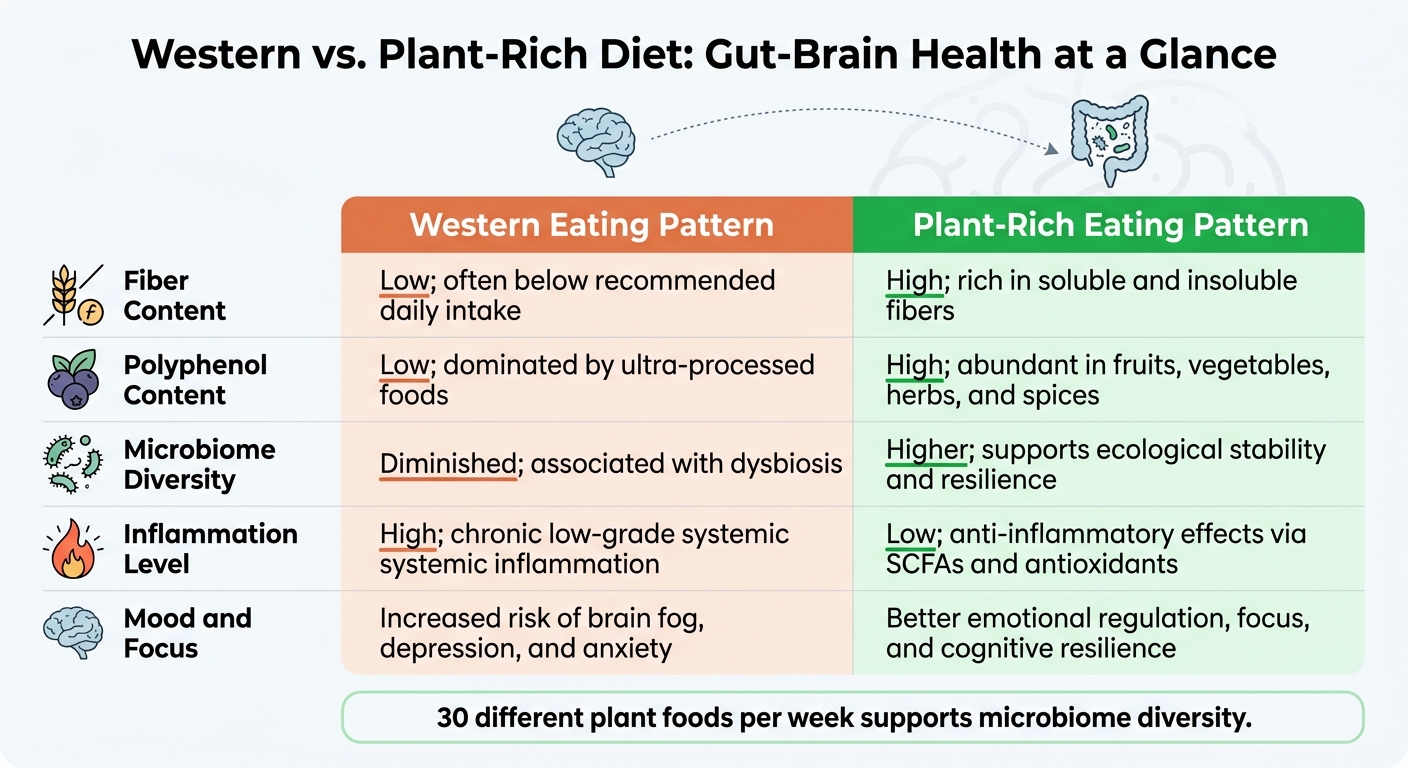
Western vs. Plant-Rich Diet: Gut-Brain Health at a Glance
These upsides come from three main routes: fiber, polyphenols, and fermentation.
How Fiber and Prebiotics Feed Beneficial Gut Microbes
When you eat fiber-rich foods like beans, lentils, oats, fruit, vegetables, nuts, and seeds, your gut bacteria ferment that fiber and make short-chain fatty acids (SCFAs) such as acetate, propionate, and butyrate. Those compounds help support the gut barrier, brain signaling, and inflammation control [1][2].
Prebiotic foods push this a bit further. Onions, garlic, leeks, asparagus, bananas, and oats contain fibers that selectively feed helpful bacteria, giving them what they need to grow. That, in turn, supports SCFA production and neurotransmitter balance [1][2].
How Polyphenols and Fermented Foods Support Gut Diversity and Reduce Inflammation
Polyphenols are plant compounds found in berries, cocoa, green tea, coffee, olives, extra-virgin olive oil, herbs, and spices. Most of them aren't absorbed in the small intestine. Instead, they make their way to the colon, where gut bacteria turn them into active compounds that may support antioxidant and anti-inflammatory effects [1][2].
That matters for the gut-brain axis because these compounds may also support mood-related signaling. Fermented plant foods like kimchi, tempeh, and miso add another piece to the puzzle. They bring live cultures and other helpful compounds that support microbes feeding one another and help maintain the intestinal barrier [1][2].
Research also suggests that both polyphenols and fermented foods help lower low-grade inflammation linked to depression, anxiety, and cognitive impairment [1][6].
Western Eating Pattern vs. Plant-Rich Eating Pattern: A Side-by-Side Look
Here’s the practical difference in gut-brain terms.
| Feature | Western Eating Pattern | Plant-Rich Eating Pattern |
|---|---|---|
| Fiber Content | Low; often below recommended daily intake | High; rich in soluble and insoluble fibers |
| Polyphenol Content | Low; dominated by ultra-processed foods | High; abundant in fruits, vegetables, herbs, and spices |
| Microbiome Diversity | Diminished; associated with dysbiosis | Higher; supports ecological stability and resilience |
| Inflammation Level | High; chronic low-grade systemic inflammation | Low; anti-inflammatory effects via SCFAs and antioxidants |
| Mood and Focus | Increased risk of brain fog, depression, and anxiety | Better emotional regulation, focus, and cognitive resilience |
A large UK cohort linked higher healthy plant-based intake with lower dementia and depression risk, which lines up with the same pattern [6].
Next, turn these mechanisms into specific foods.
The Best Plant-Based Foods to Add to Your Plate
Now that the mechanism is clear, it helps to focus on the foods that give you the most for your effort.
Whole Grains and Legumes for Steady Energy and Gut Support
Whole grains and legumes bring prebiotic fiber to the table. That fiber feeds gut microbes and helps support short-chain fatty acid production.
A simple place to start is 1/2 cup to 1 cup of cooked whole grains or legumes per meal [2]. Think of it as an easy swap, not a full diet overhaul. Trade refined grains for farro or brown rice, and you may help steady blood sugar at the same time [2].
They’re also one of the easiest ways to eat well without spending a lot. Bought in bulk, whole grains and legumes often cost $1 to $3 per pound [2].
Fruits, Vegetables, Nuts, and Seeds for Variety and Nutrients Linked to Mood and Cognition
Variety matters here. A good target is about 30 plant foods a week to support microbiome diversity [7][2].
Leafy greens like spinach and kale give you folate and magnesium, two nutrients linked to a calmer, steadier mood [7]. Berries are packed with polyphenols tied to brain support [7][4]. Chia and flaxseeds add plant-based omega-3s [7]. And a daily handful of nuts is linked to lower depression risk [3].
If that sounds like a lot, don’t overthink it. Different colors, different textures, different plants - it all adds up.
Frozen fruits and vegetables can make this much easier. They’re budget-friendly, help cut food waste, and make it simpler to add more range to your meals [2].
Fermented Foods vs. Probiotic Supplements: What to Know
Fermented plant foods like kimchi, sauerkraut, tempeh, and miso add live helpful microbes that may support microbial balance and stress resilience [2].
These foods also come with the rest of the package: fiber, texture, and the food itself. Probiotic supplements, on the other hand, give you concentrated strains and tend to make more sense for targeted needs.
For general gut and mental wellness, start with food first. If you’re thinking about a targeted probiotic for a specific condition, it’s smart to talk with a healthcare provider.
Once these staples are on your plate, the next step is turning them into a few repeatable meals each week.
How to Build a Gut-Brain Friendly Plant-Based Day
Use the foods above to shape a simple daily routine that doesn’t feel like a big project.
Start with a 3-Day Food Check
Before you change anything, spend three days writing down what you actually eat. A basic handwritten log is enough. For each meal and snack, note whether it included vegetables, fruit, whole grains, legumes, or fermented foods. Then jot down how you felt after eating, especially your energy, focus, and digestion.
After those three days, look for the gaps. Are whole grains showing up at all? Are legumes missing from most meals? Are fermented foods nowhere in sight? It also helps to count your plant variety by tracking how many different plant foods you ate and which groups are missing.
Make Small, Gradual Upgrades You Can Stick With
Once you spot the gaps, make the smallest swap that fits your day. Don’t overhaul everything at once. Start by adding one plant food to each meal. Swap one refined grain serving for oats, quinoa, or brown rice. Add 1/2 cup of cooked beans or lentils to lunch or dinner on most days. Small moves like these add up.
Go slow with fiber and drink more water as you increase it. If you have IBS, IBD, or celiac disease, get personal guidance before making big fiber changes.
And here’s the part that surprises a lot of people: the body can respond fast. Research shows that measurable shifts in gut microbiome composition can happen within 24 to 72 hours of dietary changes [5].
Build Simple Meals and Prep Once for the Week
The easiest way to make these swaps stick is to turn them into repeatable meals. A simple formula takes a lot of the guesswork out of busy weekdays:
whole grain + produce + plant protein + healthy fat
Here’s what that can look like over a full day:
- Breakfast: Oatmeal topped with berries and a tablespoon of chia seeds
- Lunch: A grain bowl with brown rice or farro, roasted vegetables, black beans, and a drizzle of tahini
- Dinner: Lentil soup or a vegetable-and-lentil stir-fry served over roasted sweet potatoes
To make this easier, batch cook once for the week. Roast a big tray of sweet potatoes, broccoli, and bell peppers at 400°F. At the same time, cook a large pot of grains or lentils. When those parts are ready to go, putting meals together during the week becomes much simpler.
How to Stay Consistent for Long-Term Gut-Brain Health
Key Nutrients to Watch and How to Track How You Feel
If you want a plant-based eating pattern to support both gut and brain health over time, Vitamin B12 needs to be at the top of your list. Unfortified plant foods don’t provide it, and low B12 levels can lead to fatigue, brain fog, and mood changes that can look a lot like depression [5]. If you eat fully plant-based, use fortified foods or take a B12 supplement [5].
A few other nutrients need attention too: iron, zinc, DHA/EPA, and vitamin D.
Iron takes a bit more planning on a plant-based diet because plant iron is less bioavailable than iron from meat. A simple fix is to pair iron-rich foods like lentils or tofu with a source of vitamin C, such as citrus, bell peppers, or tomatoes, to help your body absorb more of it [5].
Omega-3s work in a similar way. Plant foods give you ALA from sources like flax, chia, and walnuts. But the body’s conversion of ALA into DHA and EPA is limited. That’s why an algae-based omega-3 supplement can make sense here.
Just as important, pay attention to how you feel as you go. Diet tends to work best when you also cut back on common stressors that affect the gut-brain axis. Track a few basics:
- Energy
- Mood
- Digestion
- Bowel regularity
Some shifts can show up in 2 to 4 weeks, while deeper microbiome changes often take 8 to 12 weeks [9].
How Sleep, Movement, and Stress Management Support Gut-Brain Health
Once food gaps are covered, the next big factors are sleep, movement, and stress. Food helps, but it’s only one piece of the picture. These habits shape the same gut-brain system your meals are trying to support.
Regular movement - whether that’s walking, strength training, or a mix of both - is one of the strongest drivers of gut microbiome diversity [9]. You don’t need an extreme plan. Steady movement, done week after week, goes a long way.
Sleep matters just as much because the microbiome follows a circadian rhythm. If sleep is cut short or all over the place, microbial balance can drift even if your diet looks good on paper. Aim for 7 or more hours on a steady schedule [9].
Then there’s chronic stress. When stress sticks around, cortisol stays high, which can damage the gut lining and trigger neuroinflammation [8]. That’s a big deal. You can eat well and still feel off if stress keeps hitting the same system every day.
Conclusion: More Plants, More Variety, Better Daily Support for Gut and Brain
The gut-brain axis responds to what you eat on a regular basis, not to one “perfect” meal or a trendy superfood. Fiber and prebiotics feed helpful gut microbes. Polyphenols and fermented foods support microbial diversity and may help lower inflammation. And in day-to-day life, small meal changes you can repeat tend to last much longer than strict rules or total diet makeovers.
Aim for 30 different plant foods per week. That includes herbs, spices, nuts, and seeds too. Keep plant variety high, cover your key nutrients, and support the gut-brain axis with sleep, movement, and stress control.
This article is for informational purposes only and is not medical, health, fitness, or wellness advice. Always consult a qualified healthcare, medical, fitness, or wellness professional before making decisions, starting a new routine, changing your diet, using supplements, or acting on any health-related information.
FAQs
What counts toward 30 plant foods a week?
Aim for variety across plant foods, including fruits, vegetables, legumes, whole grains, nuts, and seeds. That mix is linked to a healthier, more varied microbiome.
You don’t need anything fancy. Just rotate what you eat: lentils and chickpeas, oats and quinoa, or produce in different colors. Fermented plant foods like kimchi, sauerkraut, and tempeh count too.
Can I improve gut-brain health without going fully plant-based?
Yes. You can support gut-brain health without going fully plant-based.
A Mediterranean-style diet is a good example. It leans on fruits, vegetables, whole grains, and healthy fats, which can help support a more diverse gut microbiome.
The main idea is pretty simple: eat more fiber-rich foods, polyphenol-rich foods, and fermented foods, and eat less ultra-processed food and added sugar.
That can include foods like:
- Beans, oats, berries, leafy greens, and nuts
- Yogurt, kefir, kimchi, and sauerkraut
- Olive oil, herbs, and other plant foods rich in polyphenols
At the same time, foods like oily fish, eggs, and turkey can also support brain health alongside plant-based foods.
How do I add more fiber without stomach discomfort?
Increase fiber a little at a time instead of changing everything overnight. That gives your digestive system time to adjust. It also helps to drink enough water, since fiber needs fluid to move through your system.
Try to get fiber from a mix of whole foods, including legumes, whole grains, nuts, seeds, and vegetables. It may also help to test both raw and cooked plant foods and see which ones sit better for you. If bloating or discomfort sticks around, go step by step and talk with a health professional.


