

Mental Wellness Checklist: 12 Signs You're on Track
Assess 12 signs of mental wellness—stable moods, restorative sleep, steady energy, stress management, and supportive relationships.


Mental wellness is more than just the absence of mental illness - it’s about thriving in daily life, managing stress effectively, and building resilience. This article outlines 12 signs that indicate your mental health is on track, along with practical tips to strengthen these habits. Here’s a quick summary of what to look for:
- Stable moods: You handle emotions without being overwhelmed.
- Restorative sleep: You wake up refreshed and ready for the day.
- Consistent energy: You feel motivated and capable throughout the day.
- Healthy stress management: You recover quickly from challenges and use strategies to stay calm.
- Supportive relationships: You maintain meaningful social connections.
Each section includes actionable advice, like tracking your mood, improving sleep hygiene, or strengthening social ties. Remember, this checklist is a self-reflection tool, not a diagnostic guide. If persistent issues arise, seek professional support. Start small, track progress, and focus on daily habits to build lasting mental wellness.
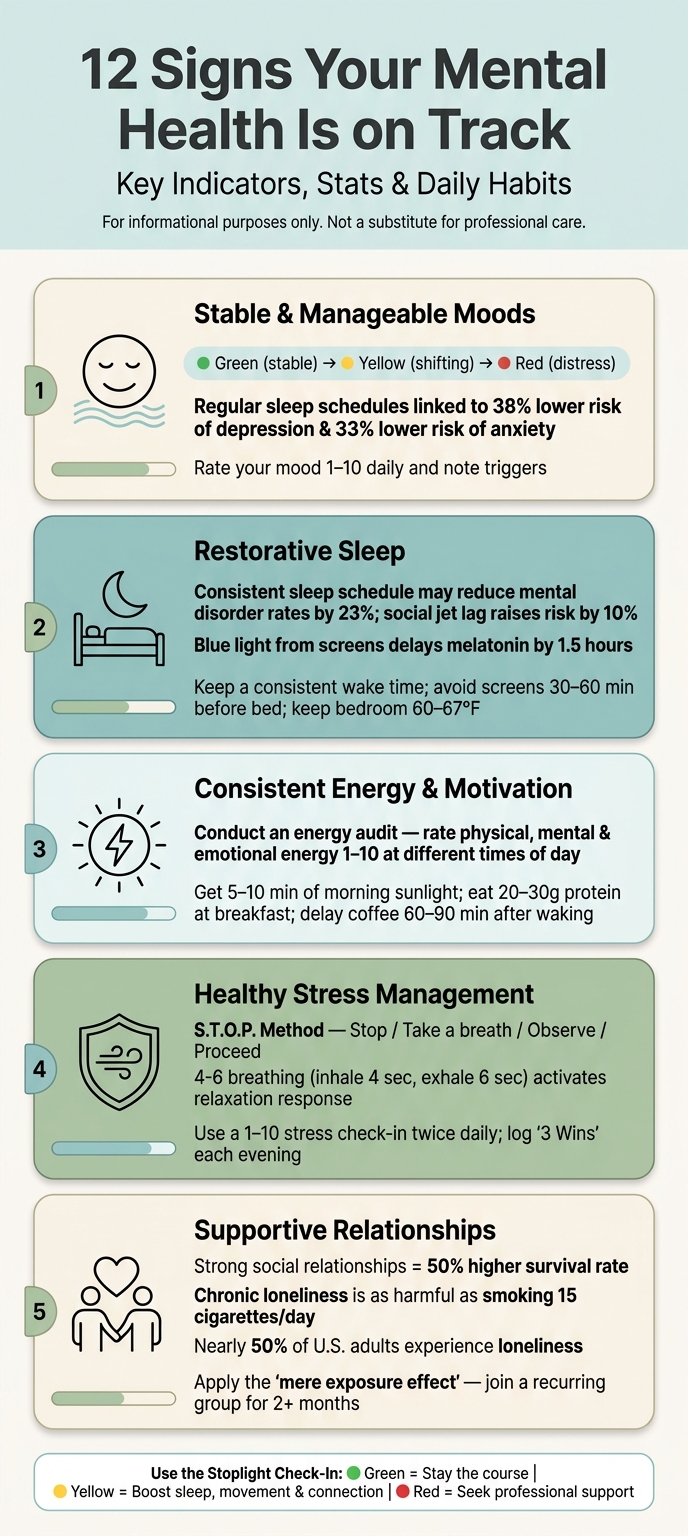
12 Signs Your Mental Health Is on Track: Key Indicators & Stats
7 Questions To Ask To Check Your Mental Health – Mental Health Awareness Month
1. Stable and Manageable Moods
Emotional steadiness doesn’t mean being happy all the time. Instead, it’s about keeping your feelings within a range that you can handle - having both good and tough days without either one completely taking over. This balance is a solid indicator that your mental health is on track. From here, we can dive into recognizing and maintaining these mood patterns.
What Stable Moods Look Like
It’s natural to feel irritated after a rough commute or sad after hearing bad news. The key is that these feelings don’t stick around too long or seep into every part of your life.
Here are a few signs that point to emotional balance:
- You can recognize your emotions without feeling consumed by them.
- Tough moments don’t overshadow your sense of self.
- You can genuinely enjoy small, everyday pleasures.
- When things don’t go as planned, you adapt without falling apart. [1]
Clinically, if a low mood or irritability lasts more than two weeks, it could signal something deeper that needs attention. But shorter dips are generally part of the normal emotional ebb and flow. [3]
How to Track Your Mood Patterns
A quick and easy way to track your mood is by using a daily 1–10 rating scale. It takes just seconds to jot down a number, but over time, these ratings can reveal patterns that a single day might not show. [2][5]
For even better insights, pair your daily score with a short note about any triggers. A mood rating becomes much more meaningful when you know what caused it. [2]
Here’s a simple guide to interpreting your mood trends:
| Mood Status | Characteristics | Recommended Action |
|---|---|---|
| Green (Stable) | Overall tone is steady; moods feel manageable | Maintain your habits and note your baseline. |
| Yellow (Shifting) | Noticeable irritability or low mood for 1–2 weeks | Focus on sleep, exercise, and reducing stress. |
| Red (Distress) | Persistent distress or difficulty functioning | Consider seeking professional help. |
"The patients who tend to do best are not those who never struggle - they're the ones who notice when they're struggling early, before the pattern has become entrenched." [5]
By keeping tabs on your mood, you’ll be better equipped to take action before things spiral.
Tips for Keeping Moods Steady
Consistency in daily habits is a game-changer. For example, research shows that people with regular sleep schedules - consistent bedtimes and wake times - have a 38% lower risk of depression and a 33% lower risk of anxiety compared to those with erratic sleep patterns. Building a nightly wind-down routine can make a big difference. [7]
Physical activity is another powerful tool. Just 10–15 minutes of walking a day can reduce the risk of depression by 18%. It’s a small effort with a big payoff. [7] And for moments of intense stress or anger, practicing paced breathing (slowing your breaths deliberately) can help calm your nervous system. [4]
Lastly, carve out a few quiet minutes each day for self-reflection. Even 10 minutes can make it easier to spot a mood shift early, which is much simpler to manage than addressing it after it’s taken root. [2] These small, consistent practices build up over time, helping to support long-term emotional stability.
This content is for informational purposes only and does not constitute medical, health, or wellness advice. Always consult a qualified professional before making significant changes to your routine, diet, or health practices.
2. Restorative Sleep
Sleep isn’t just about rest; it’s your body’s way of actively repairing itself. Quality sleep restores your brain, strengthens memory, and helps reset your emotional state. It’s not about how many hours you spend in bed - it’s about how refreshed you feel when you wake up. Yet, more than a third of Americans aren’t getting the restorative sleep they need, making it one of the most overlooked aspects of mental well-being [8].
Signs of Healthy Sleep
The best sign of good sleep? Waking up feeling recharged. You shouldn’t feel groggy or need coffee just to get moving. Healthy sleep involves falling asleep within 10 to 20 minutes of lying down, staying asleep with minimal interruptions, and waking up naturally - without an alarm - feeling alert and ready for the day [8].
How to Check Your Sleep Quality
Spend a week tracking your sleep habits - note your bedtime, wake time, how you feel in the morning, and any daytime fatigue or irritability. Feeling brain fog or crankiness? That might point to poor sleep quality [10]. Research highlights the importance of a consistent routine. Going to bed and waking up at the same time every day is more beneficial for mental health than simply hitting a specific number of sleep hours. In fact, sticking to a regular sleep schedule could reduce the population rate of mental disorders by 23%. On the flip side, disrupting your routine on weekends (known as social jet lag) can increase the risk of mental health issues by 10% [9].
| Sleep Quality Indicator | Healthy Sign | Warning Sign |
|---|---|---|
| Sleep Latency | Falling asleep in 10–20 minutes | Taking more than 20 minutes to fall asleep |
| Waking Up | Feeling refreshed and alert | Feeling groggy, drowsy, or irritable |
| Consistency | Same bed and wake times daily | Irregular hours or weekend disruptions |
| Duration | 7–9 hours for most adults | Less than 7 or more than 9–10 hours |
| Daytime Function | Minimal need for stimulants | Relying on caffeine or naps to stay awake |
Simple Sleep Hygiene Tips
One of the easiest and most effective habits? Stick to a consistent wake-up time, even on weekends. This helps regulate your internal clock and ensures your body builds enough sleep pressure by bedtime [11]. In the evening, dim the lights and avoid screens for at least 30 to 60 minutes before bed - blue light from devices can delay melatonin production by 1.5 hours [12]. Also, remember that caffeine lingers in your system for hours. That afternoon coffee at 2:00 PM? Half of it could still be in your system by 9:00 PM. Cutting caffeine after 2:00 PM is a small change with big benefits [11].
"Sleep hygiene is essentially the prep work we can do to protect our sleep and ensure that we sleep well." - Nancy Foldvary-Schaefer, DO, Sleep Medicine Specialist, Cleveland Clinic [8]
Keep your bedroom cool - somewhere between 60–67°F - because your core body temperature needs to drop by around 2–3°F to initiate sleep [11]. If you find yourself lying awake with racing thoughts, try a quick brain dump: jot down your worries and at least one next step for each. This simple act can help quiet your mind and make it easier to drift off [13].
Restorative sleep is a cornerstone of mental wellness. By mastering sleep hygiene, you’re setting yourself up for better energy, improved stress management, and a more balanced mood.
This article is for informational purposes only and is not medical, health, fitness, or wellness advice. Always consult a qualified healthcare, medical, fitness, or wellness professional before making decisions, starting a new routine, changing your diet, using supplements, or acting on any health-related information.
3. Consistent Energy and Motivation
Keeping your energy balanced is just as important for mental wellness as steady moods and quality sleep. Energy and motivation fuel your ability to handle daily tasks and pursue what matters most to you. When your mental health is in a good place, tackling responsibilities feels natural - even on tougher days - without having to push yourself through unnecessary stress.
"Motivation isn't some magical force you either have or don't. It's a form of energy." - Thanh Pham, Founder, Asian Efficiency [15]
Recognizing Your Energy and Motivation Levels
Healthy energy isn't just about feeling awake in the morning. It’s about having enough stamina throughout the day to follow through on commitments, spend time with loved ones, or enjoy personal interests. On the flip side, frequent cancellations, chronic procrastination, or finding joyless those activities you once loved can be early signs of low energy. Balanced energy also helps you stay mentally clear during hectic moments, start tasks without delay, and remain emotionally steady when life throws challenges your way [14][15].
Interestingly, energy is often the first area to show signs of trouble when something isn’t right with your health - long before physical symptoms appear [16]. Low energy isn’t just about being tired; it’s your body’s way of signaling that something needs attention. Taking note of these signs can help you take proactive steps to maintain balance.
How to Assess Your Energy Patterns
A simple way to track your energy is by conducting an energy audit. At different times of the day, rate your physical, mental, and emotional energy on a scale from 1 to 10. Alongside the rating, jot down one word that captures your state, such as "foggy", "focused", or "anxious" [17]. Over time, you’ll likely notice patterns. For example, many people feel their most energized in the morning, experience an afternoon dip, and regain some energy in the evening [17]. Identifying your natural rhythm can help you align your activities with your body’s peak performance times.
Ways to Boost Energy and Motivation
A few small changes can go a long way in improving energy levels. Start your day with 5–10 minutes of sunlight exposure and a protein-packed breakfast containing 20–30 grams of protein to stabilize your blood sugar and boost alertness [18][21]. If you’re a coffee drinker, try delaying your first cup by 60–90 minutes after waking to allow your body’s natural cortisol levels to rise, which might even help reduce caffeine dependency over time [21].
For that mid-afternoon energy crash, a quick burst of activity - like 20 seconds of movement or a 5-minute walk or stretch - can help improve circulation and fight off mental fatigue [21]. And when stress starts to build, practicing Box Breathing (inhale for 4 seconds, hold for 4, exhale for 4, hold for 4) can calm your nervous system and ease stress-related tiredness in just a few minutes [18][19].
"Motivation is often misunderstood. It's not something you wait for - it's something you build through structure and habit." - Mark Kovacs, PhD, Exercise Physiology Specialist [20]
This article is for informational purposes only and is not medical, health, fitness, or wellness advice. Always consult a qualified healthcare, medical, fitness, or wellness professional before making decisions related to your health or wellbeing.
sbb-itb-3d8e4fc
4. Healthy Stress Management
Managing stress is just as essential to mental wellness as maintaining stable moods and getting quality sleep. Stress is part of life - it’s unavoidable. The difference between thriving and burning out lies in how you handle it. Mental wellness doesn’t mean avoiding stress altogether; it means responding to it in ways that keep you from feeling perpetually overwhelmed. It’s about resilience and the ability to adjust when life throws challenges your way.
"High-functioning stress... hides behind productivity. You're doing well, you're reliable... But your nervous system is running on overdrive and your reserves are slowly depleting." - Kim Deschamps, Physiotherapist, Holistic Physiotherapy & Wellness [23]
What Healthy Stress Management Looks Like
Effective stress management isn’t about staying calm at all times - it’s about responding thoughtfully to challenges [24]. One key indicator that you’re managing stress well is noticing it early. This could mean recognizing subtle signals like clenching your jaw, tensing your shoulders, or shallow breathing. Catching these signs before they escalate helps you stay in control.
Another sign is how quickly your nervous system recovers. If you can return to a calm state after a tough meeting or an emotional conversation instead of staying tense or feeling drained for hours, that’s a clear sign of progress [23]. Recognizing stress early and addressing it can prevent it from taking over.
Simple Stress-Reduction Methods
Small, consistent actions often work better than dramatic changes. A great tool to interrupt stress is the S.T.O.P. method:
- Stop (pause whatever you’re doing)
- Take a breath
- Observe your thoughts and feelings
- Proceed with awareness [29].
This method takes less than a minute and can stop stress from spiraling out of control.
Another quick reset is taking a five-minute break to stretch, breathe deeply, or simply look out a window [22][30]. For a calming breathing exercise, try 4-6 breathing: inhale for 4 seconds, then exhale for 6. The longer exhale activates your body’s natural relaxation response [25].
"The goal isn't to clear your mind - it's to notice it." - Amanda McNab, Licensed Clinical Social Worker, Huntsman Mental Health Institute [29]
How to Track Your Stress Levels
A simple way to monitor stress is by using a 1-to-10 scale check-in twice a day [26][28]. Instead of brushing off stress with "I’m fine", try being specific: "I’m at a 7, and here’s why." Pairing the number with a single word like "wired", "overloaded", or "steady" can make your feelings more manageable [28].
It’s also helpful to separate stress signals (like headaches or irritability) from drivers (the underlying causes, such as work deadlines or financial concerns) [25]. Recognizing these patterns makes them easier to address. Another useful habit is writing down three things that went well at the end of each day. This "3 Wins" practice shifts your focus from what drained you to what brought progress [23]. Regularly checking in with yourself helps maintain balance and prevents stress from building up.
"Tracking your mental state and responding to it is not about reducing output or ambition. It is about keeping the system that produces the best work actually functional." - Modern Psych [27]
This article is for informational purposes only and is not medical, health, fitness, or wellness advice. Always consult a qualified healthcare, medical, fitness, or wellness professional before making decisions, starting a new routine, changing your diet, using supplements, or acting on any health-related information.
5. Supportive Relationships and Social Connection
Taking care of your social connections is just as important as managing stress. Both require consistent attention. Strong social ties play a key role in mental well-being. In fact, research indicates that people with strong social relationships have a 50% higher chance of survival [4]. On the flip side, chronic loneliness can be as harmful as smoking 15 cigarettes a day [36]. With nearly half of U.S. adults experiencing loneliness [32], maintaining meaningful connections becomes crucial.
"The quality of someone's relationships is a bigger predictor of early death than obesity and physical inactivity, and on a par with smoking and alcohol consumption." - Tegan Cruwys, Associate Professor and Clinical Psychologist [34]
Signs of Healthy Social Connections
Healthy relationships aren't about the number of people in your life but rather the quality of those bonds. A few honest, supportive relationships where you feel safe to be vulnerable are far more valuable than a large, conflicted network. Emotional safety is a key sign - being able to share your thoughts and feelings without fear of judgment or dismissal [31]. Other signs include mutual support, clear boundaries, and conversations that leave you feeling energized [31].
"Social connection is about feeling known, valued, and understood." - Jina Houts, Sagent Behavioral Health [32]
How to Check Your Social Wellness
A quick way to evaluate your social wellness is the "middle-of-the-night" test: How many people could you call at 3:00 AM if you needed help? If the number feels too low, it might be time to invest more in your relationships [34]. Consider these three pillars when assessing your social health:
- Structure: How often do you interact with others?
- Function: Do you have someone you can rely on during tough times?
- Quality: Are your relationships supportive and free from constant conflict? [35]
These factors together provide a deeper understanding of your social well-being than simply asking yourself, "Am I lonely?"
"What we found was that perfectly good relationships will often wither away from neglect and that the people who were best at having vibrant social networks were the people who took care of them." - Robert Waldinger, Professor of Psychiatry, Harvard Medical School [34]
Ways to Strengthen Your Connections
Strengthening relationships doesn't have to be complicated. A quick text or call to check in can go a long way in showing you care [33]. Voice and video calls are even more impactful because they allow for co-regulation - your nervous systems sync through tone and rhythm, something texts can't replicate [36].
If you're looking to form new connections, try the "mere exposure effect." Join a recurring group, like a fitness class, book club, or volunteer team, that meets regularly for at least two months [34]. Seeing the same faces consistently can turn strangers into friends over time. When interacting with someone new, go beyond a simple hello - mention something specific you admire about them. This small gesture can deepen the connection for both of you [33].
Make these practices part of your weekly routine to keep your social health on track.
This article is for informational purposes only and is not medical, health, fitness, or wellness advice. Always consult a qualified healthcare professional before making decisions about your health.
Conclusion: Building Mental Wellness Into Daily Life
Mental wellness isn't something you achieve once and forget about - it’s a practice you build into your everyday life. Each sign from our checklist acts as a foundation for maintaining mental well-being, whether it’s through steady moods, quality sleep, managing stress, or nurturing supportive relationships. These markers serve as reminders to check in with yourself and evaluate how you’re really feeling.
Creating a Weekly Wellness Ritual
The key to effective wellness routines is keeping them simple and doable. One approach to try is habit stacking - link a quick mental health check to something you already do. For example, rate your mood on a scale of 1–10 right after breakfast or jot down three small wins before heading to bed [2]. For a weekly review, use specific prompts on set days: reflect on lingering emotions on Monday, challenge unhelpful thoughts on Wednesday, and celebrate your wins on Friday [2]. Even dedicating five minutes can be more productive than an hour of aimless reflection.
"Journaling without structure is like driving without a destination. You'll move, but you might not get anywhere useful." - Voisley [2]
This kind of structure not only strengthens daily habits but also makes it easier to track and notice small improvements over time.
Recognizing Your Progress
Growth in mental wellness often happens quietly, in ways that can be easy to overlook. As Palisades Mental Health highlights, progress is usually gradual - like bouncing back from stress more quickly, catching negative thoughts earlier, or feeling less overwhelmed by everyday tasks [37]. When tracking your mood scores over time, the actual numbers are less important than the overall trend. For instance, if a steady 7 drops to a 5 over a month, it’s worth investigating what might be causing the shift [5].
Focus on small, daily steps forward.
When to Seek Additional Support
While tracking your progress, stay mindful of any extended periods of difficulty that might suggest the need for extra help. Remember, this checklist is a tool for self-awareness, not a replacement for professional care. A useful way to evaluate your situation is the "stoplight" system:
- Green means things feel steady - stick with your current habits.
- Yellow signals a shift lasting a week or two - double down on sleep, exercise, and social connections.
- Red indicates ongoing distress or impaired functioning - consider reaching out to a professional [5].
If symptoms start interfering with work, relationships, or basic self-care, don’t hesitate to consult a therapist or your primary care provider. Early intervention often leads to better outcomes [6].
"Seeking help is a sign of strength and self-awareness." - Community Minds [38]
This article is for informational purposes only and is not medical, health, fitness, or wellness advice. Always consult a qualified healthcare, medical, fitness, or wellness professional before making decisions, starting a new routine, changing your diet, using supplements, or acting on any health-related information.
FAQs
How do I know if my mood swings are normal or a warning sign?
Normal mood swings tend to be short-lived and manageable, often linked to things like stress, lack of sleep, or dietary habits. These shifts in mood typically improve with rest or changes in your environment. However, if mood swings become intense, last for an extended period, or occur without an obvious reason, they could signal a deeper issue. It’s important to seek professional support if these feelings become overwhelming, feel unmanageable, or interfere with your daily life for two weeks or longer.
What should I do if I still feel tired after 7–9 hours of sleep?
If you're clocking in 7–9 hours of sleep but still waking up tired, it might be time to fine-tune your sleep habits. Start by sticking to a consistent sleep schedule - even on weekends. Make sure your bedroom is set up for good rest: keep it cool, dark, and quiet. Avoid caffeine after noon, and try stepping away from screens at least 30 minutes before bed to help your mind wind down.
If these adjustments don’t make a difference, it’s worth talking to a healthcare provider. They can help rule out conditions like sleep apnea or hormone imbalances that might be affecting your energy levels. For ongoing fatigue, practices like taking intentional breaks or exploring breathwork techniques could also help restore your energy.
When is it time to talk to a mental health professional?
Feeling overwhelmed, stuck, or not quite yourself for an extended period - say, two weeks or more - might be a good reason to consult a mental health professional. You don't need to wait for a crisis or a formal diagnosis to seek support. Some signs to watch for include noticeable changes in sleep or appetite, difficulty concentrating, withdrawing from loved ones, or losing interest in activities you usually enjoy. If your emotions are interfering with your daily life, reaching out can be an important step toward feeling better.


