

Oral Health and Longevity: The Link
Gum disease, tooth loss, and dry mouth can shorten healthy years—daily brushing, hydration, and dental care help preserve strength.


Your mouth can affect how long you stay healthy, not just how long you live. If you have gum disease, missing teeth, or dry mouth, your risk can go up for poor nutrition, muscle loss, heart problems, thinking decline, and earlier death.
Here’s the short version:
- Gum disease is common: about 3 in 5 older adults have periodontitis.
- Tooth loss matters: adults age 50+ with fewer than 20 teeth had more than double the odds of death in one 2025 review.
- Dry mouth is a big issue: it affects about 35 million U.S. adults and is often tied to medications.
- Daily brushing helps: brushing at least twice a day is linked with about 1.6 to 2 more years of disability-free life.
- Night brushing counts: skipping brushing before bed is linked with a 20% to 35% higher death risk.
- Dental visits help too: regular care is linked with about 1 extra year of healthy life expectancy.
What causes the problem? In plain terms, it often comes down to two things:
- Inflammation from gum disease
- Trouble chewing, which can lead to weaker eating habits and muscle loss
A few risks stack up with age:
- More medications
- Dry mouth
- Diabetes and other chronic illness
- Arthritis or memory problems that make brushing harder
- Missed cleanings or trouble getting dental care
What I’d take from this article is simple: brush twice a day with fluoride toothpaste, clean between your teeth once a day, deal with dry mouth, keep dental appointments, and replace missing teeth when needed. Those small steps can help protect eating, strength, and independence as you get older.
The rest of the article explains how those mouth problems affect the body and what daily habits and dental care can help slow them down.
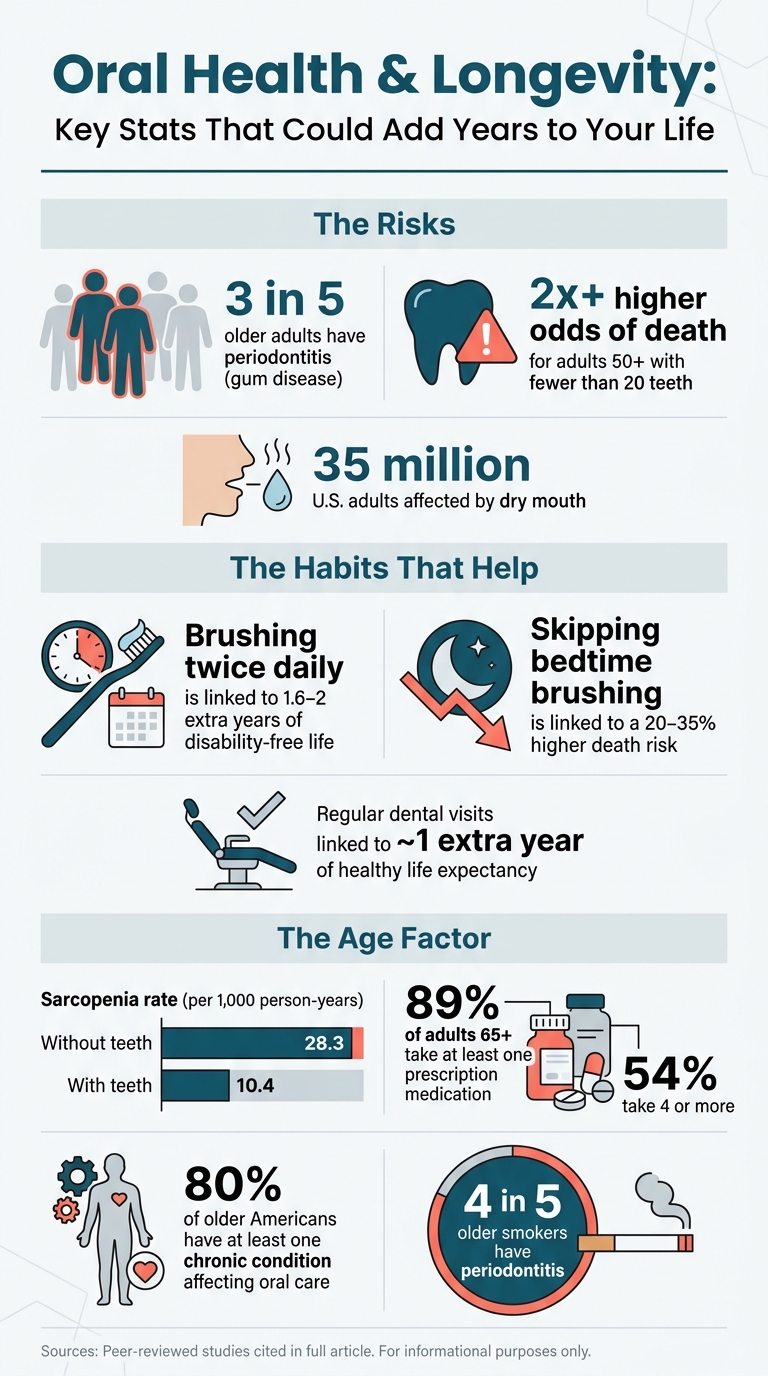
Oral Health & Longevity: Key Stats That Could Add Years to Your Life
Oral frailty in the aging population: the importance of retaining teeth | Webinar
sbb-itb-3d8e4fc
How Poor Oral Health Can Cut Healthspan Short
Poor oral health can shorten the years you stay healthy for two main reasons: inflammation and reduced chewing ability.
Gum Inflammation and Its Effects on the Body
Periodontitis is a chronic inflammatory disease. It can increase whole-body inflammation and is linked to cardiovascular disease, diabetes complications, and cognitive decline [7][5][3]. Periodontal treatment is also linked to lower dementia risk [7].
Tooth Loss, Chewing Difficulty, and Malnutrition
Missing teeth create a problem you feel at every meal. If chewing hurts or takes too much effort, people often switch to softer foods and eat fewer nutrient-rich options. Over time, that can reduce protein and nutrient intake [2].
That drop in protein and nutrients can help drive sarcopenia, the age-related loss of muscle mass and strength [5][2]. The gap is hard to ignore: adults without natural teeth developed sarcopenia at 28.3 cases per 1,000 person-years, compared with 10.4 cases per 1,000 person-years among those with teeth [5]. Muscle loss can then increase the risk of frailty and loss of independence.
Oral Conditions and Their Health Effects: A Comparison
These effects don't all look the same, but they can all make daily life harder.
| Oral Condition | Evidence-Linked Systemic Outcome | Impact on Independence / Daily Function |
|---|---|---|
| Moderate to Severe Gum Disease | Whole-body inflammation; cardiovascular disease, diabetes complications, cognitive decline [7][5][3] | Increased frailty risk [7] |
| Multiple Missing Teeth / Edentulism | Sarcopenia, malnutrition, higher mortality risk [5][2] | Limited food choices; 2.15x higher risk of muscle loss [5] |
| Dry Mouth (Xerostomia) | Increased tooth decay, oral pain, pneumonia risk [3] | Difficulty swallowing and speaking [3] |
The picture gets worse when aging, medications, and chronic disease make daily oral care harder.
This article is for informational purposes only and is not medical, health, fitness, or wellness advice. Always consult a qualified healthcare, medical, fitness, or wellness professional before making decisions, starting a new routine, changing your diet, using supplements, or acting on any health-related information.
Why Gum Disease Gets More Common With Age
Gum disease gets more common with age because a few problems tend to stack up over time. Inflammation increases. Medications add side effects. Daily oral care can take more effort than it used to. The biggest drivers are dry mouth, chronic disease, and trouble keeping up with day-to-day care.
Here’s the pattern: aging often brings more prescriptions and more chronic conditions. Those issues can make brushing, flossing, and dental visits harder. Plaque and inflammation then build up, gum disease gets worse, and overall healthspan can shrink.
Aging, Medications, and Dry Mouth
Saliva helps protect the mouth. When saliva drops, the risk of tooth decay and gum infections goes up [4][1]. That matters even more for older adults because many common prescription drugs cause dry mouth. In fact, 89% of adults aged 65 and older take at least one prescription medication, and 54% take four or more [4].
That makes dry mouth a major risk factor for gum damage. Less saliva means less natural protection, and once that shield weakens, problems can snowball fast.
When daily care becomes harder, plaque also builds faster.
Chronic Conditions and Daily Limitations
About 80% of older Americans live with at least one chronic condition, and many of those conditions make daily oral care harder [4]. Arthritis can weaken grip strength and make brushing tougher. Dementia can disrupt routines or cause people to forget them. Diabetes can increase gum inflammation while also making blood sugar harder to control [4][9].
On top of that, about 40% of adults older than 65 report a physical or cognitive disability that can interfere with oral self-care [4].
Access issues add another layer. Medicare usually does not cover routine dental care. Many retirees lose employer dental coverage. Even getting to an appointment can be hard when transportation is limited.
These barriers don’t act alone. They pile on each other.
Modifiable Risk Factors and Their Impact: A Comparison
Not every risk factor is set in stone. Some of the most harmful ones can be reduced by changing daily habits or adjusting care routines.
| Risk Factor | How It Worsens Gum Health | Key Outcome |
|---|---|---|
| Smoking | Reduces gum blood flow and weakens immune response [4] | 4 in 5 older smokers have periodontitis [4] |
| Uncontrolled Blood Sugar | Feeds bacteria and slows healing [4][10] | Gum disease makes blood sugar harder to manage [10] |
| Inconsistent Brushing | Lets plaque harden into tartar [4] | Linked to higher Alzheimer's and cardiovascular risk [1][10] |
| Skipped Dental Cleanings | Delays tartar removal and early detection [4] | Higher tooth loss risk, linked to mortality [8] |
| Dry Mouth (Medications) | Removes saliva's natural protection [4][1] | Raises risk of oral frailty and pneumonia [8][6] |
That’s why daily prevention matters so much. The next step is building a routine that still works when age makes care more difficult.
This article is for informational purposes only and is not medical, health, fitness, or wellness advice. Always consult a qualified healthcare, medical, fitness, or wellness professional before making decisions, starting a new routine, changing your diet, using supplements, or acting on any health-related information.
Daily Habits That Protect Gums and Support a Longer Life
Daily habits do a lot of the heavy lifting here. They’re the most dependable way to lower the risks above. Over time, small actions you repeat at home can slow gum disease and help protect your healthspan.
The Core Routine: Brush, Floss, and Use Fluoride
Brush for two full minutes, twice a day with a soft-bristled toothbrush or an electric toothbrush with a pressure sensor. Hold the brush at a 45-degree angle toward the gum line, and swap out brush heads every three months [12].
Nighttime brushing matters most [13]. Skipping brushing before bed is tied to a 20% to 35% higher mortality risk compared with brushing nightly [13][14]. If arthritis or low grip strength makes brushing tough, an electric toothbrush may make the job easier [12][14]. And if string floss feels awkward, interdental brushes can be easier to handle [10][15].
Clean between your teeth once a day to remove plaque from spots your toothbrush can’t reach. Tongue cleaning is optional [11].
For older adults dealing with dry mouth or limited mobility, simpler tools can make it much easier to stick with the routine.
Food, Water, and Dry Mouth Relief
Sip water during the day to help buffer acids and wash away bacteria, especially if medications are cutting down saliva flow. After meals, rinsing with water can clear food bits when brushing isn’t an option [11][14][15].
If dry mouth is a problem, sugar-free gum or lozenges can help, especially ones with xylitol. They can boost saliva and interfere with bacteria that lead to cavities. It also helps to limit added sugar, since sugar feeds cavity-causing bacteria [15][12].
Home care cuts risk, but dental cleanings and treatment help stop small problems from turning into bigger ones.
This article is for informational purposes only and is not medical, health, fitness, or wellness advice. Always consult a qualified healthcare, medical, fitness, or wellness professional before making decisions, starting a new routine, changing your diet, using supplements, or acting on any health-related information.
Professional Care and a Long-Term Oral Health Plan
Dental Visits, Gum Care, and Tooth Replacement
Home care does a lot of the heavy lifting. Professional care helps stop gum disease from getting worse.
A good starting point is two dental visits a year. If you've had gum disease before, your dentist may want to see you every three to four months for cleanings to keep bacterial buildup under control [12].
At those visits, ask for periodontal pocket measurements. Healthy pockets are usually 1 to 3 mm deep. Anything deeper can point to gum disease and may mean you need deep cleaning [12]. It also helps to get a panoramic or full-mouth X-ray every three to five years so your dentist can watch bone levels and spot early loss [12].
If you're missing teeth, replacement matters. Well-fitted dentures can help restore chewing and make eating easier, which may help prevent skipped meals. But dentures that don't fit well can cause sores and pain, so proper fitting and regular adjustments matter [4].
The next piece is making dental care line up with your medications and long-term health conditions.
Connecting Oral Health With Medical Care
Dental care works better when it lines up with medical care. That matters even more if you have diabetes or deal with medication-related dry mouth. Oral inflammation may also play a part in heart disease risk [10].
Medications can change the picture fast. Drugs used for blood pressure, allergies, and bladder control are common causes of dry mouth. Give your dentist a full medication list so they can catch these issues early and suggest saliva substitutes or change your care plan as needed [1][16].
Conclusion: Add Oral Health to Your Longevity Routine
Gum disease, tooth loss, and dry mouth may seem like minor dental issues, but they can slowly wear down your healthspan. Getting older increases the chances of all three. Still, steady daily hygiene, smart nutrition, good hydration, and regular professional care can shift the odds in your favor.
Regular dental visits are linked with adding about one year of healthy life expectancy [8]. If you're building a longevity routine - better sleep, less stress, healthier meals - oral health belongs on that list too.
"The mouth is one of the most critical gateways to overall health. How we care for it can have enormous consequences on our overall aging." - Adam Rosenbluth, M.D., Internist and Cardiologist [1]
FAQs
Can gum disease really affect heart and brain health?
Yes. Research shows a strong link between gum disease and the health of your heart and brain.
When your gums stay inflamed, harmful bacteria can slip into your bloodstream. From there, they may trigger inflammation throughout the body. That inflammation can damage blood vessels, harden the arteries, and play a part in blood clot formation.
Researchers have also found these bacteria in artery plaque and in brain tissue from people with Alzheimer’s disease. That matters because it points to a connection that goes well beyond your mouth.
Treating gum disease may help lower inflammation across the body and could reduce the risk of heart attacks, strokes, and cognitive decline.
How do missing teeth increase the risk of muscle loss?
Missing teeth can increase the risk of muscle loss in two main ways: poorer nutrition and systemic inflammation.
When chewing gets hard, people often eat fewer nutrient-dense foods. Over time, that drop in food quality can lead to muscle wasting.
Tooth loss tied to chronic periodontal disease may also set off inflammation that makes muscle breakdown worse. Put those two problems together, and physical function and muscle strength can decline with age.
What should I do if medications are causing dry mouth?
Bring a full list of your prescriptions to your dentist and go over it with your dental team. A lot of common medications can cut down saliva production, which can increase the risk of cavities and infections.
Your dentist or physician may suggest a dry mouth rinse, such as Biotene. It also helps to drink enough water and focus on nasal breathing, since both can support your body’s natural saliva flow.


