

7 Daily Habits That Support Healthy Aging After 40
7 science-backed habits—move, eat nutrient-rich, sleep, manage stress, connect, protect skin, and screen—to age well after 40.


As you age, your daily habits play a big role in how well you feel and function. After 40, muscle mass decreases, hormones shift, and inflammation increases. However, research shows that 75% to 95% of aging is influenced by lifestyle choices, not genetics. Here are seven habits to help you stay healthier longer:
- Move daily: Aim for 150 minutes of moderate exercise weekly and strength train twice a week to preserve muscle and heart health.
- Eat nutrient-dense foods: Focus on whole foods, adequate protein (20–30g per meal), and key nutrients like Vitamin D, calcium, and fiber.
- Prioritize sleep: Get at least 7 hours nightly to support brain and body repair.
- Manage stress: Practice mindfulness or relaxation techniques to reduce cortisol and inflammation.
- Stay socially connected: Build relationships to lower risks of dementia and chronic illness.
- Protect skin and hydrate: Drink enough water and use sunscreen daily to maintain skin health.
- Get regular checkups: Screenings for blood pressure, cholesterol, diabetes, and cancer can catch issues early.
Start small by pairing these habits with daily routines, like walking after meals or drinking water first thing in the morning. Consistency, not perfection, is key to aging well.
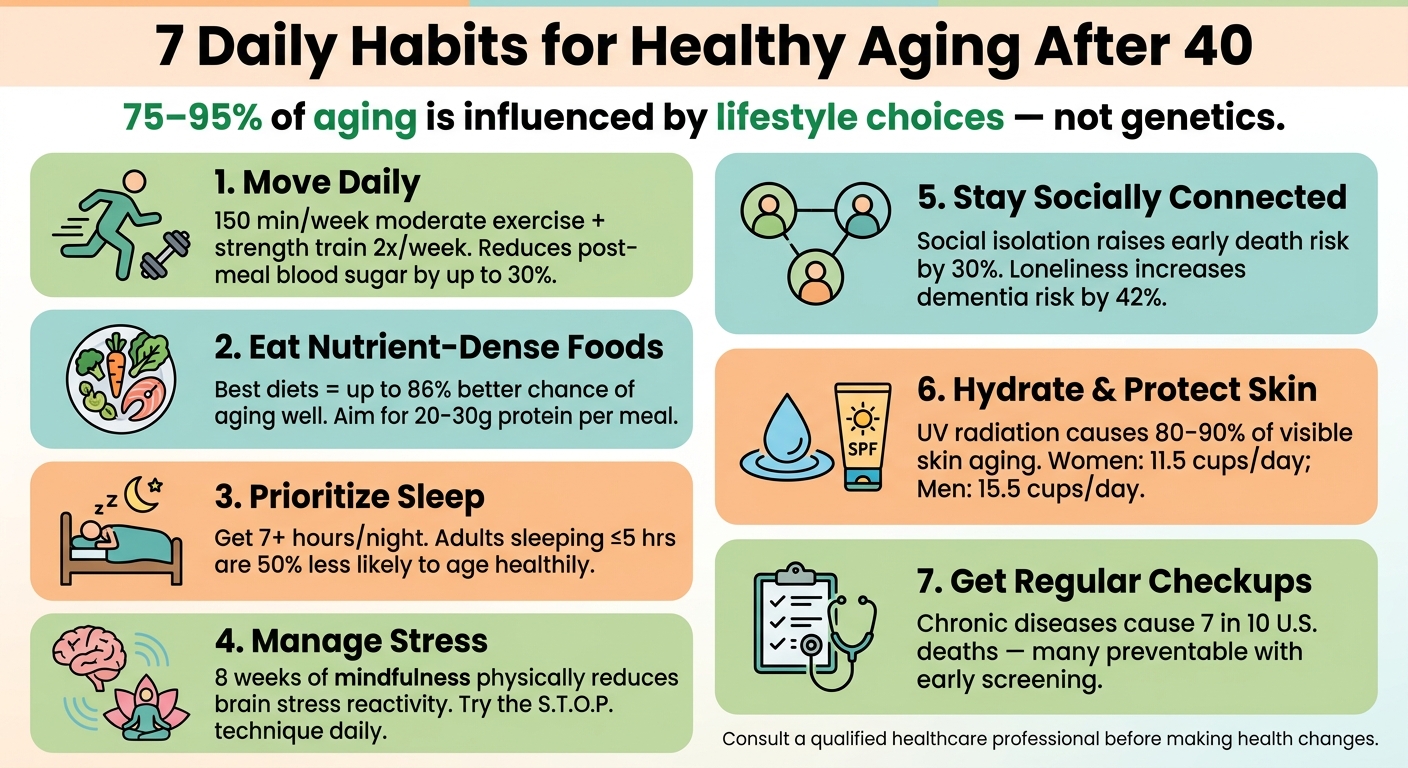
7 Daily Habits for Healthy Aging After 40
5 Habits That Slow Down Aging After 40 (Back by Science)
sbb-itb-3d8e4fc
1. Move Your Body With Purpose Every Day
Staying active becomes increasingly important as you age. Starting in your 30s, muscle mass naturally declines by about 8% per decade[6]. The good news? Regular, purposeful movement can help slow this process.
The U.S. Physical Activity Guidelines suggest aiming for 150 minutes of moderate-intensity aerobic activity each week - this could include brisk walking, swimming, or cycling - along with muscle-strengthening exercises twice a week[3]. To maximize benefits, mix up your routine: strength training helps counter muscle loss (sarcopenia), aerobic exercises support heart and lung health, balance exercises reduce fall risks, and flexibility work keeps your joints moving smoothly.
"If there were a pill that lowered blood pressure, improved cholesterol, reduced blood sugar... preserved muscle and bone... it would likely be front page news. We already have something that does all of that. It's called physical activity." - Harvard Health[3]
Finding ways to weave movement into your day can make a big difference. For example, try balancing on one leg while brushing your teeth, doing 10–15 sit-to-stand exercises before your morning coffee, or taking a 10-minute walk after dinner. That last one? It could reduce post-meal blood sugar spikes by as much as 30%[8].
When it comes to strength training, the key is intensity. Perform 8–12 repetitions of an exercise until you’re close to fatigue - meaning you could only manage one or two more reps with proper form[1]. Dr. Michael Fredericson from Stanford Lifestyle Medicine emphasizes that this level of effort is essential for building muscle[1].
This article is for informational purposes only and is not medical, health, fitness, or wellness advice. Always consult a qualified healthcare, medical, fitness, or wellness professional before making decisions, starting a new routine, changing your diet, using supplements, or acting on any health-related information.
2. Build A Nutrient-Dense, Whole-Food Plate
Once you hit 40, what you put on your plate matters more than ever. A 30-year Harvard study of over 105,000 participants found that only 9.3% managed to age healthily - defined as reaching 70 without major chronic diseases and maintaining mental and physical function[9]. Diet played a huge role: those with the best diets had up to an 86% better chance of aging well, while diets high in ultra-processed foods reduced those odds by 32%[9]. This highlights the importance of prioritizing nutrient-packed, whole foods every day.
Start by focusing on whole, unprocessed foods. Ultra-processed snacks like chips, packaged treats, and fast food often crowd out the nutrients your body needs as it ages.
Protein becomes a key player after 40. Aim for 20–30 grams per meal to help maintain muscle mass. For reference, this could look like a cup of Greek yogurt, a 4-ounce chicken breast, or 5 ounces of tofu. Other easy options include eggs, canned tuna, lentils, or rotisserie chicken. Pair your protein with fiber-rich foods - think berries, oats, broccoli, or chia seeds - for better metabolic health and muscle support.
"The Mediterranean diet has been ranked No. 1 for weight loss and overall health. Studies have shown that it's an anti-inflammatory diet, and we know that inflammation is linked to so many diseases."
- Michael Fredericson, MD, Professor, Stanford Lifestyle Medicine[1]
When building your meals, aim to fill half your plate with vegetables. Add a source of protein and a healthy fat, like olive oil, avocado, or walnuts, to complete the meal. Keep an eye on nutrients that become harder to absorb with age, such as Vitamin B12, Vitamin D, calcium, and magnesium. For instance, about 10–30% of adults over 50 struggle to absorb Vitamin B12 from food, so fortified options or supplements may be worth discussing with your doctor[10].
| Nutrient | Daily Goal (Age 40+) | Top Whole-Food Sources |
|---|---|---|
| Protein | 1.0–1.2 g per kg of body weight | Chicken, Greek yogurt, lentils, tofu, eggs, fish |
| Fiber | 25 g (Women) / 31 g (Men) | Beans, chia seeds, berries, broccoli, oats |
| Vitamin D | 600 IU | Salmon, trout, fortified dairy, eggs |
| Healthy Fats | Emphasize unsaturated fats | Extra-virgin olive oil, walnuts, avocado, flaxseeds |
| Calcium | 1,000–1,200 mg | Dairy, almonds, broccoli, sardines |
This article is for informational purposes only and is not medical, health, fitness, or wellness advice. Always consult a qualified healthcare professional before making changes to your routine, diet, or supplement use.
3. Protect And Prioritize Quality Sleep
Sleep is like your body’s nightly repair workshop. During this time, your brain activates the glymphatic system, a natural cleaning process that clears out waste proteins such as beta-amyloid and tau - both of which are tied to Alzheimer’s disease [11]. On top of that, your body releases growth hormone during the first deep sleep cycle, essential for maintaining muscle and repairing tissues, especially as you age beyond 40 [12]. Skimping on quality sleep doesn’t just leave you groggy - it quietly speeds up cellular aging.
The American Academy of Sleep Medicine advises adults to aim for at least 7 hours of sleep per night [14]. Yet, in 2024, 30.5% of U.S. adults reported falling short of this target [14]. Missing the mark has real consequences: consistently getting only 6 hours a night for two weeks impairs your cognitive function as much as staying awake for 24 straight hours [12]. Even more striking, adults who sleep 5 hours or less are about 50% less likely to age healthily compared to those getting 7 hours [13]. Clearly, sleep isn’t just a luxury - it’s a cornerstone of healthy aging.
Sleep patterns naturally change as we age, particularly after 40. Deep, restorative slow-wave sleep starts decreasing by about 2 to 3 minutes per decade from your 30s onward [12]. By your mid-50s, you may have lost up to 50–60% of the deep sleep you enjoyed in your 20s [19]. For women, hormonal shifts like declining progesterone and estrogen can lead to night sweats and early-morning wake-ups (often between 2–4 AM) [12]. For men, reduced testosterone levels can shorten deep sleep and increase nighttime awakenings [19]. While these changes are normal, you can take steps to reduce their impact.
"We talk so much about diet and exercise when it comes to health, but sleep is another important part of that conversation." - Nancy Foldvary-Schaefer, DO, Sleep Medicine Specialist, Cleveland Clinic [16]
To improve sleep quality, start with these practical tips:
- Stick to a consistent wake time: Waking up at the same time every day, even on weekends, helps stabilize your body’s internal clock [15][18].
- Optimize your sleep environment: Keep your bedroom cool (65°F–67°F), avoid caffeine 8–10 hours before bed, and skip alcohol 3–4 hours before sleep since it disrupts REM sleep and can cause early-morning wake-ups [15][16][17].
- Create a wind-down routine: Spend 30 minutes before bed dimming lights, avoiding screens, and doing relaxing activities like light stretching or reading. This signals your body it’s time to sleep [16].
If you’re still struggling despite good habits, consider Cognitive Behavioral Therapy for Insomnia (CBT-I), which is widely regarded as the best treatment over relying on long-term sleep medications [11][19]. Another common issue to rule out is sleep apnea, a condition affecting up to 50% of adults over 60, with most cases going undiagnosed [17]. Addressing these issues can make a big difference in your overall well-being.
This article is for informational purposes only and is not medical, health, fitness, or wellness advice. Always consult a qualified healthcare, medical, fitness, or wellness professional before making decisions, starting a new routine, changing your diet, using supplements, or acting on any health-related information.
4. Practice Daily Stress Management And Mindfulness
In addition to fitness and nutrition, learning to manage stress through mindfulness plays a key role in aging gracefully. After turning 40, stress can take a heavier toll on both the body and mind. Chronic stress increases cortisol levels, fuels inflammation, and raises the risk for heart disease, anxiety, and cognitive issues [25]. The good news? Your ability to practice mindfulness is largely shaped by the habits you build [24].
"It's important to manage stress or stress will manage you." - David Spiegel, Director of the Stanford Center on Stress and Health [1]
Research from Harvard shows that just eight weeks of mindfulness practice can physically alter the brain. It reduces the thickness of the amygdala - your brain's stress and fear center - making it less reactive over time [21]. This underscores the importance of incorporating even simple mindfulness techniques into daily life.
One quick and effective method is the S.T.O.P. technique: Stop, Take a breath, Observe without judgment, Proceed. This entire process takes less than a minute and can be done anywhere - whether you're between meetings, preparing for a tough conversation, or just needing a midday reset [20].
Even routine activities, like brushing your teeth or washing dishes, can become opportunities for mindfulness. By focusing on the sensory details, such as the feel of the water or the sound of the toothbrush, you can make mindfulness a seamless part of your day. This approach, often called "habit stacking", allows you to practice mindfulness without needing to carve out extra time [21][22].
"The goal isn't to clear your mind - it's to notice it." - Amanda McNab, Licensed Clinical Social Worker, University of Utah [20]
For those looking for a more structured approach, activities like yoga, Tai Chi, or Qigong are excellent options. These practices combine movement, breathwork, and focused attention into one session. Just 3 to 4 sessions a week, each under an hour, can make a noticeable difference [26]. If you're new to mindfulness, guided apps can provide helpful structure and support [23].
This article is for informational purposes only and is not medical, health, fitness, or wellness advice. Always consult a qualified healthcare, medical, fitness, or wellness professional before making decisions, starting a new routine, changing your diet, using supplements, or acting on any health-related information.
5. Nurture Social Connection And Emotional Well-Being
Building strong relationships does more than boost your mood - it directly benefits your health. Studies reveal that social isolation increases the risk of early death by about 30%, comparable to the harm caused by smoking 15 cigarettes daily [1][29]. On the other hand, staying socially engaged can lower the risk of dementia by 19%, while loneliness increases it by 42% [27]. These numbers highlight just how important social connections are as part of a well-rounded approach to aging.
Life after 40 often gets hectic. Many people juggle careers, parenting, and caring for older family members - all at the same time. With so much going on, it’s easy to let social connections slide. However, prioritizing relationships is essential for long-term health. Simple strategies, like the 5-3-1 Rule, can help make social engagement more manageable.
"Social connection is really important for healthy aging - for your brain and for your emotional health." [1][5] - Dr. Abby King, Professor of Epidemiology and Population Health, Stanford Medicine
The 5-3-1 Rule encourages you to:
- Interact with 5 people weekly
- Nurture 3 close relationships
- Spend 1 hour daily on meaningful connection
This doesn’t mean you need elaborate plans. A quick phone call, a walk together, or even a thoughtful text can go a long way. Research shows that forming a friendship takes around 90 hours of interaction, and building a close bond requires 200 hours [28]. Consistency is more impactful than grand gestures.
Emotional well-being is deeply tied to social health. People with high psychological well-being are nearly 5 times more likely to achieve excellent overall health compared to those with lower emotional wellness [30]. For instance, the AARP Foundation's Experience Corps program, where older adults tutor young children for 15 hours a week, demonstrated improved health outcomes for participants. These benefits stemmed from the sense of purpose and connection the program provided - not changes in diet or exercise [28].
"The good life is being engaged in activities I care about with people I care about." - Robert Waldinger, Director of the Harvard Study of Adult Development [28]
Looking to grow your social circle? Activities that bring people together in shared spaces work best. Consider joining a club, volunteering, or taking an in-person class. Group activities that combine social interaction with physical or mental challenges - like fitness classes or hobby groups - offer a double boost for brain health [27].
This article is for informational purposes only and is not medical, health, fitness, or wellness advice. Always consult a qualified healthcare, medical, fitness, or wellness professional before making decisions, starting a new routine, changing your diet, using supplements, or acting on any health-related information.
6. Stay Hydrated And Care For Your Skin And Sun Exposure
Once you hit 40, your skin undergoes changes that make staying hydrated and protecting yourself from the sun more important than ever. Lower estrogen levels, reduced hyaluronic acid, and a yearly 1% collagen loss (collagen accounts for 75–80% of your skin's dry weight) leave your skin more vulnerable. Two habits - drinking enough fluids and consistent sun protection - can have a noticeable impact on your skin's health.
The National Academies of Sciences, Engineering, and Medicine suggests women aim for about 11.5 cups (92 oz) of total fluids daily, while men should target 15.5 cups (125 oz). This includes all sources of hydration, such as beverages and water-rich foods like cucumbers (95% water), watermelon (92% water), and broccoli (over 90% water). Don’t wait until you feel thirsty to drink water. As Ashlee Carnahan, MS, RD at Henry Ford Health explains:
"It's best not to let yourself get thirsty - that's a sign that you're already becoming dehydrated."[33]
A good indicator of hydration is pale yellow urine. Staying hydrated internally works hand-in-hand with the external care your skin needs.
For maintaining skin moisture, apply a moisturizer within 2–3 minutes of cleansing. Start with a humectant like hyaluronic acid, follow with an emollient such as ceramides, and finish with an occlusive like shea butter to lock in the moisture[31]. Also, stick to lukewarm showers instead of hot ones, as hot water can strip your skin of its natural oils[32].
Sun protection is non-negotiable, as UV radiation is responsible for 80–90% of visible skin aging[34]. Use a broad-spectrum SPF 30 or higher every single day, even on cloudy days. Apply sunscreen 15 minutes before heading outdoors and reapply every two hours if you're active. You’ll need about one ounce (a shot glass worth) to cover your body adequately[36]. Don’t forget often-missed spots like your ears, the back of your neck, your hands, and your lips (an SPF lip balm works great). Try to avoid direct sun exposure during peak UV hours, typically between 10 a.m. and 2 p.m.[36].
"Consistency beats intensity. Wearing a good sunscreen most days of the year beats wearing a perfect sunscreen three times a month." - Ritual by TH[35]
By sticking to these habits, you’re not only protecting your skin but also supporting its resilience as you age.
This article is for informational purposes only and is not medical, health, fitness, or wellness advice. Always consult a qualified healthcare, medical, fitness, or wellness professional before making decisions, starting a new routine, changing your diet, using supplements, or acting on any health-related information.
7. Keep Up With Preventive Care And Health Monitoring
Your 40s are a pivotal time to focus on preventive care. Dr. Heather Hockenberry, Associate Medical Director at Included Health, emphasizes the importance of early screenings:
"We start screening early to catch things before they become a problem. If we wait, it's not preventive anymore - you're dealing with a condition you've been living with for years without knowing it." [41]
Conditions like high blood pressure, prediabetes, and early-stage cancers often develop silently, showing no symptoms. Regular screenings can detect these issues early, making treatment more manageable. Chronic diseases are responsible for 7 out of 10 deaths in the U.S., yet many can be avoided with timely detection [43].
Key Screenings After 40
Certain screenings become especially important as you age. For instance, blood pressure should be checked at least once a year. A normal reading is under 120/80 mm Hg, while 130/80 mm Hg or higher indicates stage 1 hypertension [38][42]. Cholesterol levels should be reviewed every 4 to 6 years [38]. Starting at age 35, diabetes screenings are recommended every three years, particularly for individuals who are overweight [38][39]. Women should begin biennial mammograms at 40, a practice that can lower breast cancer mortality by about 30% [40][44]. Colorectal cancer screenings are advised for average-risk adults starting at age 45, potentially preventing 6 to 8 deaths per 1,000 people screened [38][44]. By age 50, the shingles vaccine (a two-dose series) is recommended for everyone [38].
| Screening | Recommended Frequency | Who It's For |
|---|---|---|
| Blood Pressure | At least once per year | All adults |
| Cholesterol | Every 4–6 years | All adults |
| Colorectal Cancer | Starting at age 45 | Average-risk adults |
| Mammogram | Every 2 years starting at 40 | Women aged 40–74 |
| Diabetes/Prediabetes | Every 3 years starting at 35 | If overweight or obese |
| Eye Exam | Every 2–4 years (ages 40–54) | All adults |
| Dental Exam | Once or twice per year | All adults |
| Shingles Vaccine | 2 doses starting at age 50 | All adults |
Preparing for Appointments
Before heading to a checkup, jot down any noticeable changes in your energy levels, sleep patterns, or mood. It’s also a good idea to update your family health history using tools like the CDC's My Family Health Portrait [37]. After your visit, set one or two actionable goals - like a 20-minute daily walk or cutting back on sodium - to turn advice into tangible steps [43]. These small, consistent efforts can make a big difference in maintaining your health as you age.
This article is for informational purposes only and is not medical, health, fitness, or wellness advice. Always consult a qualified healthcare, medical, fitness, or wellness professional before making decisions, starting a new routine, changing your diet, using supplements, or acting on any health-related information.
How To Fit These Habits Into Your Daily Routine
Incorporating these seven habits into your daily life doesn't have to feel overwhelming. The real challenge isn't figuring out what to do - it’s finding a way to make it part of your routine. A simple and effective method is habit stacking, which involves pairing a new habit with something you already do automatically.
Here’s how it works: Use the formula, "After I finish [current habit], I will do [new habit]." For example:
- After turning off your alarm, drink 16 ounces of water before doing anything else.
- After brushing your teeth, stand on one leg for 60 seconds to improve your balance.
- After dinner, take a 10-minute walk - this can lower post-meal blood sugar spikes by 20–30% [46].
These small actions don’t require much extra time but can create a big impact over time.
"Your body really needs that daily stimulus to get the most benefit. But it also becomes easier to make it a habit if you're doing it more often. It becomes integrated into your routine." - Michael Fredericson, MD, Professor, Stanford Lifestyle Medicine [1]
If you're short on time, aim for a simplified version of each habit. Can’t squeeze in a 30-minute workout? Even five minutes of bodyweight exercises can provide the muscle engagement you need [1]. Similarly, if preparing a full breakfast isn’t realistic, grab something quick like Greek yogurt or eggs to hit your protein goal [7]. The focus isn’t on doing it perfectly but on keeping the habit alive. This mindset helps transform these habits into effortless parts of your day.
Timing Tips for Success
Timing can also play a role in maximizing the benefits of these habits. For instance, delay your caffeine intake by 60–90 minutes after waking to support your natural cortisol peak. In the first hour of your day, spend 10–15 minutes near a bright window or step outside to anchor your circadian rhythm [45].
As Andrew Hogue, co-CEO at NEUROFIT, explains:
"Think of it as setting the trajectory of a ship at sea. If it's aimed in the right direction early on, it's much easier to stay on the intended path for the rest of the day." - Andrew Hogue, co-CEO at NEUROFIT [45]
Quick Reference Guide
Here’s a breakdown of how to pair each habit with a natural trigger and how little time they actually take:
| Habit | Anchor (Trigger) | Time Needed |
|---|---|---|
| Hydration | Turning off alarm | 1 min |
| Morning Sunlight | Drinking water | 10–15 mins |
| Movement | Waking up or post-meal | 5–10 mins |
| Mindfulness | Coffee brewing or commute | 5 mins |
| Protein-Rich Breakfast | Making breakfast | 15 mins |
| Social Connection | Transition between tasks | 5 mins |
| Digital Sunset | Finishing dinner | Ongoing |
Start with the easiest habit, like drinking water or taking a short walk, and gradually build momentum throughout your day. Over time, consistency matters more than intensity. Even small, steady efforts can lead to meaningful progress [2].
This article is for informational purposes only and is not medical, health, fitness, or wellness advice. Always consult a qualified healthcare, medical, fitness, or wellness professional before making decisions, starting a new routine, changing your diet, using supplements, or acting on any health-related information.
Conclusion
Aging after 40 is largely shaped by the choices you make. Studies reveal that lifestyle and environment contribute to 75% to 95% of your lifespan [4], giving you substantial control over how you age.
The goal here isn’t perfection - it’s about building habits that add up over time. As longevity expert Dr. Poonam Desai explains:
"Longevity is not a moment of brilliance. It's the slow accumulation of unsexy, repeated, boring decisions made consistently over decades." [47]
It’s important to remember the distinction between simply living longer and maintaining a healthy, active life. In wealthier countries, the gap between lifespan and healthspan averages 17 years [48]. By incorporating the science-backed habits discussed earlier, you can work to close that gap. Every small step counts. Start with something simple, like setting a regular bedtime or taking a quick 10-minute walk daily, and build from there. As Abby King, PhD, Professor of Epidemiology and Population Health at Stanford Medicine, emphasizes: "It's never too late to start." [1]
This article is for informational purposes only and does not provide medical, health, fitness, or wellness advice. Always consult a qualified professional before making changes to your routine, diet, or health practices.
FAQs
Which habit should I start with if I’m overwhelmed?
If you're feeling swamped, begin with a routine that’s easy to stick to. Start by prioritizing 7–9 hours of consistent sleep - it’s the backbone of good health. Once your sleep schedule is on track, introduce simple habits like drinking a glass of water first thing in the morning or dedicating 10 minutes to light movement. The key here is consistency. A steady 15-minute routine is far more effective than trying to take on too much at once.
What’s the minimum exercise that still helps after 40?
For healthy aging after 40, aim to get at least 150 minutes of moderate-intensity aerobic exercise or 75 minutes of vigorous activity each week. On top of that, include two resistance training sessions that work your major muscle groups.
Even smaller efforts make a difference - like a 20-minute daily walk or quick bursts of movement during your day. These can still boost your cardiovascular health and contribute to overall well-being.
Which screenings do I actually need in my 40s?
Your 40s are a crucial time to stay on top of health screenings that can help safeguard your long-term well-being. Here’s what you should focus on:
- Mammograms: Women should begin scheduling mammograms at age 40 to monitor breast health.
- Colorectal Cancer Screenings: Everyone at average risk should start these screenings at age 45.
- Blood Pressure Checks: Make sure to monitor your blood pressure annually to catch any early signs of hypertension.
- Cholesterol Tests: Aim for a cholesterol check every 4–6 years to keep heart health in check.
- Diabetes Screenings: Testing for diabetes should begin at age 45, or earlier if you're overweight or have other risk factors.
Don’t overlook other important exams like vision and dental check-ups to maintain overall health. Mental health evaluations are equally important, ensuring emotional well-being. Additionally, age-specific tests, such as prostate exams for men or cervical cancer screenings for women, should be part of your routine care. Staying proactive now can make a big difference in the years to come.


